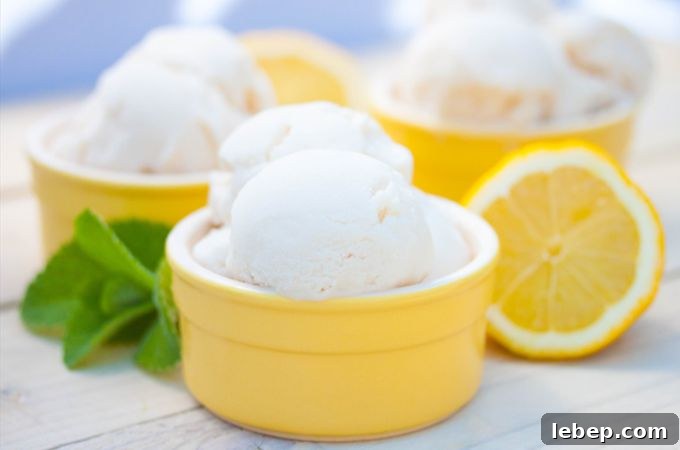
There are few things as refreshing as a scoop of lemon ice cream on a hot day. I especially love the bright, tart flavor of lemons in summer, though they’re available year-round. This vegan homemade lemon ice cream is wonderful on its own and pairs beautifully with sweet summer berries.
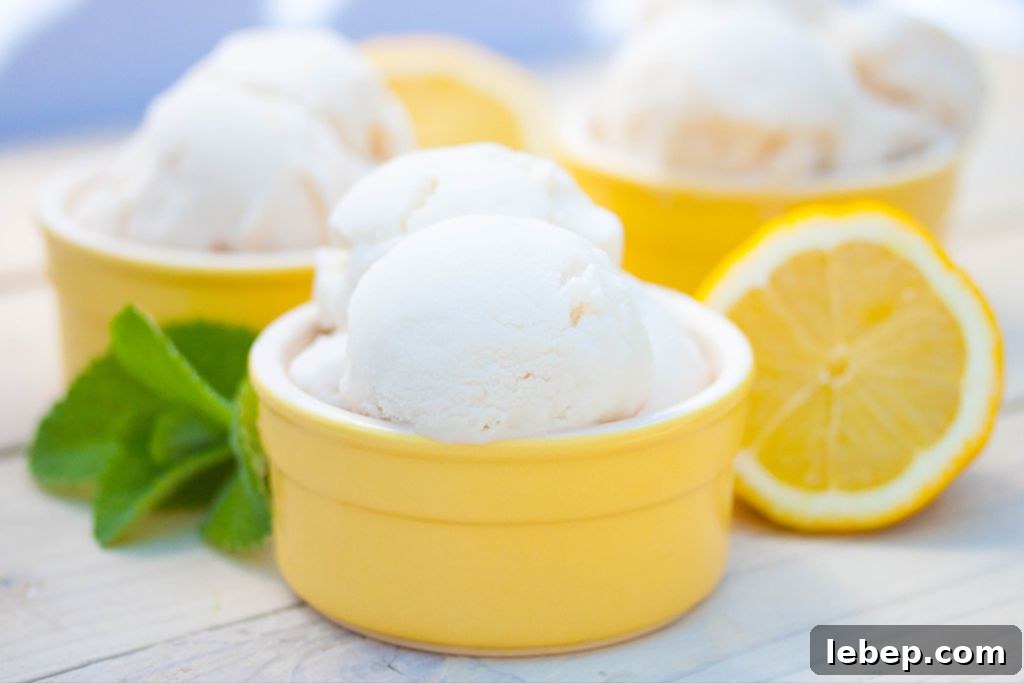
My fondness for lemons began long before I ever made lemon ice cream. Growing up in Croatia, I was always drawn to my father’s citrus trees. I loved the fragrance of their flowers, but as a child I was far more excited by the fruit. I would sit on the white stone wall around our house and watch tiny, dark green marbles harden and slowly ripen. Each year I eagerly waited until they were ready to pick so I could make fresh lemonade.
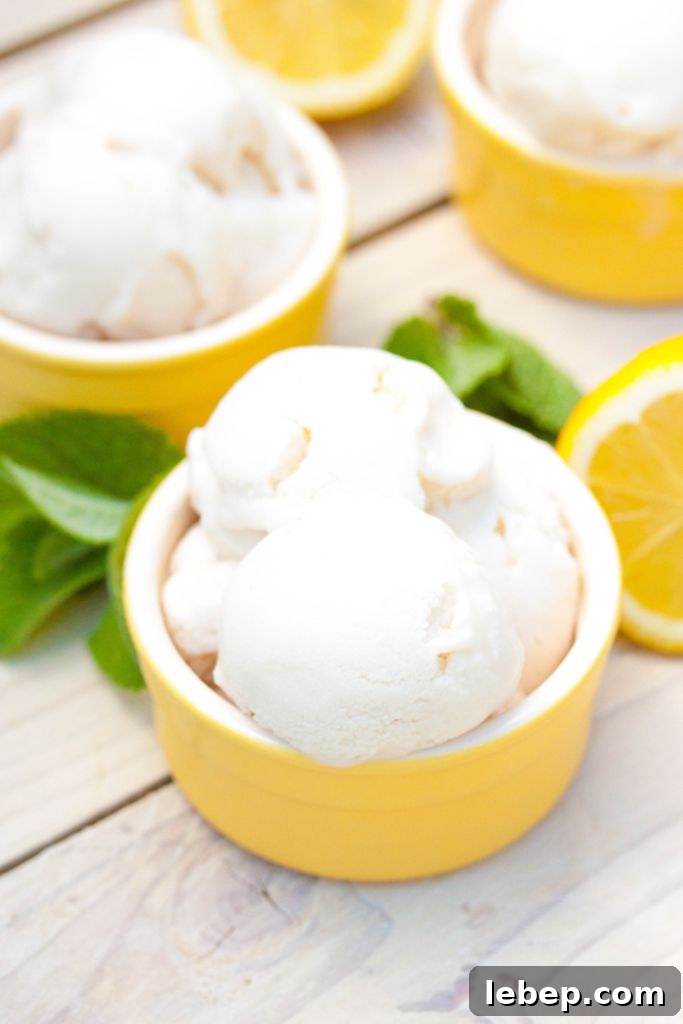
Over the years lemons became a pantry essential for me. I try to add them to as many dishes as possible, and in warm weather lemonade and lemon ice cream are my favorites. Fortunately, lemons are widely available in most places, so I can enjoy this homemade vegan ice cream in my current home in England whenever I want.
There are several ways to infuse lemon flavor into ice cream. Lemon extract or zest work well, but I prefer a combination of zest and freshly squeezed lemon juice. The juice delivers a lively zing, while the zest adds aromatic depth. If you’re using zest you can leave it in the base; the only reason to strain it out is if you want a snow-white finished ice cream. If appearance isn’t important to you, the little flecks of zest are perfectly fine and tasty.
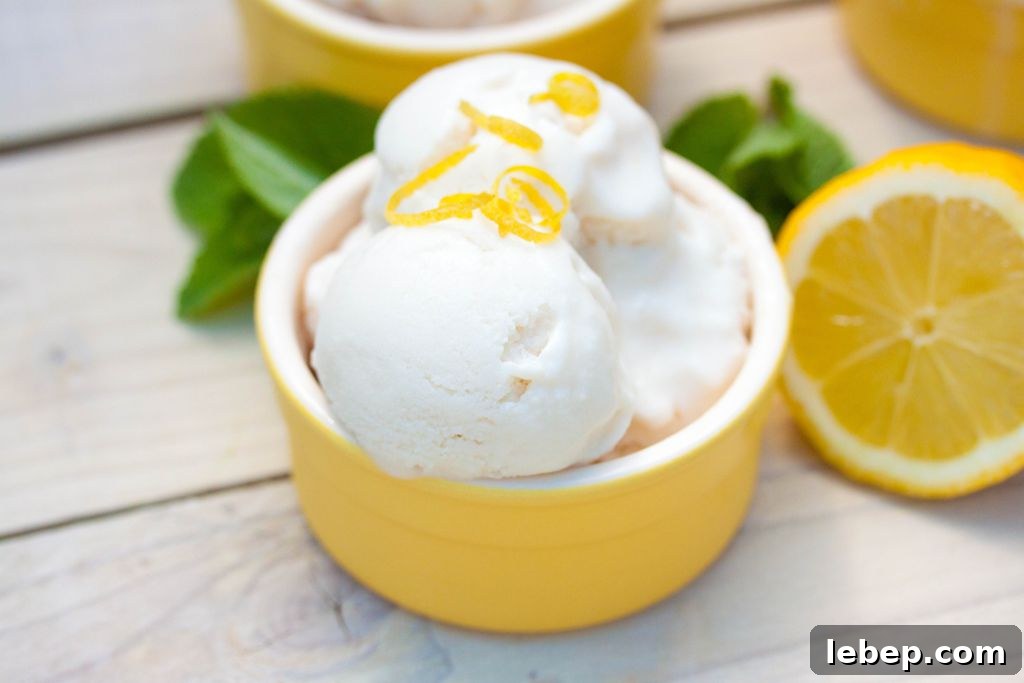
Whether you strain the zest or leave it in, the result will be a bright, full-flavored lemon ice cream. If you prefer a sweeter, more lemonade-like treat, increase the sugar by about 50 g (roughly ¼ cup). This sweeter version tends to be a hit with kids.
Lemon Ice Cream
The Greedy Vegan
Pin Recipe
Ingredients
- 2 cans full fat coconut milk* can size : 400ml (13-15oz)
- 100 g coconut sugar or sweetener of your preference
- 1 tablespoon arrow root powder
- 2 tablespoon lemon zest from unwaxed lemons
- 1 pinch of salt
- 180 ml fresh lemon juice
Instructions
-
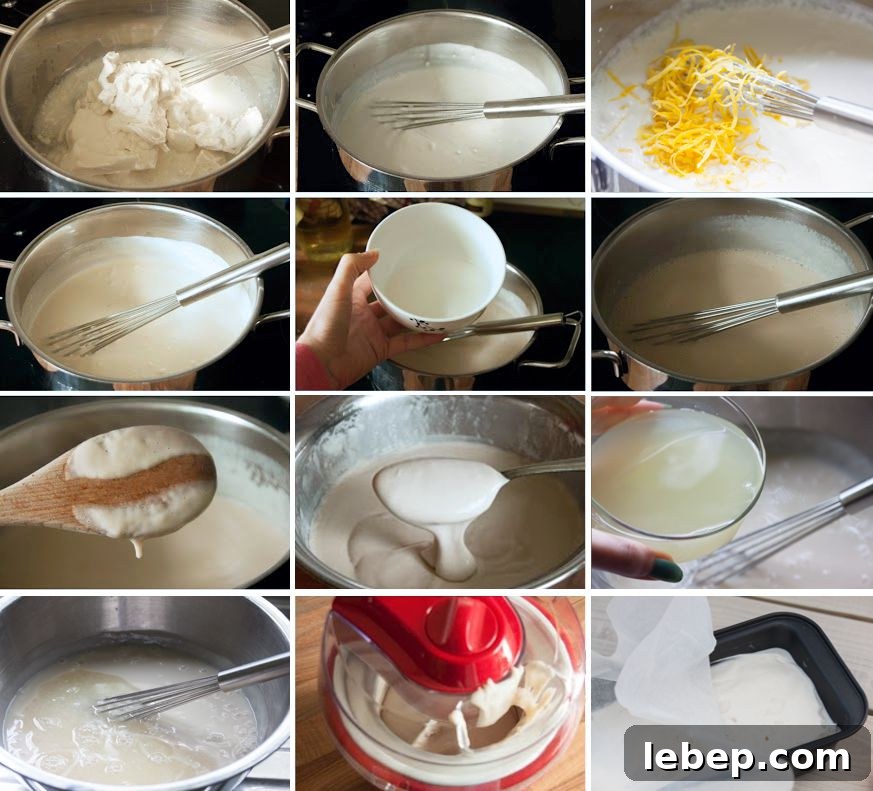
Pour the coconut milk from both cans into a saucepan. Canned coconut milk often separates into a thick cream layer and watery milk; whisk until smooth and combined.
-
Remove about 125 ml (½ cup) of the coconut milk into a small bowl and whisk in the arrowroot powder. This slurry will help thicken the base when added back into the saucepan.
-
Zest the lemons using a zester or fine peeler, taking only the yellow outer layer. Avoid the white pith, which can make the ice cream bitter.
-
Return the saucepan to low–medium heat. Add the sugar, salt and lemon zest and warm gently, stirring until the sugar dissolves. Heat until warm but not boiling and let the zest infuse for about 5 minutes.
-
If you prefer a pure white ice cream, strain the mixture through a fine mesh sieve to remove the zest, then return the liquid to the pan. If you don’t mind flecks of zest, you can skip this step.
-
Whisk the arrowroot-coconut slurry into the warm lemony coconut milk. Increase the heat to medium and whisk frequently. Do not let the mixture boil.
-
After 5–7 minutes the mixture should thicken. You’ll know it’s ready when a line drawn across the back of a wooden spoon stays visible. Remove from heat and allow to cool.
-
Chill the base in a bowl. A thin skin may form; you can stir it occasionally as it cools or cover the surface to prevent skinning. Cooling fully in the fridge is important before churning.
-
Just before churning, add the fresh lemon juice and whisk to combine. Adding the juice at the end preserves its fresh bright flavor and avoids curdling. Follow your ice cream maker’s instructions to churn.
-
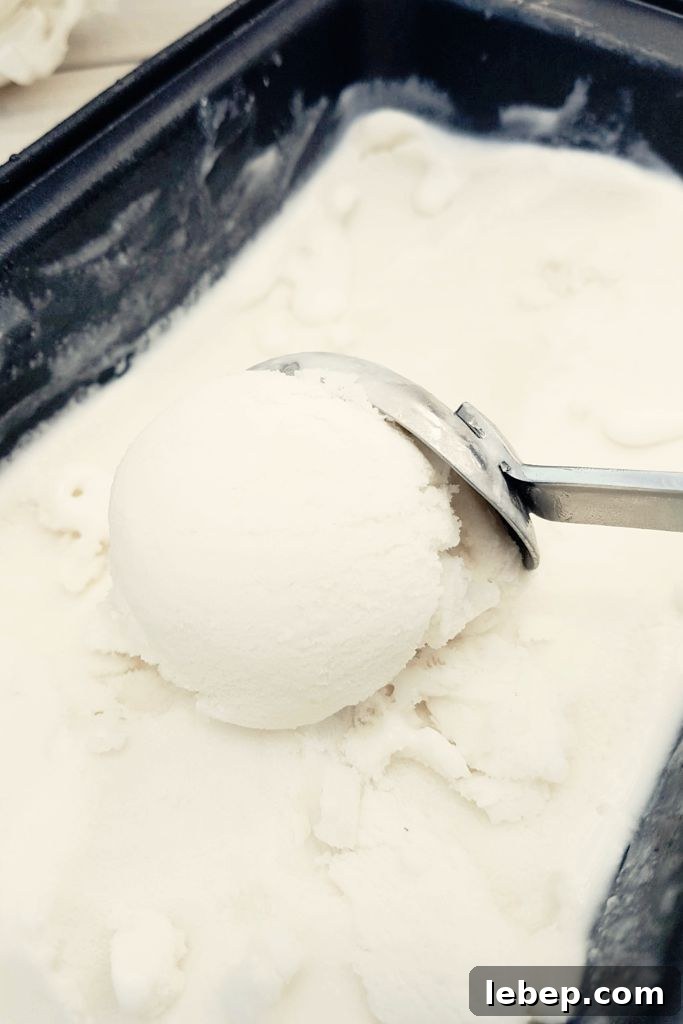
Transfer the churned ice cream to a suitable container, press a sheet of wax or baking paper onto the surface to prevent ice crystals, then freeze for about 2 hours to firm up. To serve, let it soften a few minutes, then scoop and enjoy with extra lemon zest, fresh berries, mint or simply by itself.
Notes
**Covering the ice cream with wax or baking paper prevents ice crystals on the surface.
***Nutrition values are estimates based on the ingredients used.
Nutrition