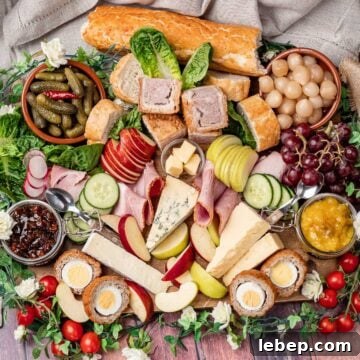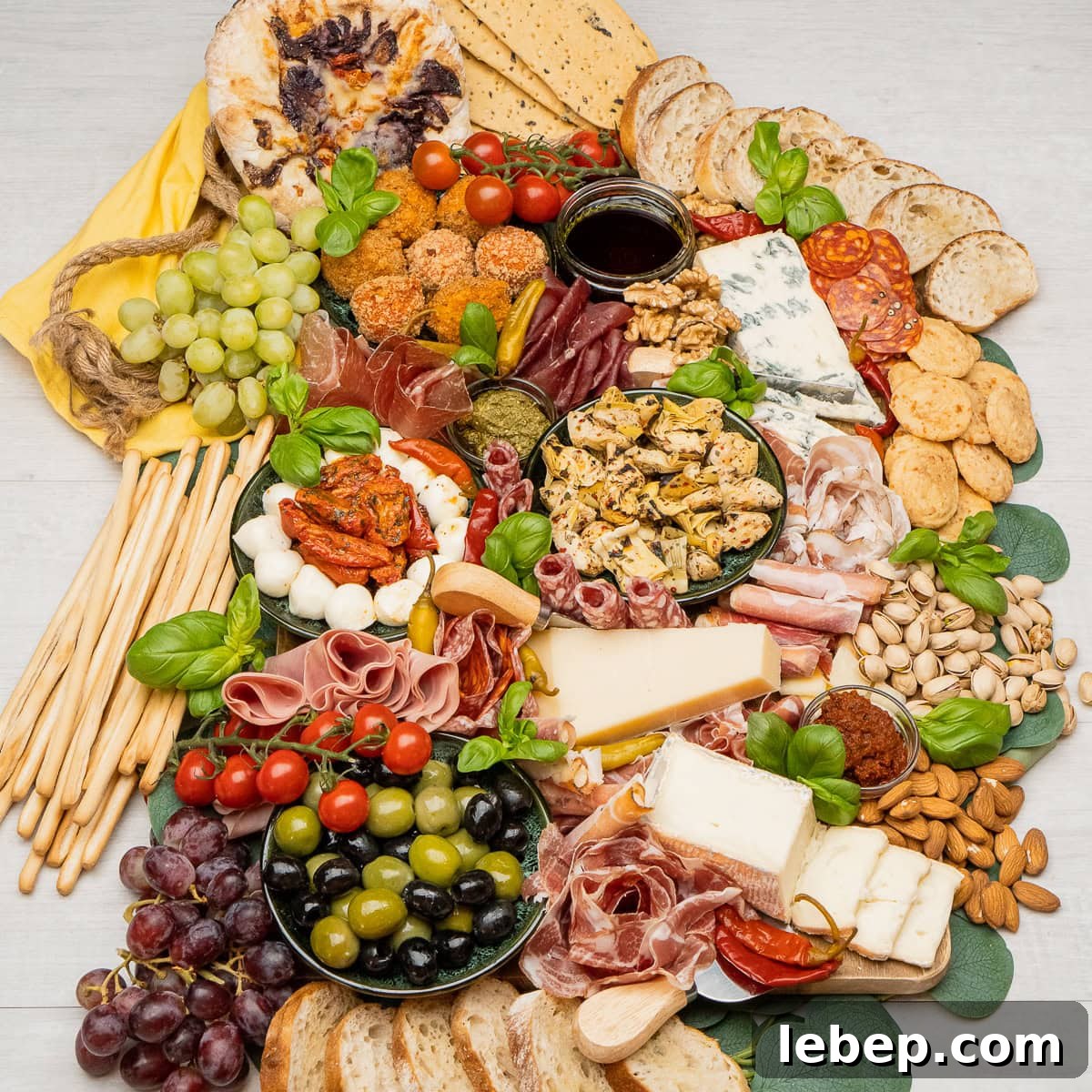
Our antipasto platter brings the best of Italy to your table: cured meats, a selection of cheeses, vibrant vegetables, olives, nuts, fruit and crusty bread. It’s a simple, stylish way to feed a crowd and celebrate flavour.
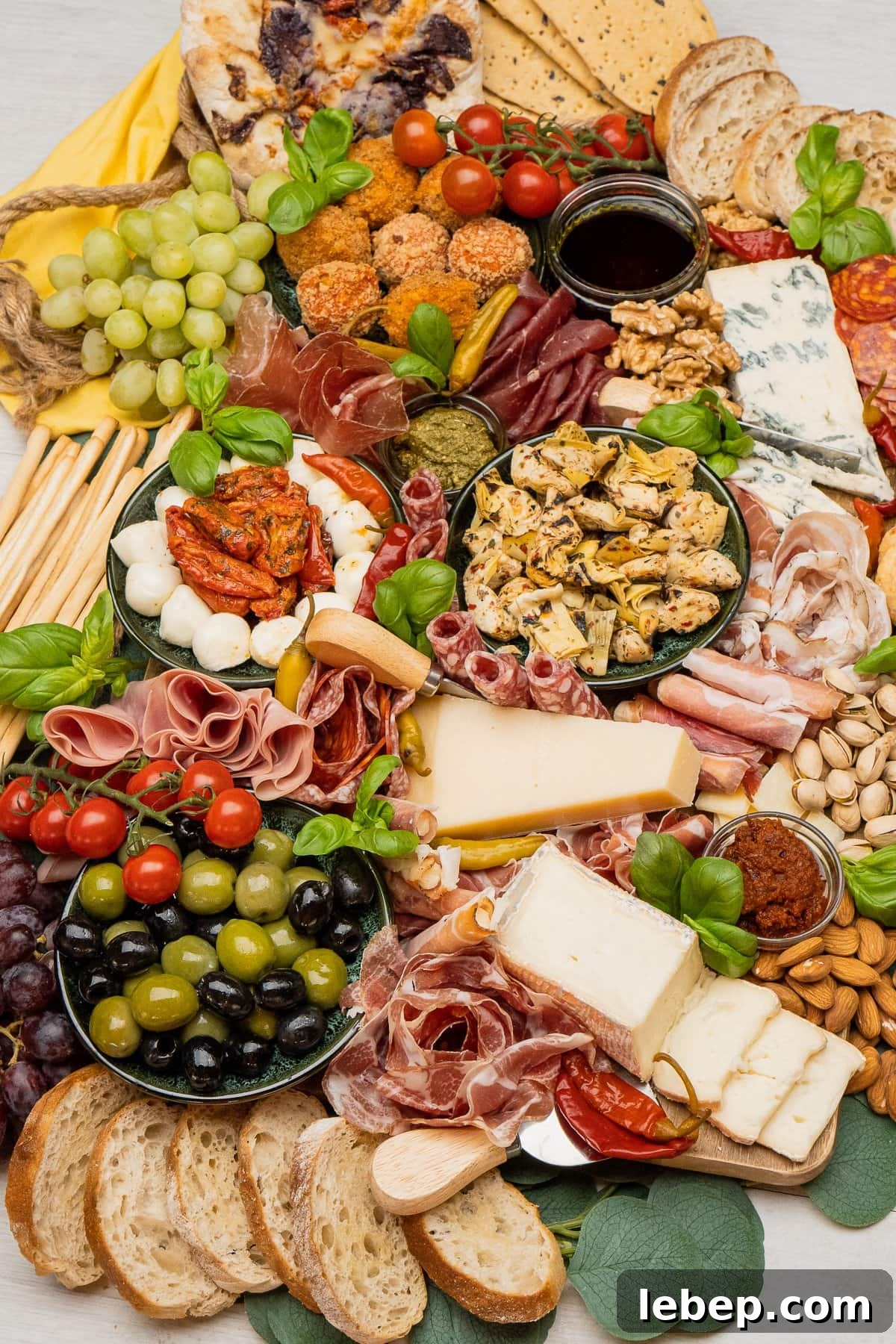
If you’ve wanted to build an authentic Italian antipasto platter but didn’t know where to begin, this guide will walk you through everything—ingredients, assembly and presentation.
Perfect for entertaining or a relaxed family meal, this guide shows how to assemble an Italian meats and cheese board with all the classic accompaniments for an authentic antipasto experience.
Step-by-Step Recipe
Italian Antipasto Platter
The essential guide to creating a beautiful Italian antipasto platter. From choosing cheeses and cured meats to arranging vegetables, dips, bread and fruit, learn how to offer a balanced variety of flavours and textures. Great for parties, brunch or a shared main.
Serves: 8 • Prep time: 15 mins • Total time: 15 mins
Equipment
- Large cheese or serving board
- Small bowls or glass jars for olives, artichokes and dips
- Cheese knives and serving utensils
- Small dishes for pesto, tapenade and oil
Ingredients (serves 8)
Cheeses
- 150 g Gorgonzola
- 150 g Taleggio
- 150 g Mozzarella balls
- 150 g Grana Padano
Italian meats
- 100 g Mortadella
- 100 g Italian salami selection (e.g. Milano, Napoli, Calabrian)
- 200 g Italian cured meats (Pancetta, Prosciutto, Coppa, Bresaola)
- 100 g Italian pepperoni
Nuts & fruit
- 500 g grapes
- 200 g piccolo tomatoes
- 100 g sundried tomatoes
- 70 g pistachios (in shell)
- 70 g walnuts
- 70 g almonds
Vegetables
- 40 g pickled chilli peppers
- 180 g marinated artichokes
- 150 g Queen Nocellara olives
- 150 g black olives
- 25 g fresh basil leaves
Bread
- 300 g focaccia
- 200 g bruschetta or sliced ciabatta
- 100 g breadsticks
- 100 g flatbread
Dips & finishing
- 30 g extra virgin olive oil
- 1 tbsp balsamic vinegar
- 2 tbsp green pesto
- 2 tbsp olive & tomato tapenade
Extras
- Prosciutto & cheese rolls or crackers (optional)
- Arancini balls or savoury bites (optional)
- 1 bottle Prosecco (optional)
Instructions
- Gather equipment: board, small bowls, cheese knives and serving spoons.
- Prepare your board: lay down a cloth or some foliage for colour and place the board centrally.
- Place items that need containers first: olives, marinated artichokes, mozzarella balls, arancini and sundried tomatoes into small bowls and set them on the board.
- Arrange cheeses next. Place whole wedges and slice a few pieces so guests can serve themselves. Leave cheese knives nearby.
- Create visual interest with cured meats: use a small glass to form a “flower” with folded slices, tip it upside down to release and fan out other sliced meats. Roll or fold different types for variety and prop some pieces against cheeses or bowls.
- Fill small bowls with pesto, tapenade and olive oil mixed with balsamic vinegar for dipping.
- Fill gaps with fruits, nuts and fresh vegetables: grapes, piccolo tomatoes, pistachios, walnuts, almonds, pickled chillies and fresh basil add colour and texture.
- Tuck breads and crackers around the edge of the board: focaccia, bruschetta slices, breadsticks and flatbread make great vehicles for the toppings.
- Finish with any extra crackers or savoury biscuits and place chilled Prosecco or chosen wines nearby for serving.
Presentation tips
- Group like items together for visual impact and to make selection easy for guests.
- Vary heights with small bowls and stack breads or crackers.
- Use fresh herbs or edible flowers for a final touch of colour.
- Label cheeses and meats if hosting a larger group.
Wine pairing
Choose wines that match the range of flavours on your board:
- Sparkling: Prosecco or Asti for a light, refreshing start.
- White: Pinot Grigio for lighter cheeses; Friulano with cured meats.
- Rosé: A dry rosé pairs well with medium cheeses and mixed platters.
- Red: Chianti for bold cheeses like Gorgonzola; Pinot Noir with mature cured meats.
Storage
Follow storage advice on packaging for individual items. Serve meats and cheeses at room temperature (remove from the fridge 20–30 minutes before serving) to enhance flavour. Store leftover meats and cheeses in the fridge; keep breads and nuts at room temperature in airtight containers. Vegetables and fruit should be refrigerated.
Nutrition (per serving, approximate)
Calories: 800 kcal • Carbohydrates: 70 g • Protein: 48 g • Fat: 50 g
Tried this recipe? Share an image on social media and tag the creator!
This antipasto platter recipe was originally posted on 15th May 2024 and updated on 25th February 2025.
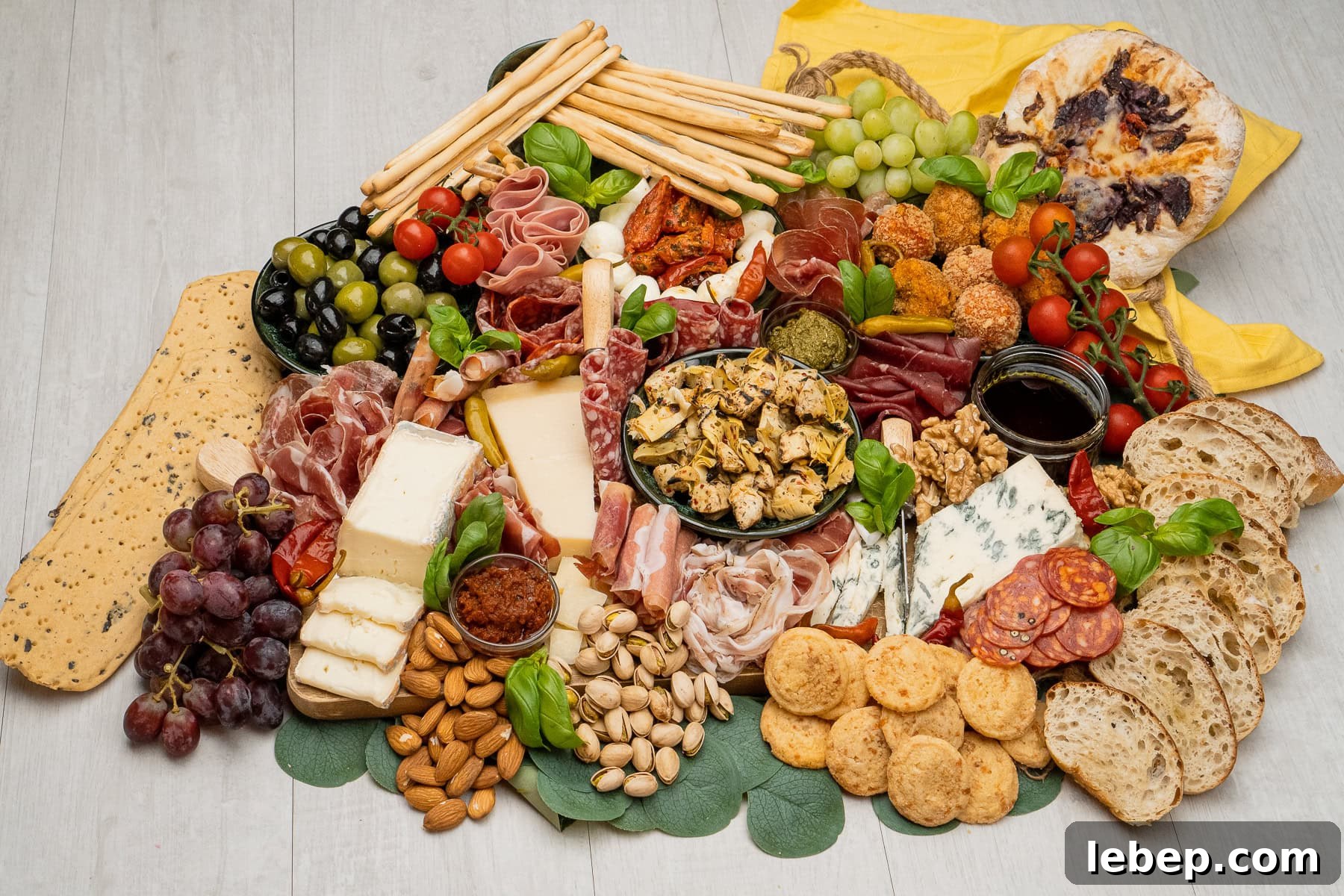
What is Antipasto?
Antipasto is an Italian starter served before the main course. It’s meant to whet the appetite and can range from a simple selection of olives and cheese to an abundant spread that becomes the meal itself—ideal for summer entertaining when you want to avoid cooking.
Arranging the Platter
Start with bowls for wet items, then place cheeses and cured meats. Use height and colour to guide the eye and fill gaps with fruit, nuts and fresh herbs. Tuck bread around the edge so everything is easy to reach.
Choosing Italian Ingredients
A varied selection of cheeses and cured meats is the heart of a great antipasto. Quality matters—look for authentic Italian cheeses and an assortment of cured meats to provide contrast in flavour and texture.
Italian Cheeses to Include
Consider a mix of soft, creamy and hard cheeses: Taleggio for creaminess, Grana Padano for texture, mozzarella balls for freshness and Gorgonzola for a bold blue option. Other choices: Ricotta Salata, Fontina, Provola or Burrata when available.
Italian Meats to Include
Pick a range of textures and tastes: Mortadella, Prosciutto di Parma, Coppa, Pancetta, Bresaola, various salamis and a spicy pepperoni. Fold or roll slices for a polished presentation and create a “flower” using a small glass to add visual interest.
Dips
Essential dips include green pesto, olive & tomato tapenade, and high-quality extra virgin olive oil with balsamic vinegar for dipping bread. Ricotta dip, bagna cauda or cannellini bean dip are tasty alternatives.
Vegetables
Marinated artichokes, pickled chillies, Queen Nocellara and black olives, plus fresh basil, add colour, acidity and brightness to the board. Roasted peppers, cherry tomatoes or carrot sticks are easy additions.
Nuts & Fruit
Grapes, piccolo tomatoes, sundried tomatoes, pistachios, walnuts and almonds add sweet and crunchy contrasts that balance savoury meats and rich cheeses. Dried fruits like apricots or figs and fresh apples or oranges make lovely seasonal additions.
Italian Bread
Bread completes the antipasto: focaccia, bruschetta or grilled ciabatta, flatbreads and breadsticks are all excellent choices to serve alongside the board.
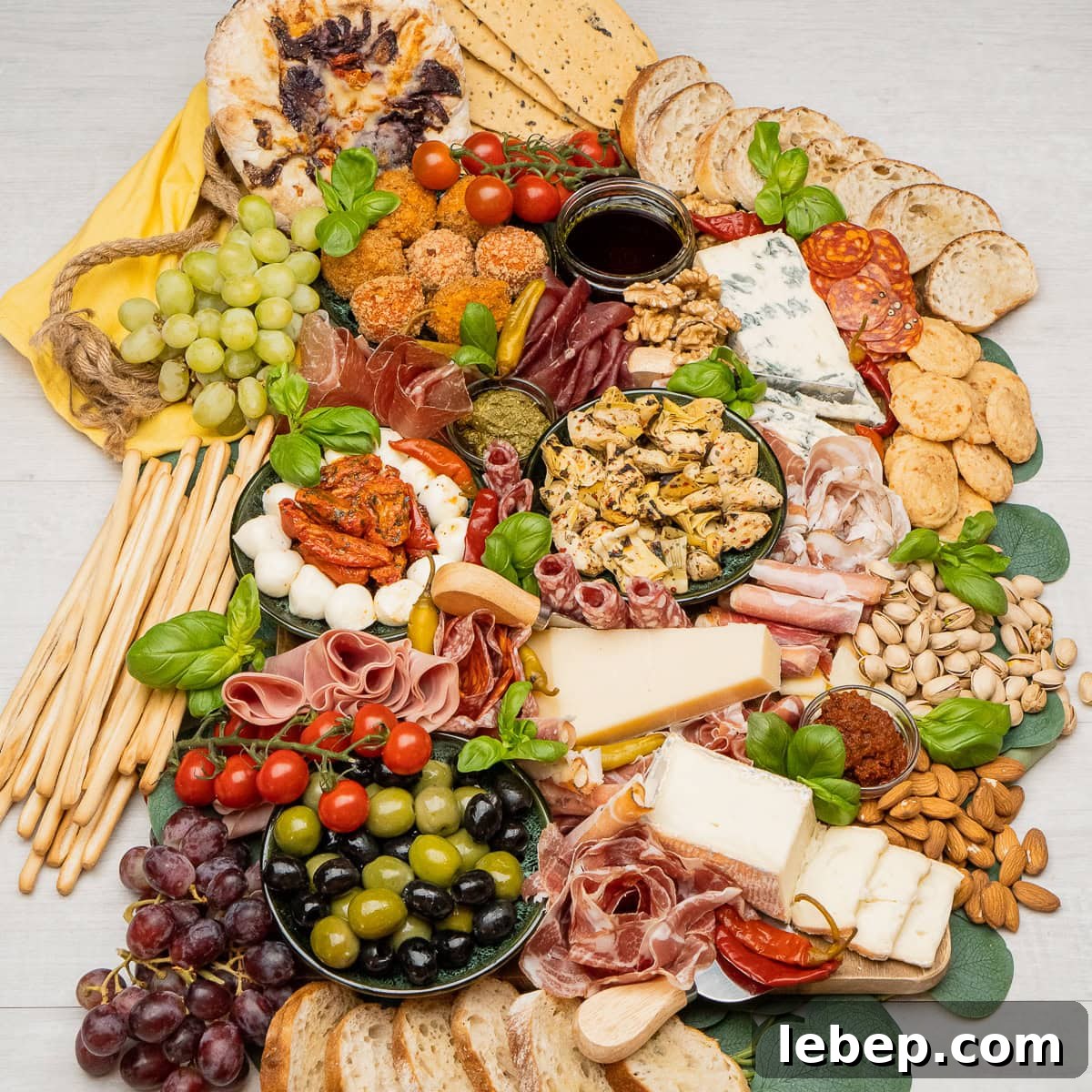
Antipasto is about sharing and enjoying variety. Use this guide as a template and adapt quantities and items to suit your guests and tastes.
Storage & Serving Notes
Serve meats and cheeses within 20–30 minutes of removing from the fridge to allow flavours to open. Refrigerate leftovers promptly and store breads at room temperature. Follow any product-specific storage guidance on packaging.
More Platter Ideas
 Ploughman’s Lunch Cheese Platter
-
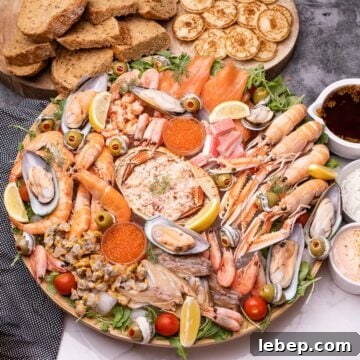
Seafood Platter (Fruits de Mer)
-
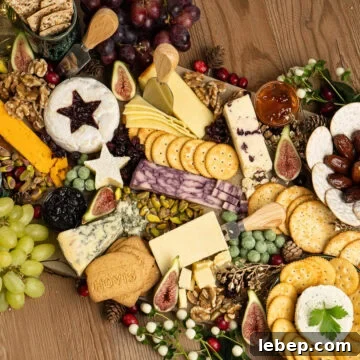
Christmas Cheese Board Grazing Platter
-
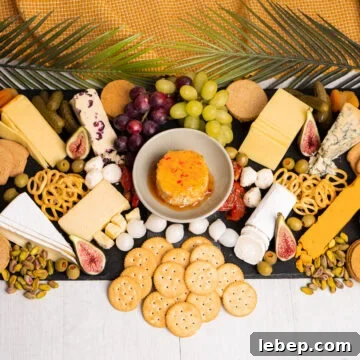
Cheese Board Ideas