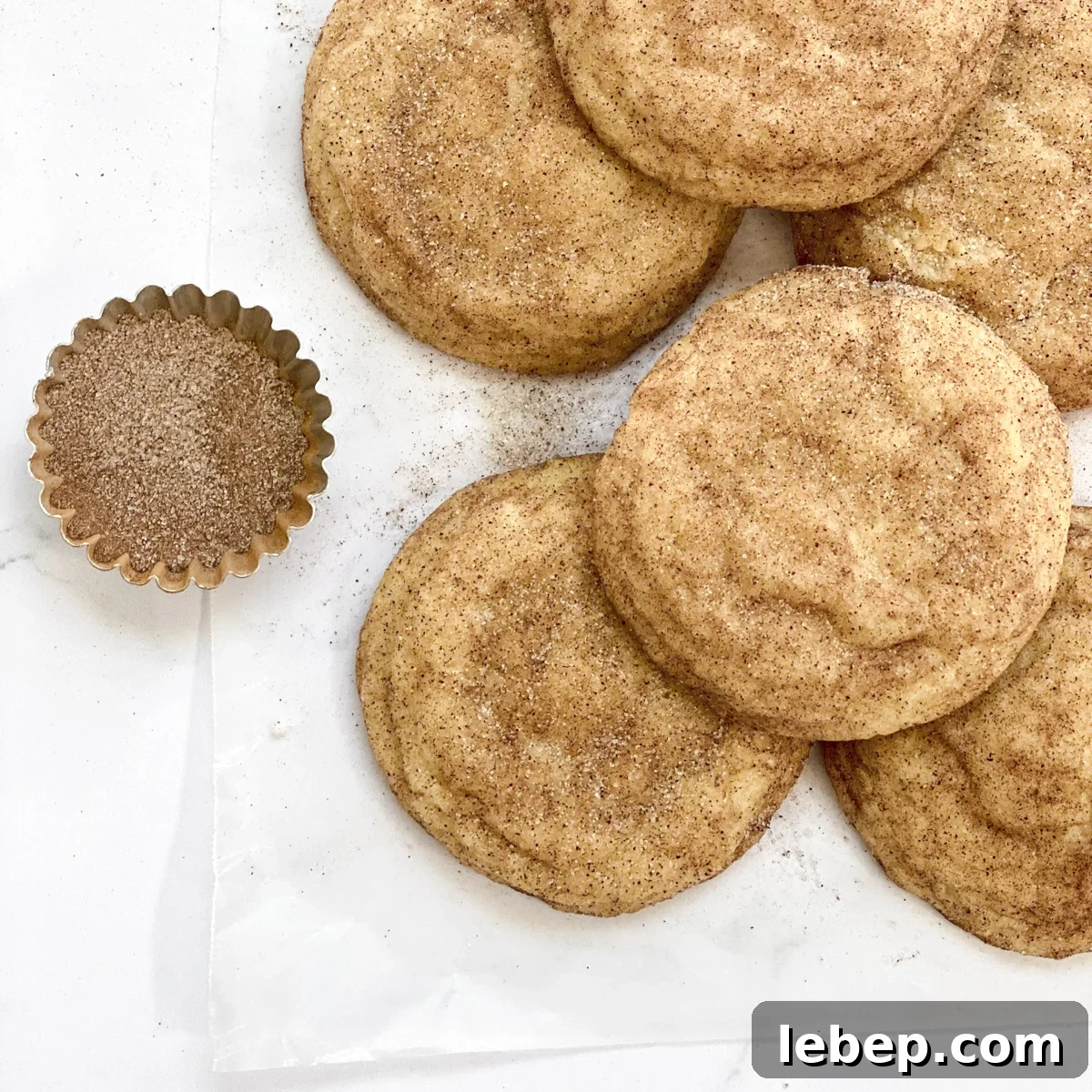
These snickerdoodle cookies (made without cream of tartar) use baking powder as a substitute. They are sweet, chewy, and rolled in a cinnamon-sugar coating for a warm, comforting flavor.
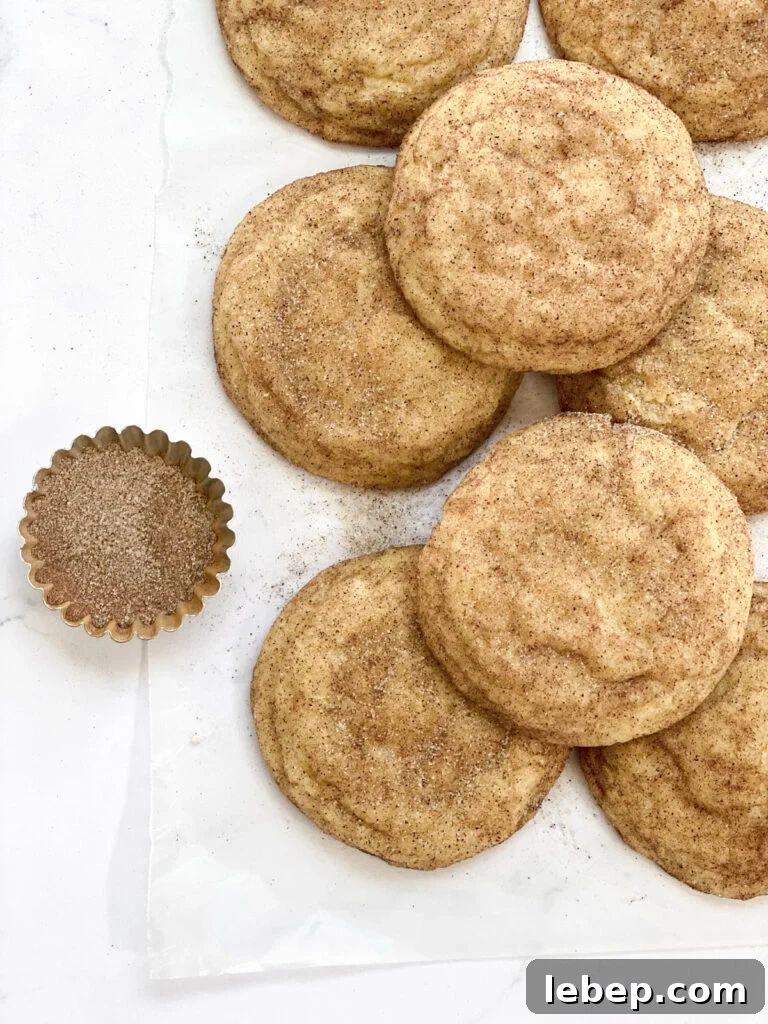
These snickerdoodles are quick to prepare and bake into tender, slightly crisp-edged cookies with a soft center. Instead of using the classic cream of tartar and baking soda combination, this version relies on baking powder for lift and a reliable, consistent texture.

Why you will love these
Common pantry ingredients: This recipe uses basic ingredients most home bakers already have, no cream of tartar required.
Fast and simple: No chilling time is needed; you can mix, scoop, and bake in under 30 minutes.
Cinnamon-sugar coating: Rolling each dough ball in cinnamon and sugar gives a classic snickerdoodle appearance and irresistible flavor.
Ingredient notes
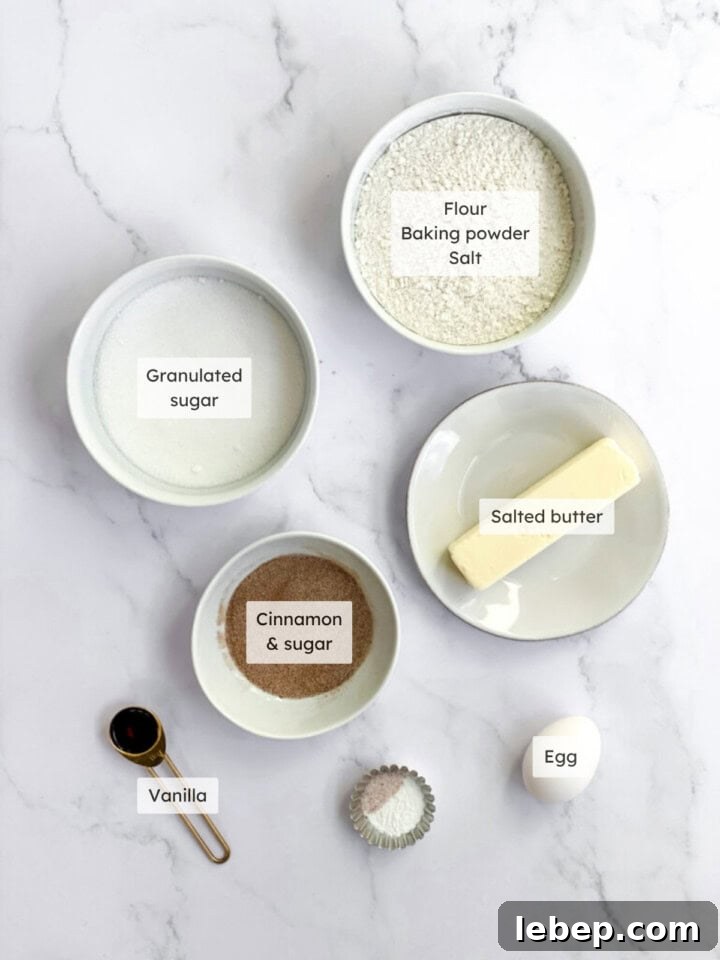
- Butter: Use room-temperature butter that’s softened but not greasy—about an hour at room temperature works well.
- Sugar: Granulated sugar is all you need for the dough and for the cinnamon-sugar coating.
- Egg: A room-temperature egg blends more evenly into the batter.
- Baking powder: This replaces cream of tartar (and baking soda) as the leavening agent.
- Flour: For dependable results, weigh your flour or spoon it lightly into the measuring cup to avoid dense or overly flat cookies.
Step-by-step instructions
Step 1 — Prep pans and oven. Preheat the oven to 350°F (175°C). Line two baking sheets with parchment paper.
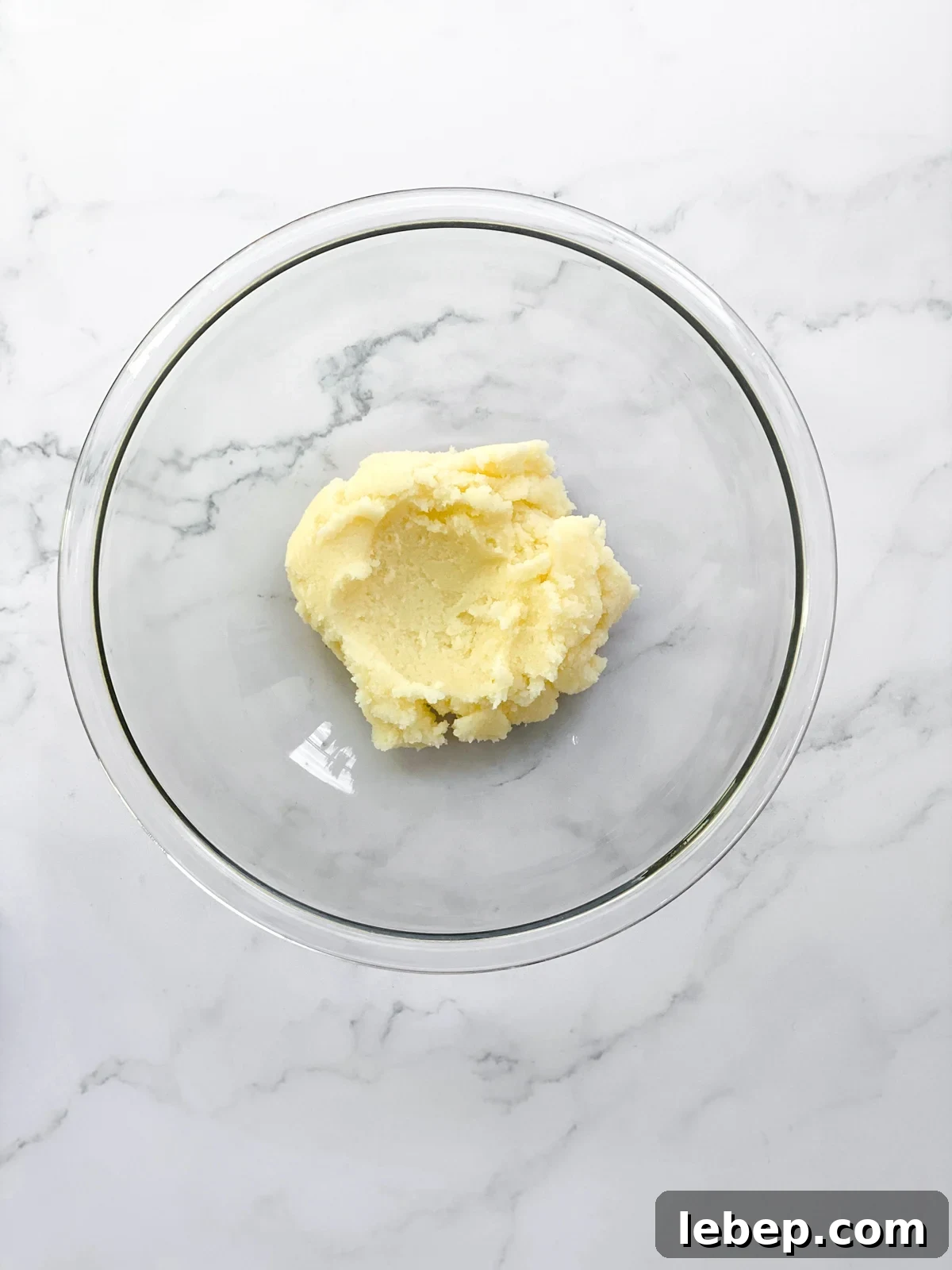
Step 2 — Cream butter and sugar. In a stand mixer fitted with the paddle attachment (or in a large bowl with a hand mixer), beat the butter and granulated sugar on medium-high until light and fluffy, about 3 minutes. Add the egg and vanilla and mix on low until combined, about 30 seconds.
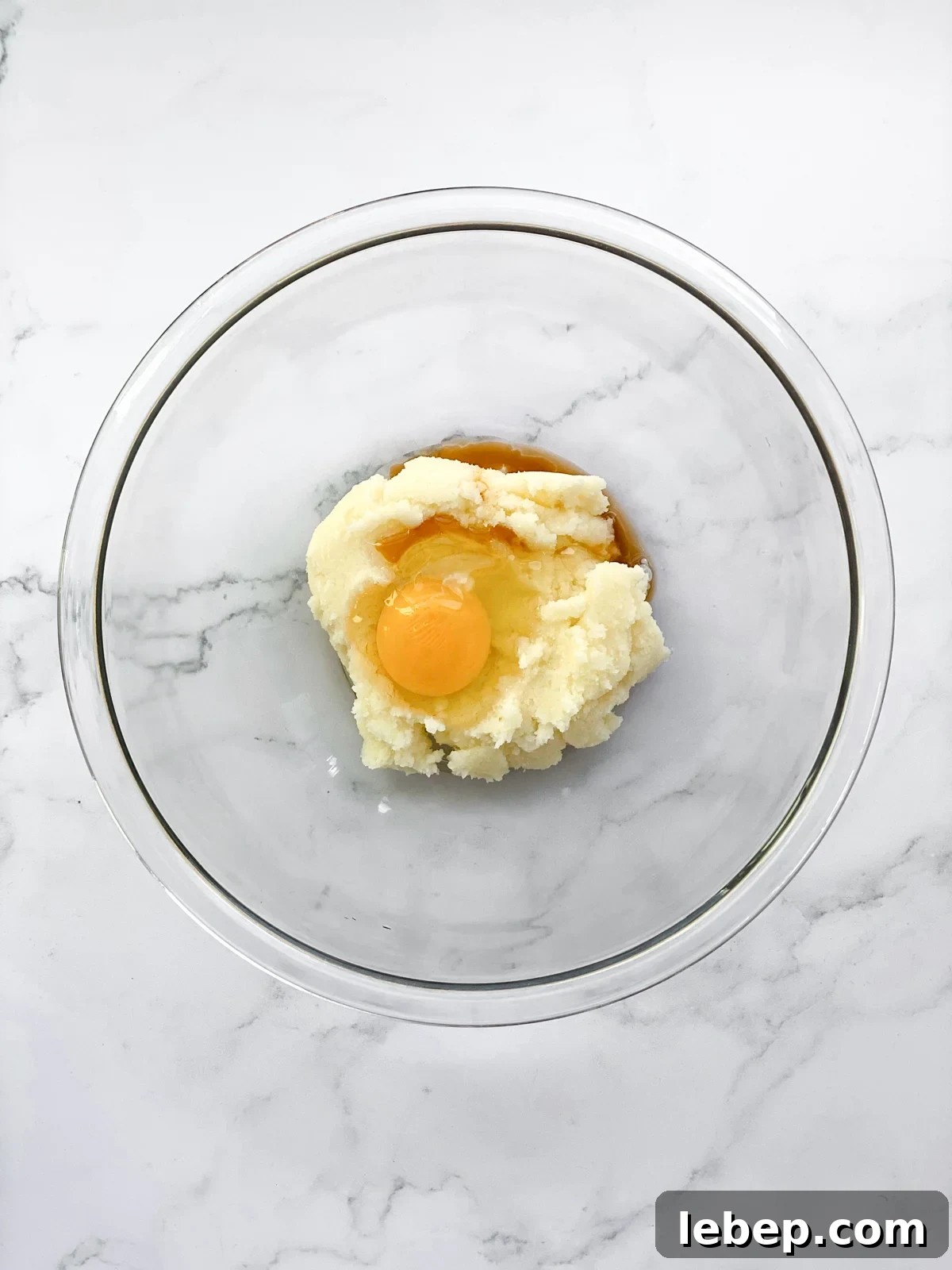
Step 3 — Add dry ingredients. Gradually add the baking powder, salt, and flour on low speed, mixing just until incorporated. Stop when there are a few streaks of flour left visible to avoid overmixing; the dough should be cohesive and slightly soft.
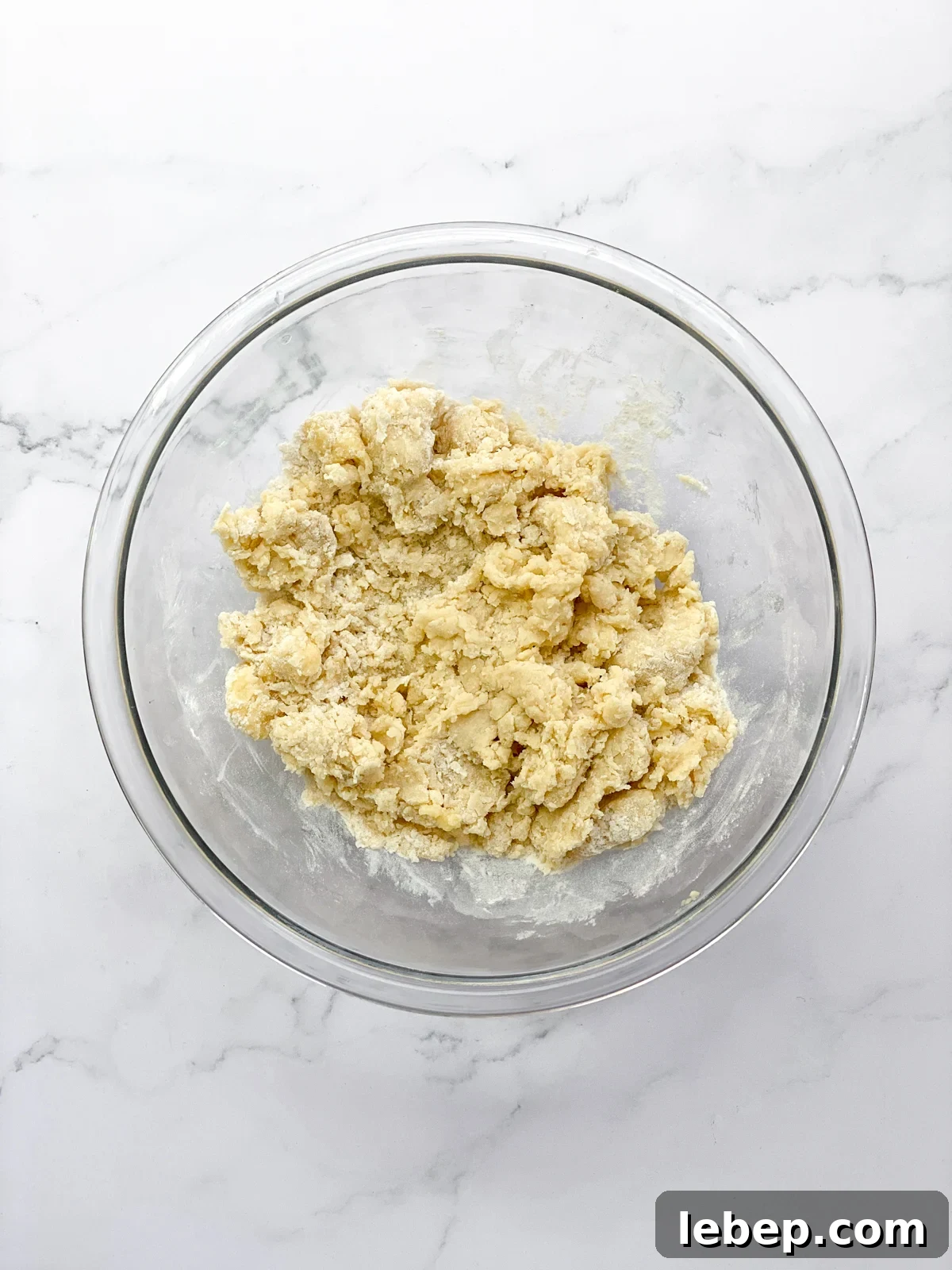
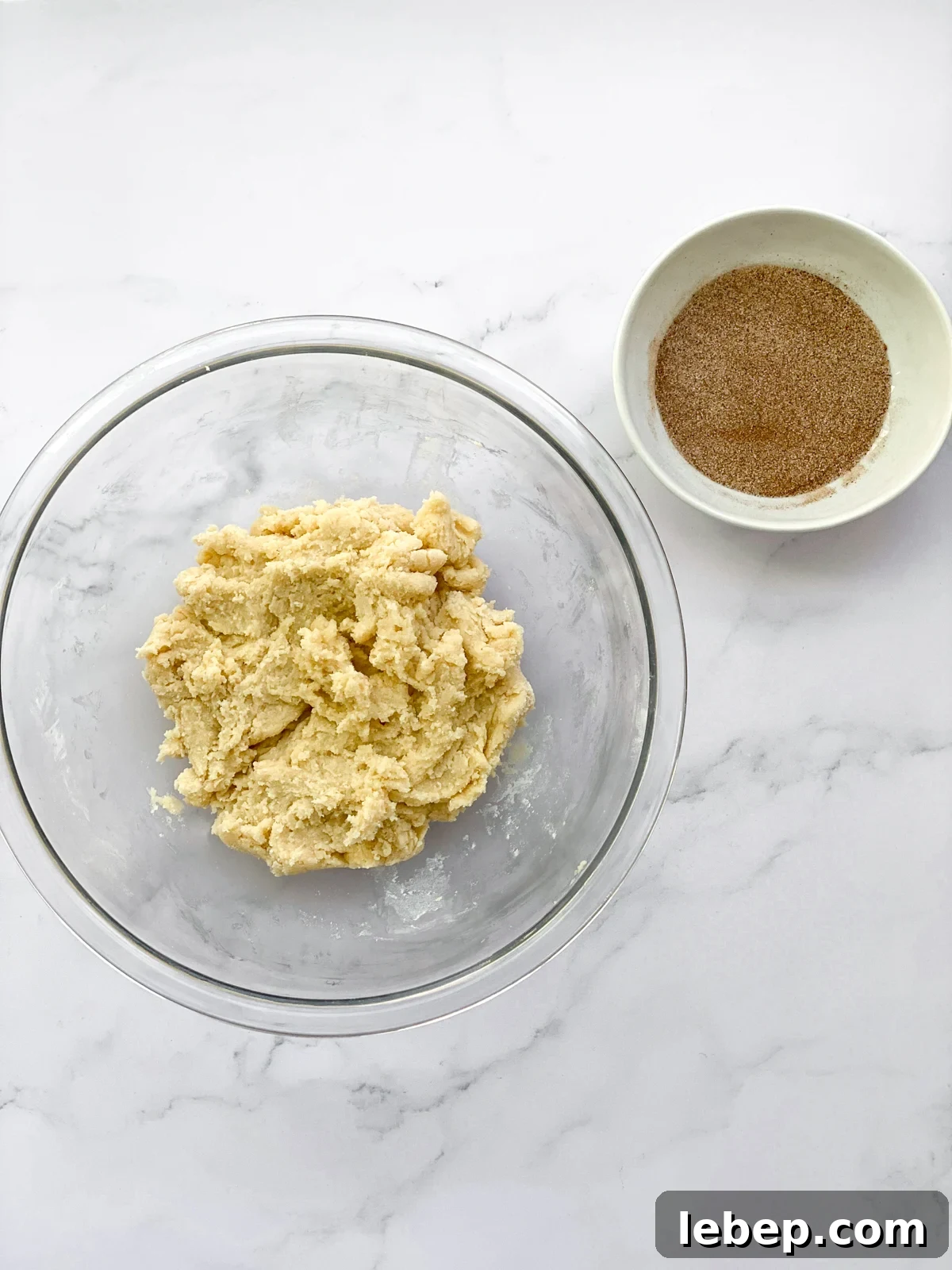
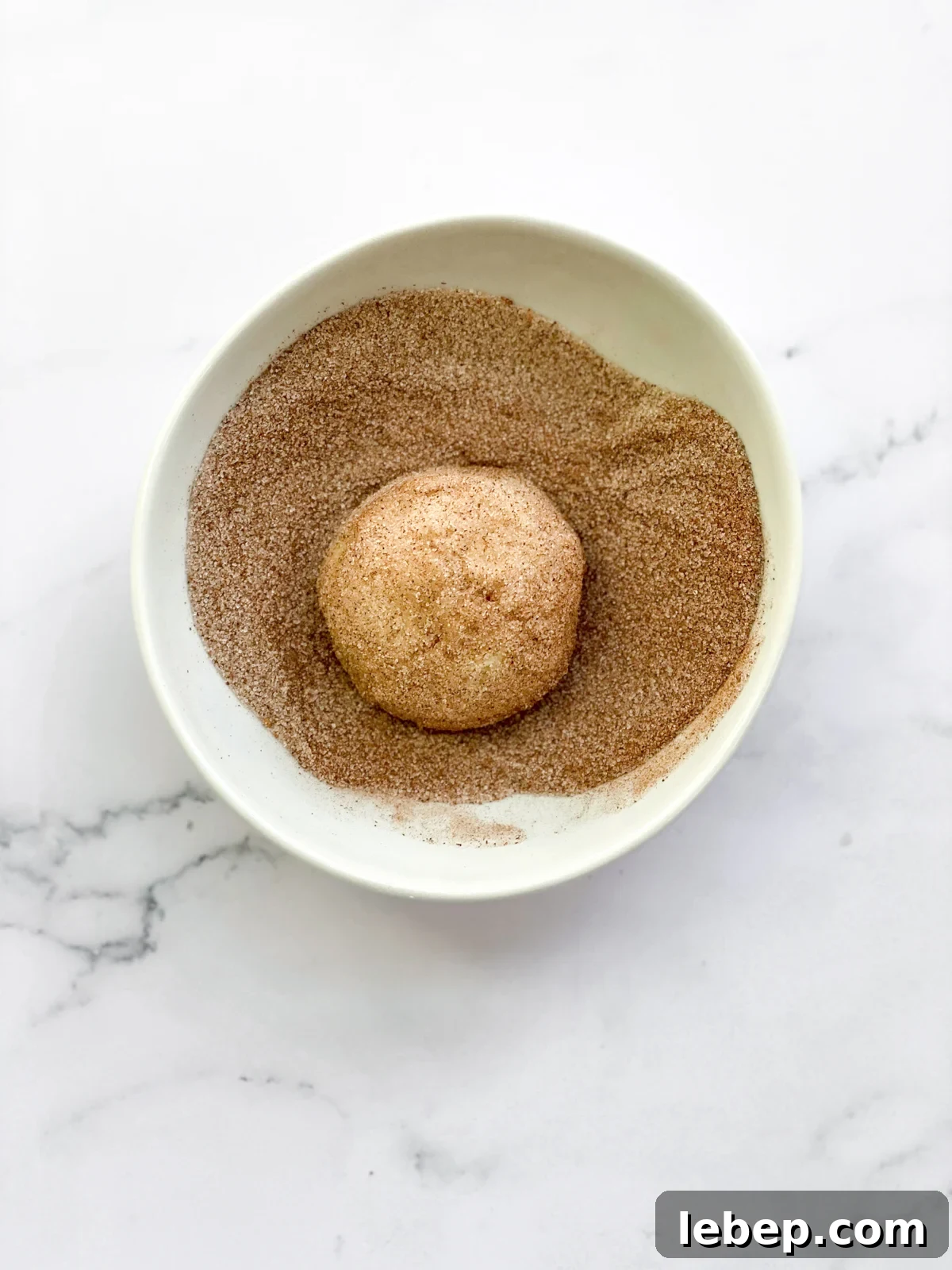
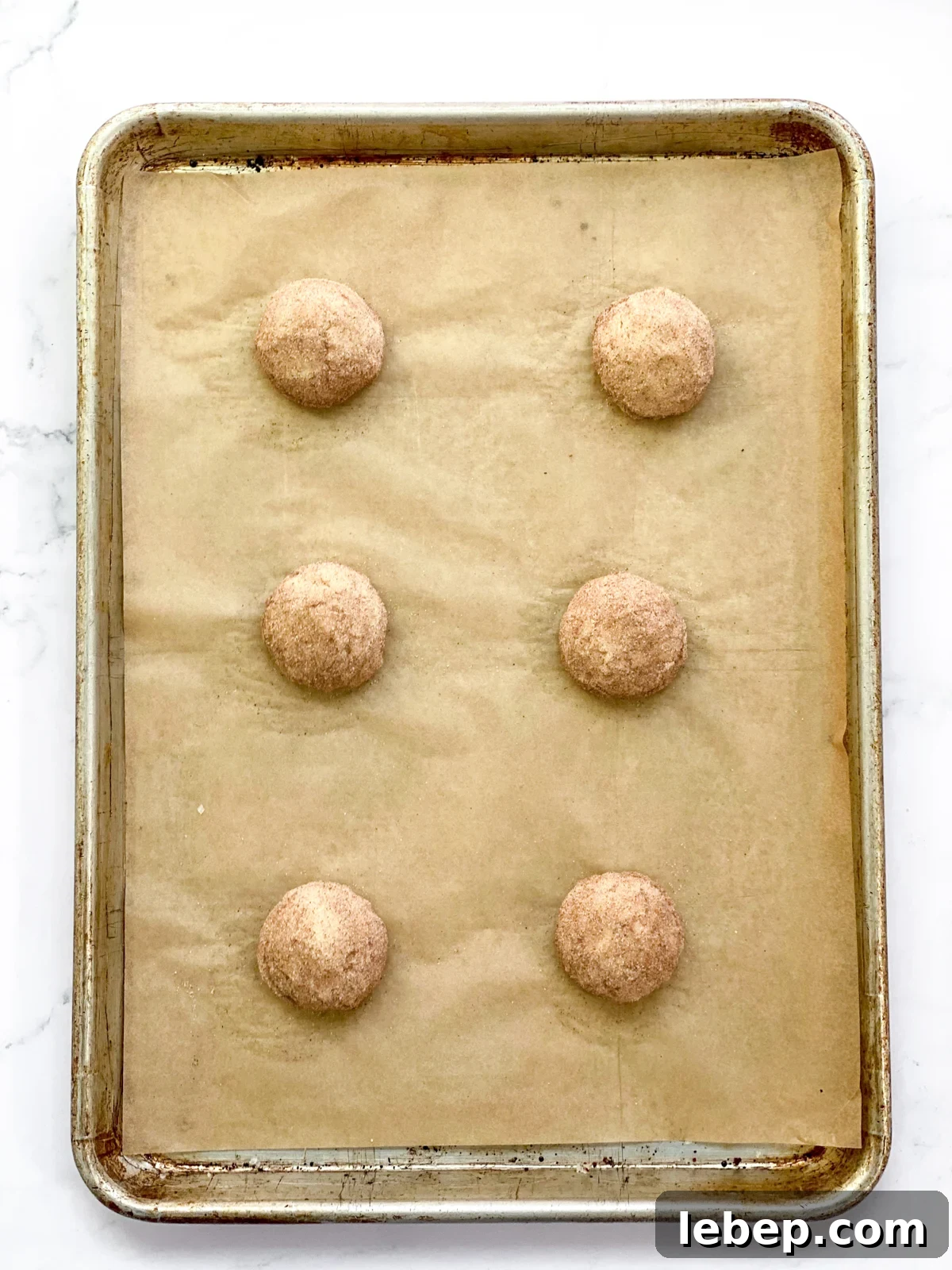
Step 4 — Shape and coat. Scoop the dough into large balls; a 3-tablespoon scoop makes generously sized cookies. Roll each ball in the cinnamon-sugar mixture until evenly coated.
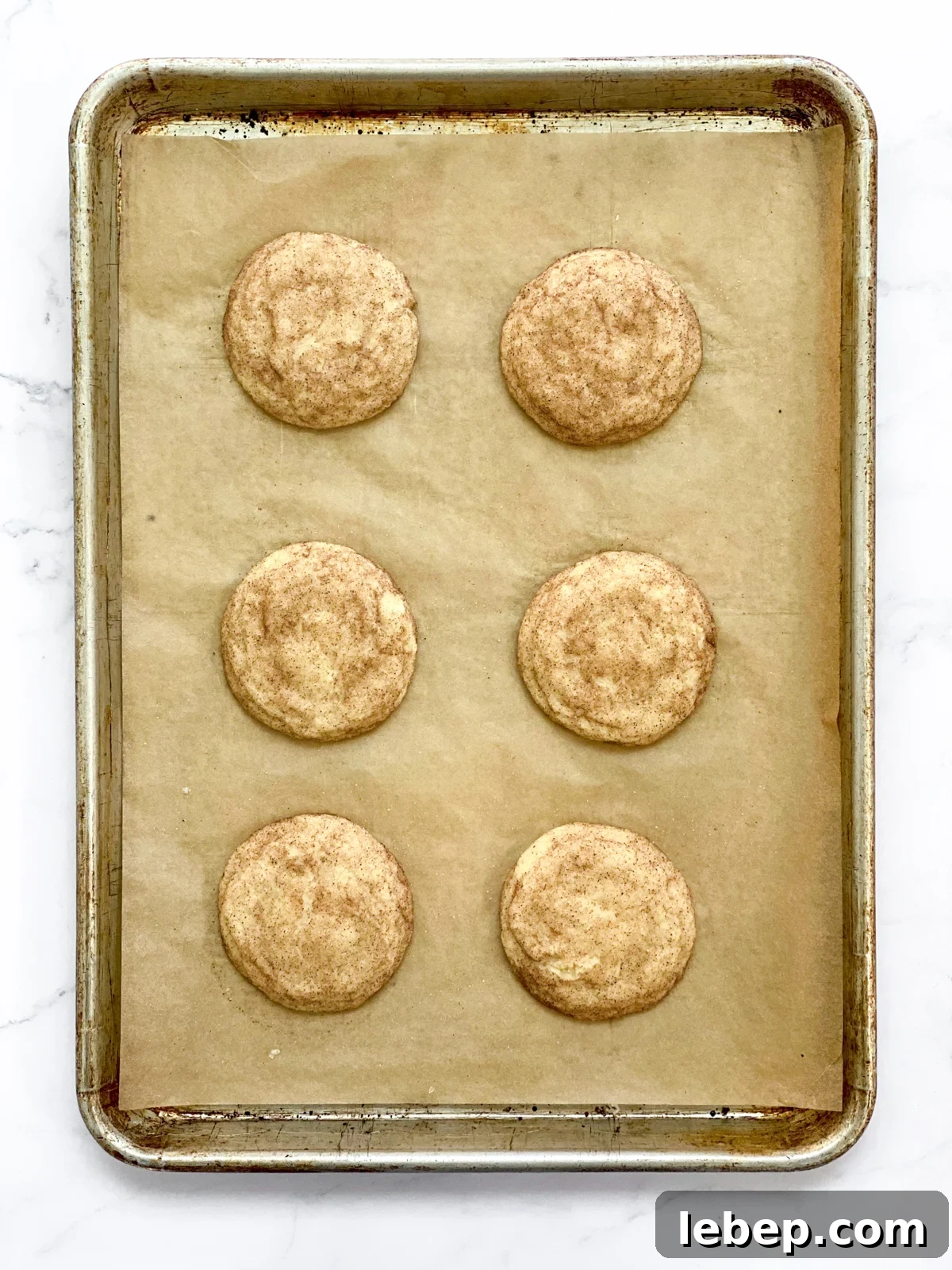
Step 5 — Bake. Arrange 6–8 dough balls per sheet, leaving space for slight spreading. Bake 10–13 minutes, until the edges are lightly golden. Remove from the oven while centers still look slightly soft to preserve a chewy texture.
Expert baking tips
Bring butter and eggs to room temperature (about 45–60 minutes) so they cream together smoothly. Use grams for the most consistent flour measurement; if you don’t have a scale, spoon the flour into the cup and level it off to avoid packing.
If the cookies puff up in the oven, give the baking sheet a firm tap on the counter right after removing it from the oven to encourage them to settle and create a tender center.
FAQ
Snickerdoodles are rolled in a cinnamon-sugar mixture before baking, giving them a distinctive spiced crust; sugar cookies are typically rolled or coated only in granulated sugar or left plain.
Snickerdoodles, sometimes spelled snip doodles, date back to the 1800s and are believed to have German roots. Their name and origin have evolved over time.
If you omit both cream of tartar and baking powder, cookies will likely spread and become flat. Cream of tartar and baking powder both help cookies rise and stay tender.
Storing and freezing
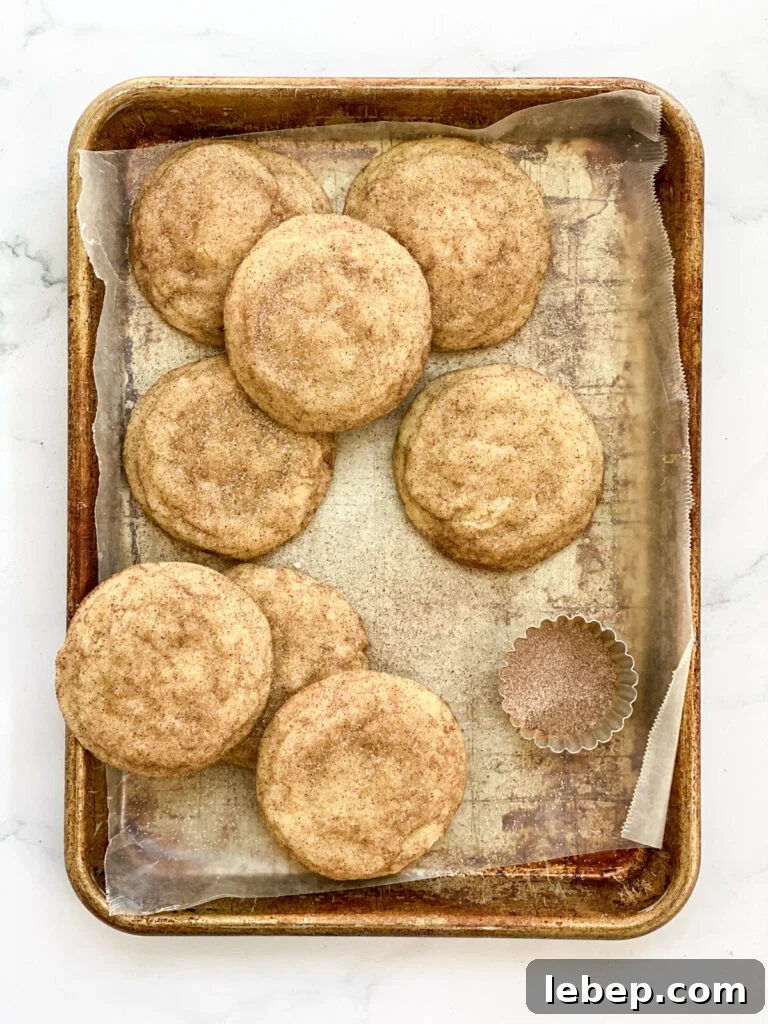
Store baked cookies in an airtight container at room temperature for 3–4 days to keep them fresh. Dough can be prepared ahead and refrigerated; if storing dough, do not roll it in cinnamon-sugar until just before baking.
Freezing
Freeze baked cookies in an airtight container for 2–3 months. You can also freeze scooped dough balls on a tray, then transfer to a sealed container so you can bake as many as you need later.

Other popular cookie recipes to try
The Best Ginger Molasses Cookies
Salted Brown Sugar Cookies
No Butter Chocolate Chip Cookies
Share your results on social media and tag the original author if you’d like to show off your batch. If you try this recipe, consider leaving a star review to help others find it.
Snickerdoodle Cookies (without cream of tartar)
These snickerdoodle cookies without cream of tartar are made by substituting baking powder. They are sweet, chewy, and rolled in cinnamon and sugar.
Ingredients
- ½ cup (113.5 g) butter, room temp
- ¾ cup (150 g) granulated sugar
- 1 large egg, room temp
- 1 tsp vanilla
- 1 tsp baking powder
- ¼ tsp salt
- 1⅓ cups (185 g) all-purpose flour
Cinnamon/Sugar Mixture
- 3 tbsp granulated sugar
- ½ tbsp (0.5 tbsp) ground cinnamon
Instructions
- Preheat oven to 350°F. Line two baking sheets with parchment paper.
- Cream the butter and sugar until light and fluffy, about 3 minutes.
- Add the egg and vanilla; mix on low until combined, about 30 seconds.
- Slowly add baking powder, salt, and flour and mix until just incorporated. Stop while a few streaks of flour remain visible.
- Scoop dough into large balls (about 3 tablespoons), then roll in the cinnamon-sugar mixture.
- Place 6–8 cookies per sheet and bake 10–13 minutes until edges are lightly golden. Do not overbake to keep a chewy center.
Notes
Allow butter and eggs to come to room temperature (about 45–60 minutes) for best results. Weights in grams are more precise for flour measurements; if using cups, spoon flour lightly into the cup and level.
Nutrition
Calories: 224 kcal
Carbohydrates: 32 g
Protein: 2 g
Fat: 10 g