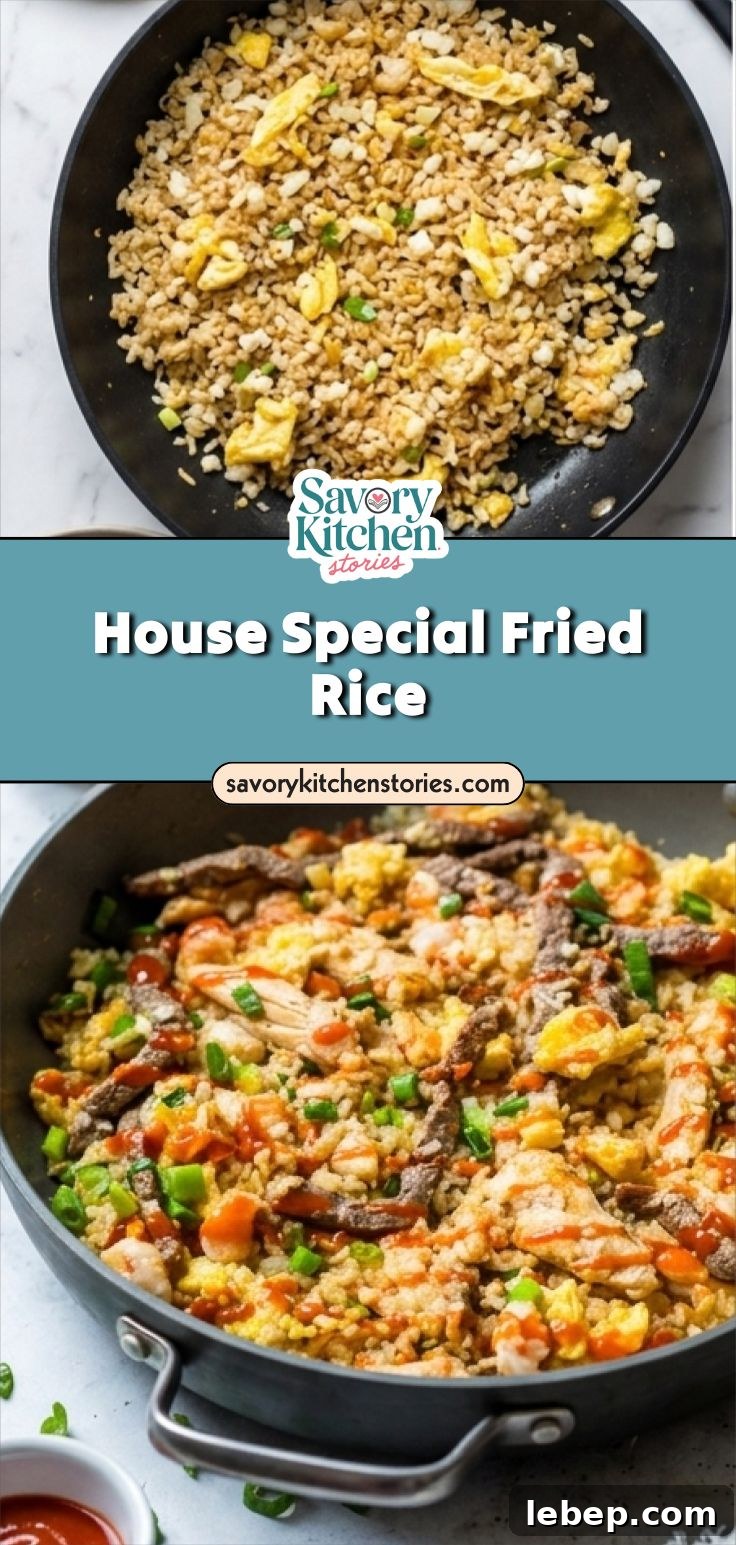
I still remember the first time I made this House Special Fried Rice for friends; it felt like a small celebration in my kitchen. Seared steak, tender chicken, and plump shrimp folded into browned rice and riced cauliflower create a comforting, layered dish I return to again and again. Toasted sesame oil and rice vinegar lift the flavors, and once the mise en place is done, the cooking goes quickly. If you like a balance of textures and bold, harmonious flavors, this recipe will become a reliable weeknight favorite.
How This Recipe Became My Rainy-Day Favorite
One rainy afternoon, the kitchen filled with the warm aromas of soy sauce and garlic. I seared the steak first so the air smelled caramelized, then cooked the chicken and shrimp, each releasing savory steam. The rice developed crisp patches and, when I folded in beaten eggs, the pan shimmered with gold. We ate straight from the skillet, laughed, and traded stories while scallions added a bright counterpoint. That memory is why I make this House Special Fried Rice when I want food that feels indulgent and homey.
The Ingredients That Make It Sing
- Shrimp: Provides sweet, briny flavor and quick-cooking protein. Substitute scallops or firm tofu for variety; choose translucent shrimp and pat them dry.
- Chicken breast: Lean and tender when thinly sliced; use thigh meat for extra richness. Slice against the grain for the best texture.
- Sirloin steak: Adds beefy depth and caramelized edges. Flank or skirt steak work well if sliced thin; pick well-marbled cuts for more flavor.
- Brown rice and riced cauliflower: Brown rice gives chew and nuttiness while cauliflower lightens the dish. Day-old cold rice yields the best texture.
- Aromatics and seasonings: Ginger, garlic, scallions, soy, rice vinegar, and toasted sesame oil create the dish’s savory-sour-sesame profile.

Essential Tools for This Dish
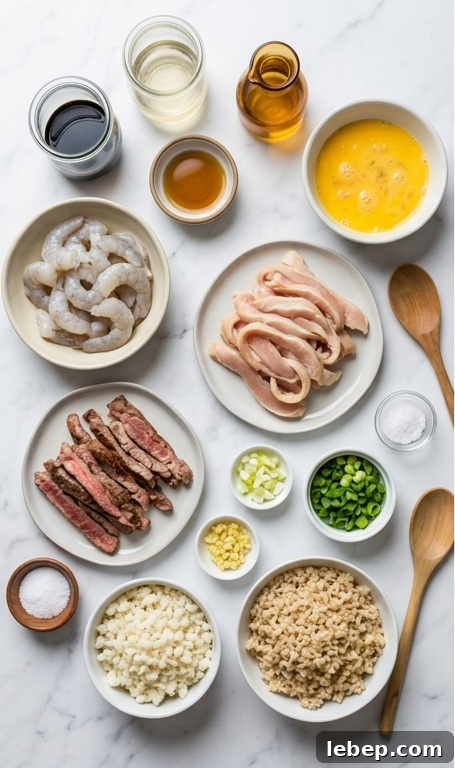
A few reliable tools make this fried rice effortless. A large wok or heavy skillet is essential; its hot surface lets proteins sear and rice crisp. Use a sturdy spatula or wooden turner to toss and fold without breaking the grains. Prep bowls keep proteins and aromatics organized so nothing crowds the pan. A sharp chef’s knife and a stable cutting board speed up slicing. If you lack a wok, a large cast-iron skillet or nonstick pan will work; a splatter screen is helpful when searing at high heat.
Step-by-Step Preparation Guide
Step 1: Roll and thin-slice the proteins
Roll the chicken and sirloin into tight cylinders and slice crosswise into 1/4-inch strips so they cook quickly and evenly. Pat peeled, deveined shrimp dry and season all proteins lightly with kosher salt. Keep them separated on small plates or shallow bowls so they’re ready to cook without crowding the pan.
Step 2: Sear each protein and rest
Heat a large wok or heavy skillet until very hot, add a light spritz of oil, and sear the steak strips until the edges caramelize (about 2–3 minutes). Transfer to a resting plate and repeat quickly with the chicken, then the shrimp, giving each protein a fast, high-heat sear to retain juiciness. Let the proteins rest together while you build the rice base.
Step 3: Cook aromatics and cauliflower rice
Add a teaspoon of oil to the hot pan and stir in minced ginger, chopped garlic, and the white parts of the scallions; cook just until fragrant, about a minute. Add frozen riced cauliflower and toss until heated through and softened, with small browned bits. Push the cauliflower and aromatics to one side of the pan to make room for the rice.
Step 4: Build and crisp the rice
Swirl in the remaining oil to coat the pan and spread cold, cooked brown rice in an even layer. Let it sit undisturbed for 2–3 minutes so patches crisp and become nutty, then toss and cook another minute or two until rice and cauliflower are well combined.
Step 5: Scramble the eggs into the rice
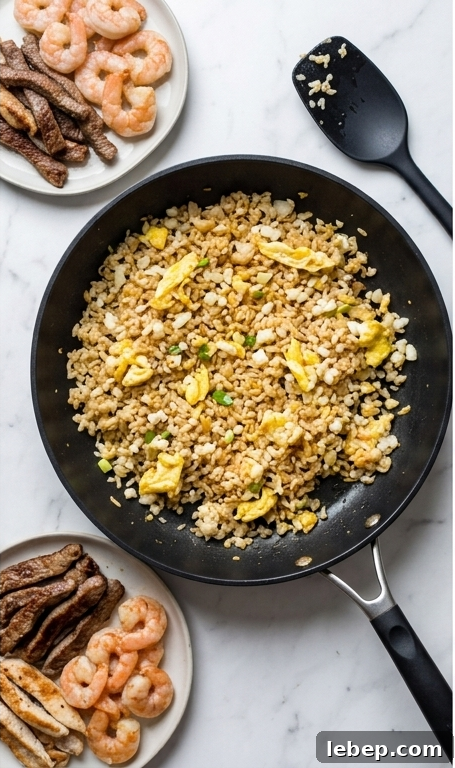
Push the rice to one side and pour beaten eggs into the cleared space. Stir constantly until the eggs set into small curds, 30–60 seconds, then fold them through the rice so golden ribbons and flecks are distributed throughout. The rice should have a slight gloss from oil and be dotted with tiny yellow curds and pale green scallion whites.
Step 6: Return proteins and add scallion greens
Return the reserved steak, chicken, and shrimp to the pan and toss gently until everything is warmed through and the proteins sit evenly within the rice. Add thinly sliced scallion greens and let them wilt slightly from the heat so they remain bright and crisp.
Step 7: Finish with seasoning liquids
Stir in soy sauce (or tamari), rice vinegar, and toasted sesame oil so the fried rice takes on an even savory sheen; taste and adjust salt as needed. For a spicy touch, offer chile-garlic sauce or Sriracha to drizzle when serving.
Step 8: Plate and serve warm
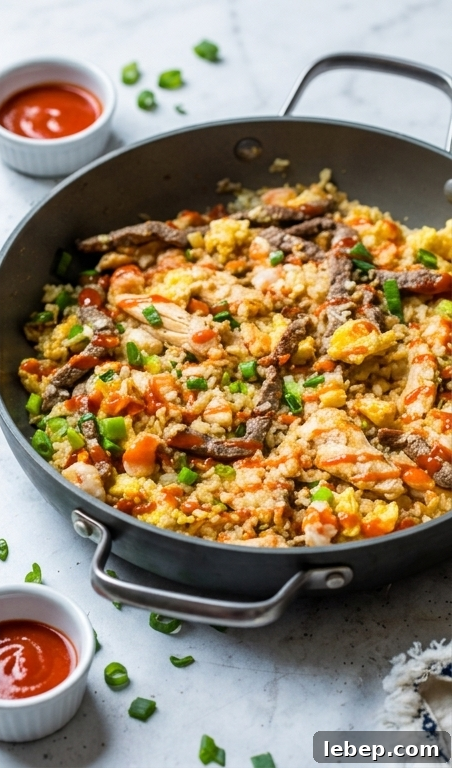
Transfer the finished fried rice to a serving skillet or bowl, scatter extra scallion greens on top, and optionally zigzag a thin line of Sriracha. Serve immediately while the rice is hot and slightly crisp at the edges.
Making It Your Own
Adapt this recipe to the season. In spring, swap riced cauliflower for a mix that includes peas and young corn to brighten the dish. For a vegetarian version, replace the proteins with firm tofu and extra mushrooms, and add mushroom soy for deeper umami. In colder months, briefly marinate the steak in soy and garlic for more depth. For a tangy, spicy twist, stir in a spoonful of kimchi and its juice.
How to Serve
For a small dinner, spoon the fried rice into warmed shallow bowls and finish with extra scallion greens and a drizzle of toasted sesame oil. For a party, spread the rice on a large platter with lime wedges and small bowls of chile-garlic sauce so guests can customize heat. To stretch portions, add an extra cup or two of rice and cauliflower and thinly slice additional vegetables to bulk up the dish without losing the seared-protein focus.
Storage and Reheating
Store leftovers in an airtight container in the refrigerator for up to 3 days. Cool the rice quickly to room temperature before refrigerating to prevent mushiness.
Reheat in a hot skillet with a teaspoon of oil, stirring until rice and proteins are heated through and crisp edges return. Alternatively, spread the rice in a shallow dish, cover loosely with foil, and warm in a 325°F oven until just heated.
Common Slip-Ups and How to Fix Them
Soggy rice usually means it was too soft or still warm when cooked; use chilled, day-old rice and ensure the pan is very hot before adding it. Overcrowding the pan causes steaming instead of searing; cook proteins in batches and let them rest so they stay juicy when returned to the rice.
Final Thoughts
Try this House Special Fried Rice on a busy weeknight or when you want to impress with minimal fuss. Once you master the rhythm of searing, building, and finishing, it becomes a fast, dependable meal that feels celebratory. I hope it becomes one of your go-to comfort dishes.
Frequently Asked Questions
-
Q: Can I make this gluten-free?
A: Yes—use gluten-free tamari instead of soy sauce and check that any bottled sauces are labeled gluten-free. -
Q: What rice is best for this dish?
A: Cold, day-old short-grain brown rice offers chew and slight stickiness; long-grain rice also works but yields a different texture. -
Q: Can I prep parts ahead of time?
A: Absolutely. Slice proteins, chop aromatics, and cook the rice in advance; keep everything chilled until you’re ready to cook. -
Q: How do I keep the proteins from overcooking?
A: Sear each protein quickly over high heat and remove to rest; they will finish warming when tossed back into the rice. -
Q: Is there a vegetarian version?
A: Yes—replace shrimp, chicken, and steak with firm tofu, tempeh, or extra vegetables and boost umami with mushroom soy or miso.