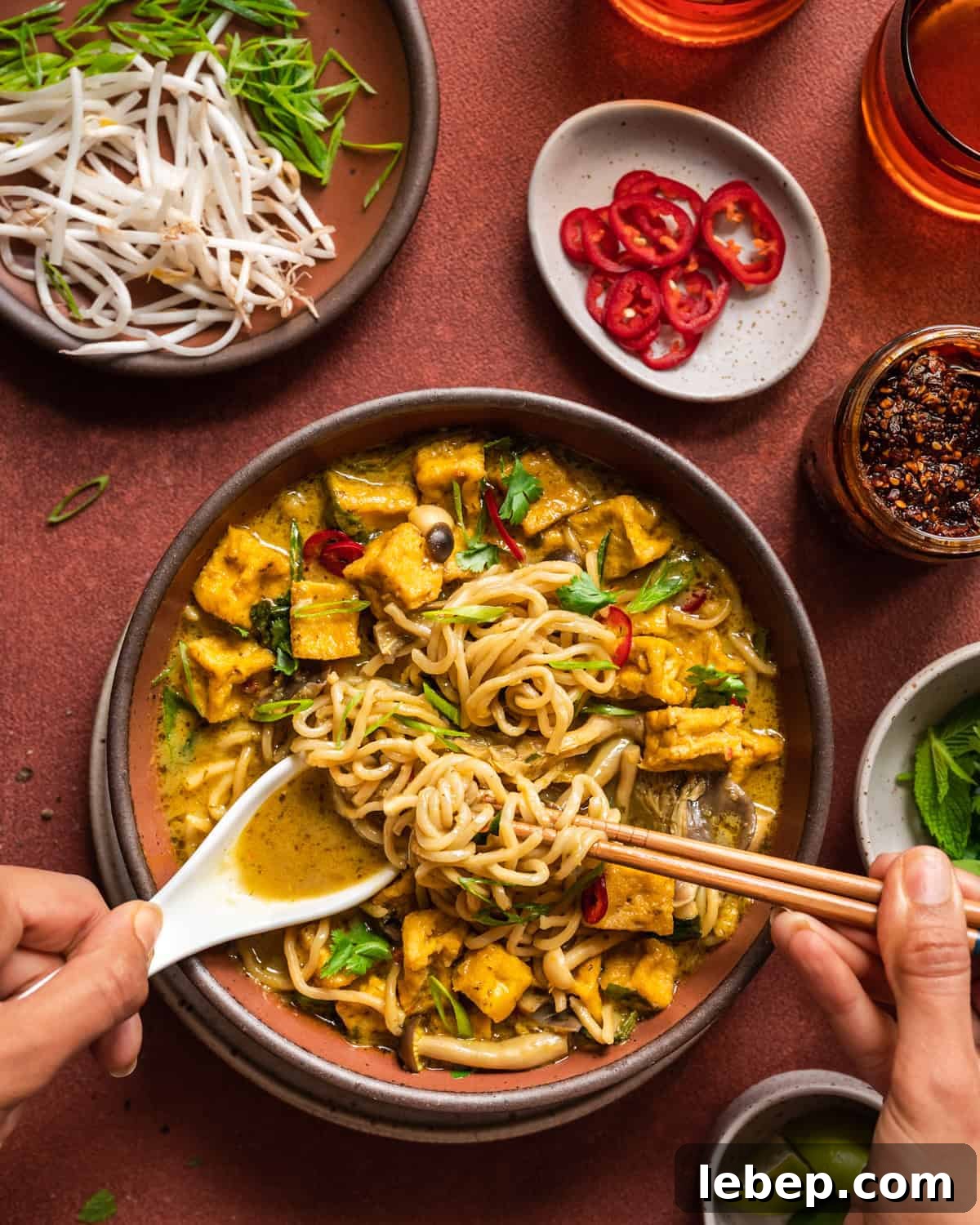
Whenever someone asks me “what single food would you want on a deserted island,” my answer is always some kind of Asian noodle soup. It may feel like a cheat, but noodle soup covers so many comfort-food bases—broth, noodles, aromatics, heat—so it’s a perfectly logical pick.
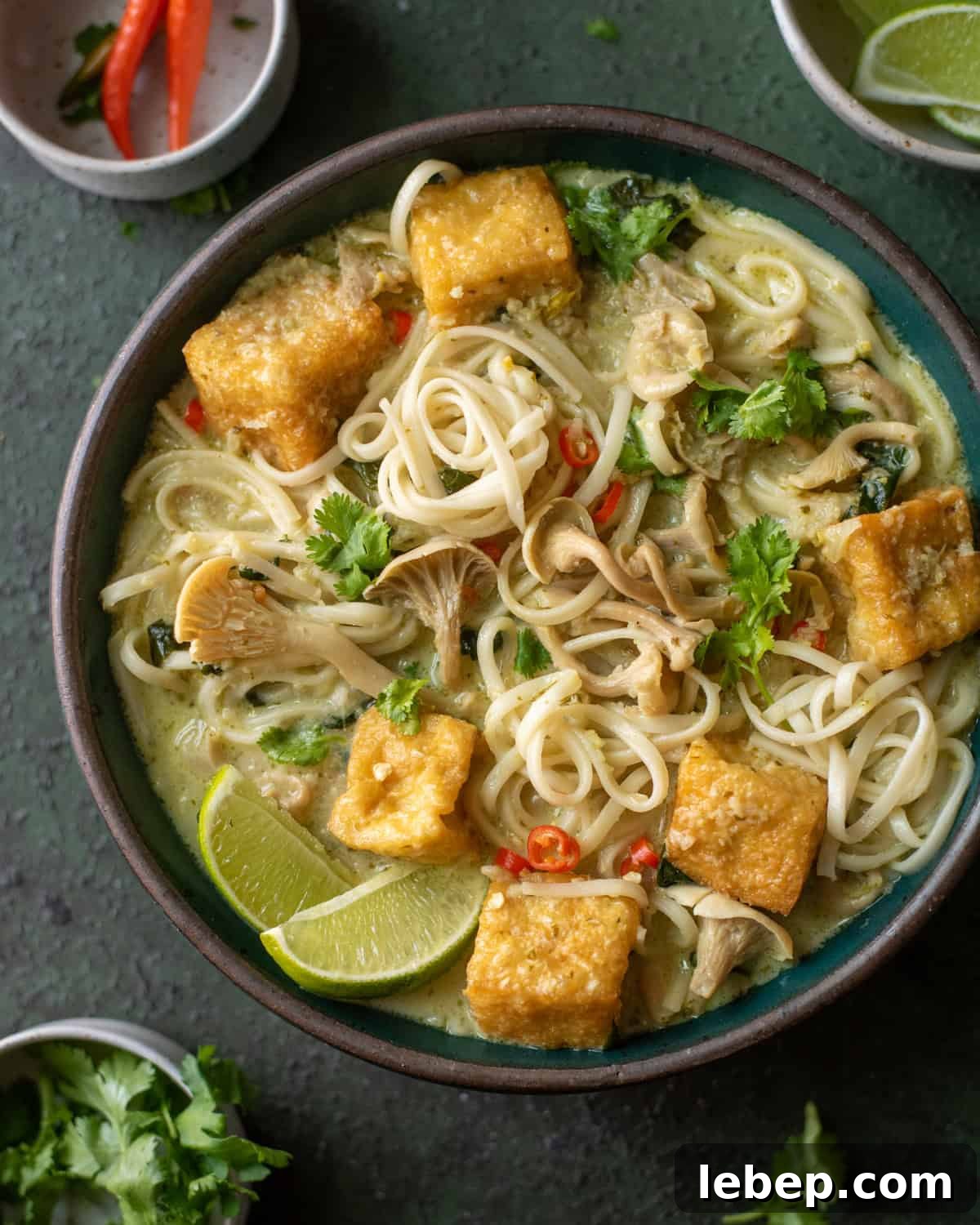
This Malaysian Curry Noodle Soup is exactly that: a rich, curry-and-noodle hybrid that balances savory, spicy, tangy, and sweet. The broth is creamy without being heavy, the spices are warming, and the bright aromatics keep each spoonful lively. It’s the kind of bowl you’ll want to make again and again.
I’m especially excited because I developed this recipe in early 2021 and have been saving it for my second cookbook. It appears in the “wow-worthy dinners” chapter of Big Vegan Flavor, where you’ll find noodle soups, curries, stir-fries, and other bold-flavored dinners.
Table of Contents:
1. What is curry laksa?
2. Video: How to make this soup
3. Why you’ll love this recipe
4. Ingredient notes
5. Tips for making this recipe
6. Frequently Asked Questions
7. Recipe card with notes
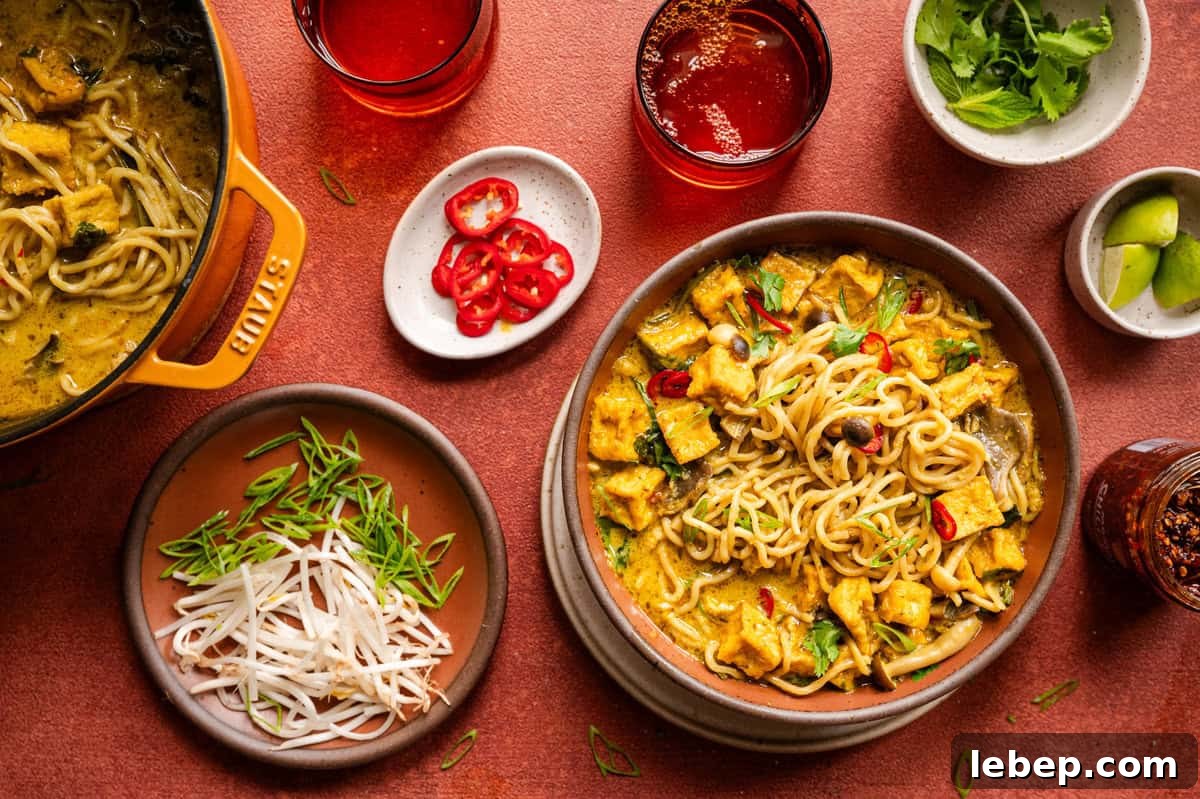
Video: How to make this noodle soup
I enjoyed making this recipe on my friend Sadia’s YouTube channel—watch the demonstration for a step-by-step visual guide.
What is curry laksa?
Malaysia has many types of laksa. Some are light and tangy, while others are richer and creamier. This recipe is inspired by the creamy style often called curry laksa, laksa lemak, or curry mee. Variations of this dish are also popular in Singapore.
Curry laksa features warming spices, a coconut milk base, and airy tofu puffs that soak up flavorful broth. Traditional versions sometimes include fish or meat; this vegan interpretation uses plant-based umami and creative swaps so you won’t miss animal products.
Why you’ll love this recipe
A flavorful fusion
This soup showcases Southeast Asian aromatics—lemongrass, galangal, and lime—alongside Chinese and Indian influences. Soy sauce adds deep savoriness, while cumin, coriander, and curry leaves bring warm, fragrant notes. The combination produces a layered, memorable bowl.
Homemade laksa paste makes a difference
There are three reasons to make your own laksa paste: store-bought vegan laksa paste can be hard to find; making paste builds confidence and technique; and fresh paste is far more fragrant and nuanced than a jarred version. You can also control the spice level when you blend fresh ingredients.
Not as hard as it looks
Yes, the ingredient list is long—authentic laksa paste relies on many aromatics and spices—but the process is straightforward. The paste blends in a food processor, the broth requires only a few ingredients and simmers briefly, and the final assembly is quick. The result is a complex, layered dish without an all-day simmer.
PS: For meal-prep tips to simplify weekday dinners, see the Tips section below.
Ingredient notes
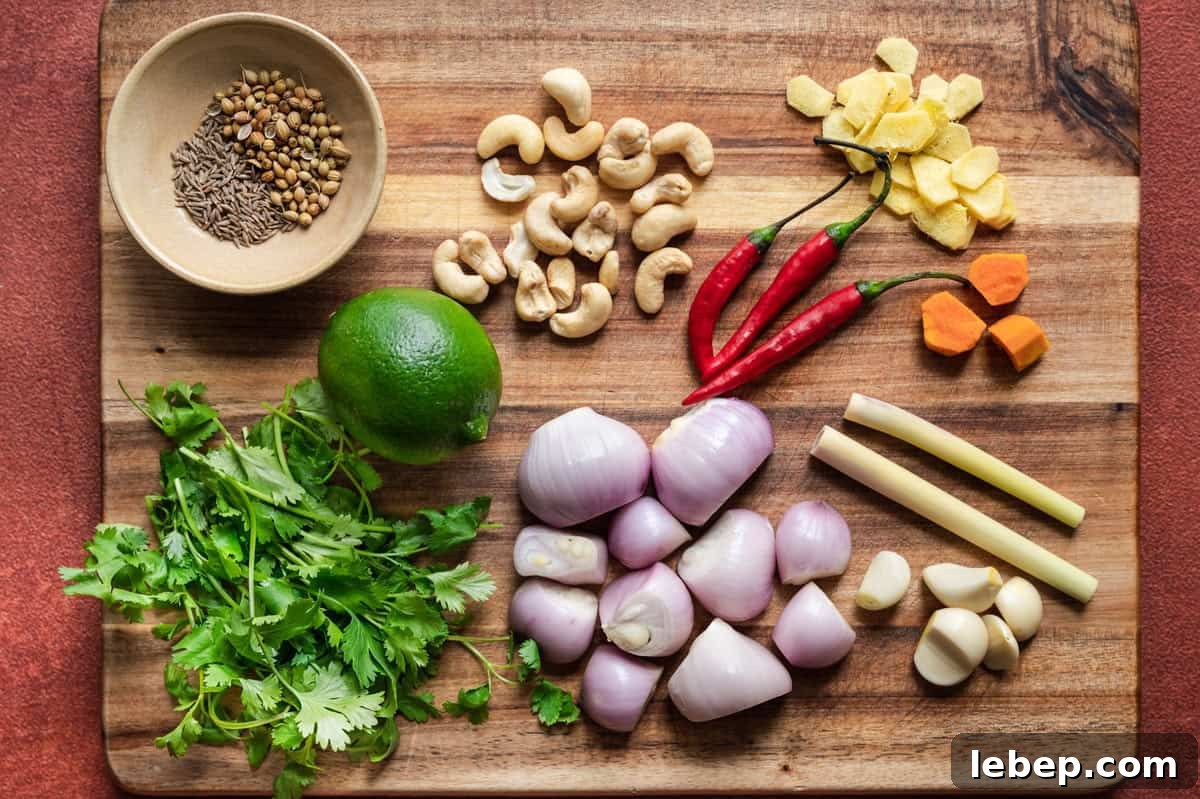
A visit to an Asian grocery store will make sourcing these ingredients much easier. Larger pan-Asian markets typically carry most items, and many can be found at mainstream specialty grocers.
Kombu and wakame
Because traditional laksa often uses shrimp or chicken, this vegan broth leans on seaweed for umami. Kombu (kelp) is especially rich in glutamic acid, which provides savory depth; wakame adds a milder sea-like note and is optional. If wakame is unavailable, use a few dried shiitake mushrooms to boost umami.
Chinese light soy sauce
Light soy sauce imparts concentrated savory flavor in both the broth and the paste. If you can’t find Chinese light soy sauce, regular supermarket soy sauce or tamari will work—use a slightly larger amount to achieve similar seasoning.
Chile peppers
Fresh Thai chiles are used here, but you can substitute dried red chiles (rehydrated), fresno, serrano, or jalapeño depending on availability and heat preference. Start with less and add more as you taste.
Lemongrass
Lemongrass brings a bright, citrusy aroma that elevates the soup. Prep involves removing tough outer layers, smashing to release oils, then finely chopping. If you’re unsure, practice with step-by-step photos or a short video to build confidence.
Galangal
Galangal smells piney and cooling—different from ginger. It’s a core ingredient in Southeast Asian pastes. If you can’t find galangal, ginger is an acceptable substitute; slice galangal thinly so it blends well.
Cashews
Candlenuts are traditionally used for creaminess in laksa paste but are hard to source. Roasted cashews (or peanuts) provide a similar texture and richness in a small amount.
Fresh curry leaves
Curry leaves add an aromatic, slightly citrusy note that complements the paste. They’re commonly available in Indian grocery stores; omit if you can’t find them—the soup will still be delicious.
Fried tofu puffs
Fried tofu puffs have a spongy, porous texture that makes them excellent at absorbing broth. Find them refrigerated or frozen at Asian markets. If unavailable, baked or fried tofu can be used, though the texture will be different.
Tips for making this recipe
Split the dish into four components and prep ahead
Break the recipe into four parts: (1) broth, (2) laksa paste, (3) the assembled soup (broth + paste + additions), and (4) toppings. The broth and laksa paste can be made ahead and stored separately in airtight containers in the fridge for about five days. When you’re ready to eat, combine, simmer briefly, and finish with fresh noodles and garnishes.
How to meal prep this recipe
- Gather ingredients for the Broth and Laksa Paste.
- Start the Broth (water will take time to heat) and prep the paste ingredients while it comes to a simmer.
- Simmer the broth for 10 minutes, strain, and finish the paste in a food processor.
- Store broth and paste separately in airtight containers in the fridge for up to 5 days.
- When you’re ready to eat, finish the soup and cook noodles—dinner can be on the table in about 30 minutes.
Shop beyond your usual grocery store
For authentic flavor, visit a Southeast Asian or pan-Asian market. Fresh ingredients like lemongrass, galangal, and Thai chiles are easiest to source in those stores.
Chop tough aromatics before blending
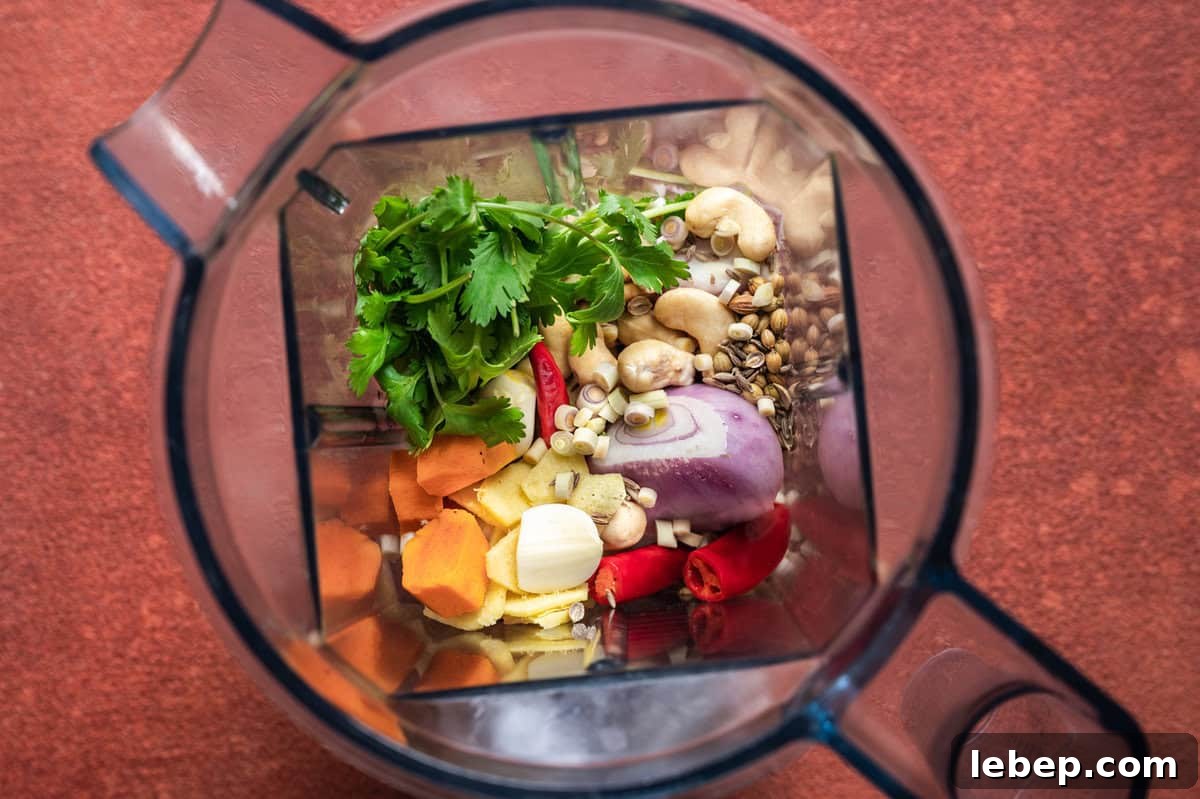
Chop lemongrass and galangal into smaller pieces before adding to the food processor, and scrape the sides while blending to help the paste come together. The paste won’t be perfectly smooth, and that’s part of what makes it feel homemade.
Taste as you go
Adjust the balance of spice, tang, sweetness, and salt as you finish the soup: add more coconut milk and lime to calm heat, a pinch of sugar to tame acidity, or a dash of soy sauce for extra savoriness.
Get creative with toppings
Like other Asian noodle soups, this laksa benefits from fresh, crunchy, and spicy garnishes. My favorites are Chinese chili crisp and fried shallots, but fresh herbs, bean sprouts, thinly sliced chiles, and lime wedges all work beautifully.
Frequently Asked Questions
If you can eat peanuts, roasted peanuts work well. For a nut-free option, use 2 tablespoons of full-fat coconut milk to add creaminess to the paste; you may not need additional oil if you use coconut milk.
Yes. Use tamari or gluten-free soy sauce instead of Chinese light soy sauce (you may need to use the larger amount noted in the recipe notes) and substitute rice noodles for wheat noodles. Choose a medium-thickness rice noodle for the best texture.
Yes. The broth and laksa paste can be made several days ahead and stored separately. Follow the meal-prep tips above for best results.
Don’t freeze the noodles. Freeze the soup (without noodles) in an airtight container for 3–4 months. Laksa paste can be doubled and frozen for about three months; defrost in the fridge before use. Refrigerated assembled soup (without noodles) keeps for about four days; reheat gently on the stove.
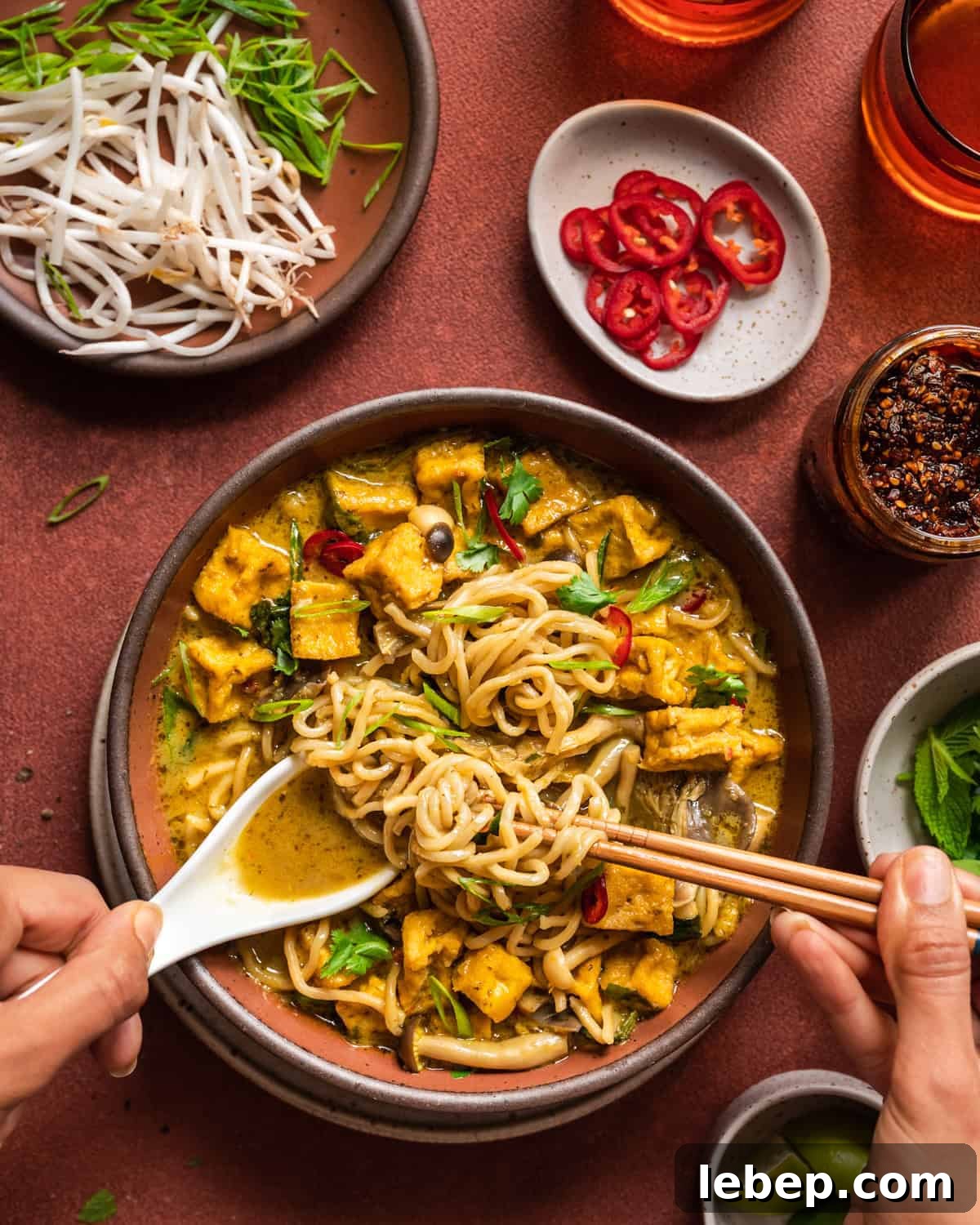
I hope you enjoy this Malaysian Curry Noodle Soup from Big Vegan Flavor. Thank you to everyone who has pre-ordered the book—your support means so much. If you’ve already ordered, follow the preorder instructions provided with your purchase for any bonus content.
Malaysian Curry Noodle Soup
Made it? Click the stars to leave a review!
Review
Ingredients
Broth
- 3 sheets (about 12g) kombu
- 3 tablespoons (50g) Chinese light soy sauce
- 1 tablespoon wakame seaweed (optional)
- 1 lime
Laksa Paste
- 1 ½ teaspoons coriander seeds
- 1 teaspoon cumin seeds
- 3 medium shallots, roughly chopped
- 4 garlic cloves, chopped
- 2-inch (5cm) piece galangal, very thinly sliced (or ginger)
- 1-inch (2.5cm) fresh turmeric, peeled and roughly chopped (or ¾ tsp ground turmeric)
- 1 to 4 fresh Thai chiles, stemmed
- 2 stalks lemongrass, smashed and finely chopped
- 2 tablespoons (25g) roasted cashews (or peanuts)
- 1 tablespoon Chinese light soy sauce
- 1 small handful (5g) fresh cilantro leaves and tender stems
- 1 lime: 1 teaspoon zest + 2 teaspoons juice
- 1 to 2 tablespoons neutral-flavored oil (or water)
Soup
- 2 tablespoons neutral-flavored oil
- 8 ounces (227g) oyster mushrooms, torn into strips
- Sea salt (or kosher salt)
- 1 (13.5-ounce/400ml) can full-fat coconut milk
- 5 to 10 fresh curry leaves (or 10 to 15 dried; optional)
- 1 (8-ounce/227g) package fried tofu puffs or soy puffs
- 1 to 2 teaspoons coconut sugar or brown sugar, more as needed
- 6 to 8 oz (170 to 230g) dried ramen noodles OR 10 oz (285g) fresh noodles
- 1 to 2 limes
Optional Toppings
- Fresh mint, cilantro, and/or Thai basil
- Thinly sliced Thai chiles
- Bean sprouts
- Chinese chili oil / chili crisp
Instructions
-
Make the broth. Cut a few slits in the kombu to release flavor. In a small or medium saucepan over medium heat, bring 5 cups (1.2 L) water, the kombu, wakame (if using), and soy sauce to a simmer. Gently simmer 10 minutes, then remove from heat and stir in 1 tablespoon lime juice. The broth should taste like the sea. Strain into a bowl and discard the kombu and wakame.
-
Optional – toast whole spices. In a dry pan over medium heat, toast coriander and cumin seeds until aromatic and slightly darker. Remove from heat to avoid burning.
-
Make the laksa paste. In a food processor or small blender, combine toasted coriander and cumin (if toasted), shallots, garlic, galangal (or ginger), turmeric, chiles, lemongrass, cashews or peanuts, soy sauce, cilantro, lime zest, and lime juice. Blend into a paste, stopping to scrape the sides. Add oil or water, 1 tablespoon at a time, until the paste comes together.
-
In a Dutch oven or soup pot, heat 2 tablespoons oil over medium-low heat. Add the laksa paste and cook, stirring frequently, until the paste begins to dry out, about 5 to 8 minutes.
-
Pour in the strained broth, scraping up any browned bits. Add mushrooms, ¼ teaspoon sea salt, and leftover lemongrass stalks (if using). Bring to a boil, then reduce heat and simmer rapidly for 10 minutes.
-
Remove any whole lemongrass pieces. Stir in coconut milk, curry leaves, and tofu puffs. Simmer 5 minutes. Taste and adjust seasoning with soy sauce, salt, and sugar as needed.
-
While the soup simmers, cook noodles according to package directions. Drain and keep warm.
-
Assemble. Divide noodles among four bowls, ladle hot curry over them, add garnishes, and squeeze fresh lime juice on top. Serve with optional toppings.
Notes
- Kombu: Sold at many Asian grocers; wakame is optional—substitute dried shiitake for extra umami.
- Soy sauce: If you don’t have Chinese light soy sauce, use 1/4 cup (68 g) regular soy sauce or tamari in the broth and 1 ½ tablespoons in the paste.
- Galangal: Use ginger if unavailable; slice galangal thinly for easier blending.
- Chiles: For spicy, use 4 fresh chiles; for mild heat, use about 3 dried red chiles rehydrated in hot water for 15 minutes.
- Lemongrass: Trim the tough top and root, peel outer layers, smash to release aroma, and finely chop the tender core. Use leftover smashed stalks in the broth and discard before serving.
- Mushrooms: Substitute snap peas, snow peas, or chopped baby bok choy if you prefer.
- Fresh curry leaves: Available at Indian grocers; omit if needed.
Nutrition
Nutrition information is an approximation.
 Love this? Leave a rating below!