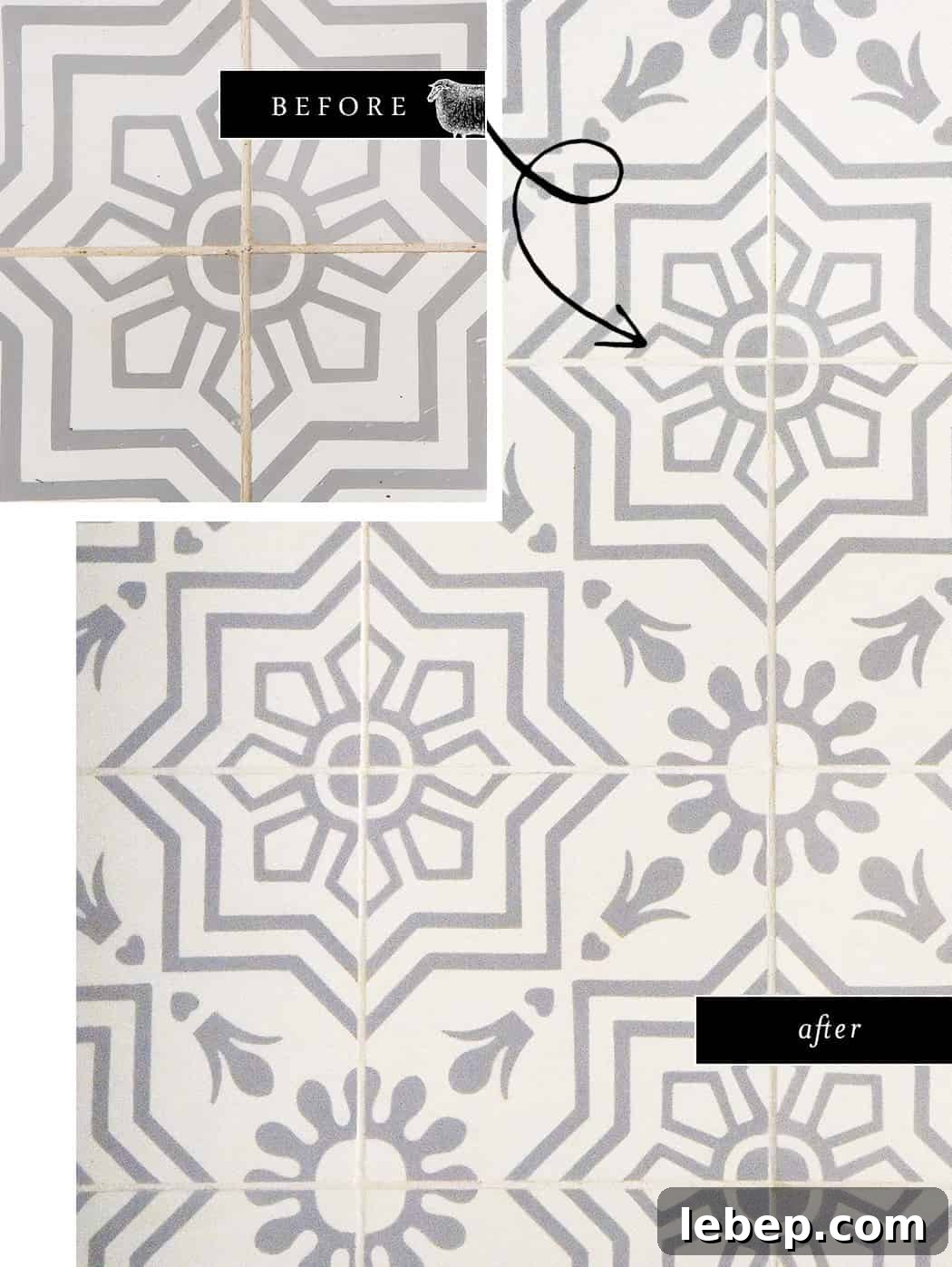
Create an effective homemade grout cleaner using just natural, gentle ingredients. This easy recipe brightens white grout and refreshes dirty tile floors without harsh chemicals.
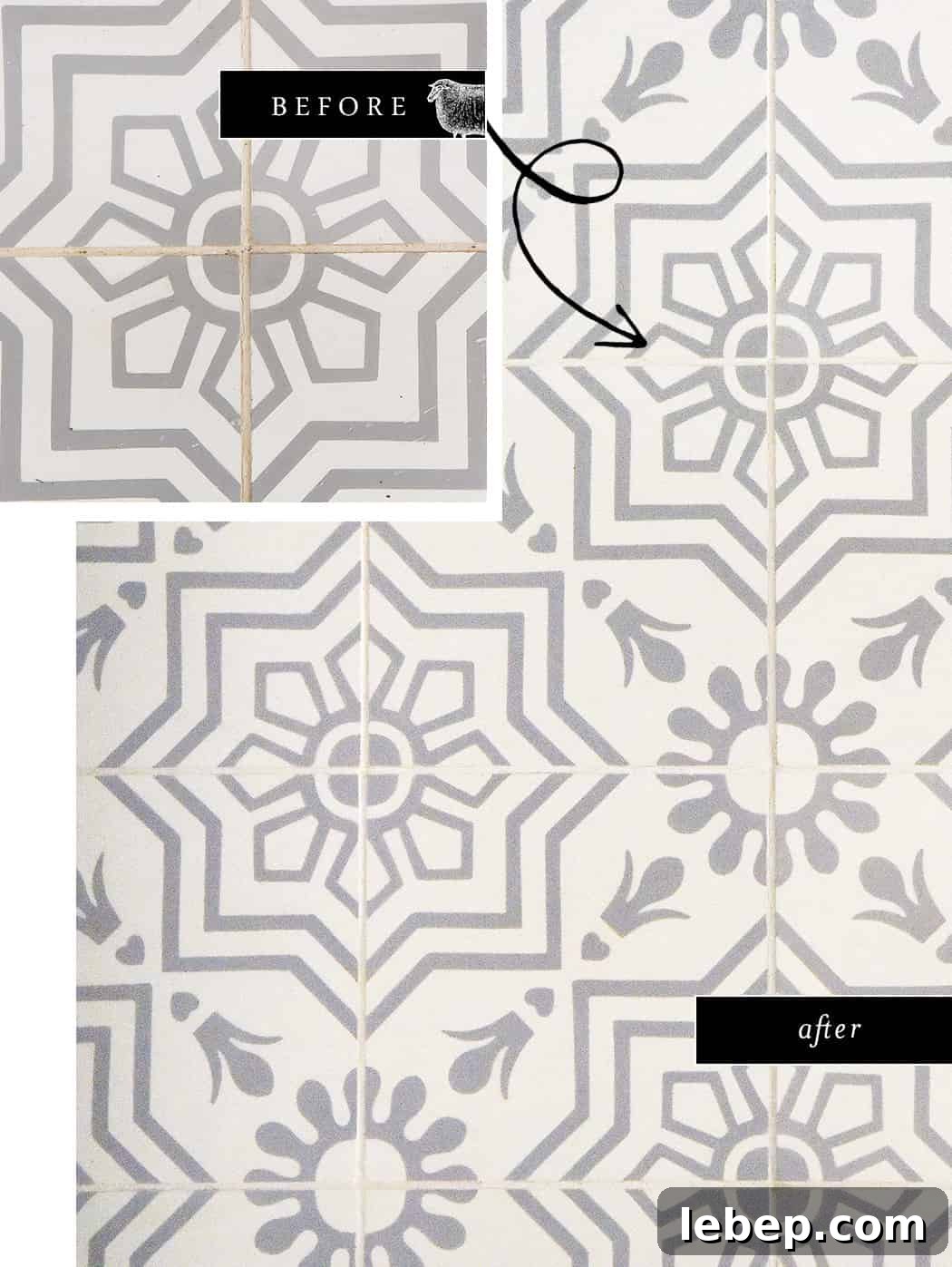
Homemade Grout Cleaner
If you’re looking for the best homemade grout cleaner, this simple, effective option is worth trying. It uses everyday ingredients and a little elbow grease to remove surface dirt and restore grout to a cleaner, brighter appearance.
The formula requires just baking soda, Castile soap, and a stiff-bristle brush. It’s eco-friendly, mild, and ideal for regular cleaning of kitchen and bathroom tile.
What is Castile Soap? Click Here!
Deep cleaning other surfaces? Consider an appropriate carpet or upholstery cleaner for textiles.
This grout cleaner is best for removing surface dirt, food stains, and everyday discoloration. It works particularly well on white grout and porcelain tile. Note that it may not fully remove mineral deposits or stains that have penetrated deeply into grout; stubborn, deeply set stains can require stronger, specialized treatments.
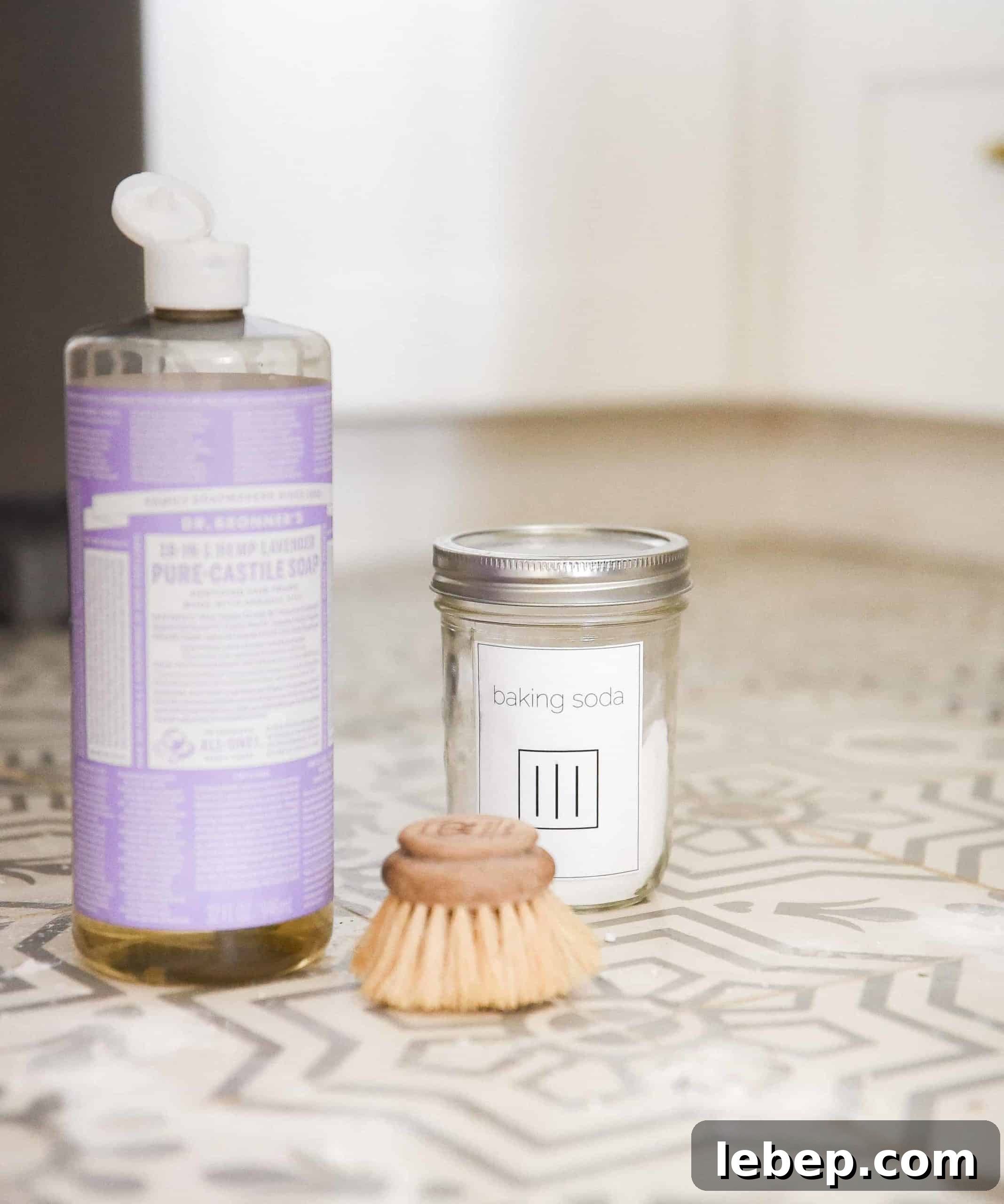
Unlike recipes that call for bleach, peroxide, lemon juice, or Borax, this method relies only on baking soda and Castile soap. Those two ingredients combine to form a mildly abrasive paste that lifts surface stains without harsh chemicals.
I tested this mixture on kitchen floor grout stained with coffee and everyday grime, and it noticeably brightened the grout lines. The transformation is often immediate when the stains are surface-level.
This approach is simple, cost-effective, and 100% eco-friendly, making it a great option for regular maintenance and green cleaning routines.
Homemade Grout Cleaner with Baking Soda
Baking soda is a versatile cleaning agent. When combined with Castile soap, it creates a gritty paste that helps lift stains and restore whiteness to grout lines. The gritty action helps physically remove residue while the soap helps dissolve and lift soil.
This combination is also useful for other surfaces, such as white porcelain sinks, where it removes coffee, tomato sauce, and similar food stains without damaging the finish when used gently.
Materials Needed
- Glass dispenser or mason jar
- Baking soda
- Castile soap
- Coarse bristle brush
Instructions
- Sprinkle baking soda evenly over the grout lines, similar to dusting powdered sugar on a surface.
- Combine 3 cups of water with 1/2 cup Castile soap in a mason jar or glass dispenser. Shake gently to mix without creating foam.
- Drizzle the diluted Castile soap over the baking soda on the grout, enough to moisten it and form a paste.
- Scrub the grout with a coarse bristle brush, applying firm pressure. For heavily soiled areas, repeat scrubbing. If the paste dries or becomes thick, add a little water and continue.
- Wipe away paste residue with a wet rag, rinsing the rag and repeating until the paste is removed. Work quickly so residue does not dry into the tile. For stubborn build-up that won’t come off with water, allow the area to dry and then rinse with a diluted water-and-vinegar solution (about 1/2 cup vinegar in several cups of water).
This method reliably refreshes grout and is a favorite for green cleaning around the home. It’s practical for routine maintenance and for tackling fresh, surface-level stains.
If you want to expand your green-cleaning toolkit, look into reputable guides and resources on non-toxic cleaning products and homemade cleaners for other surfaces.
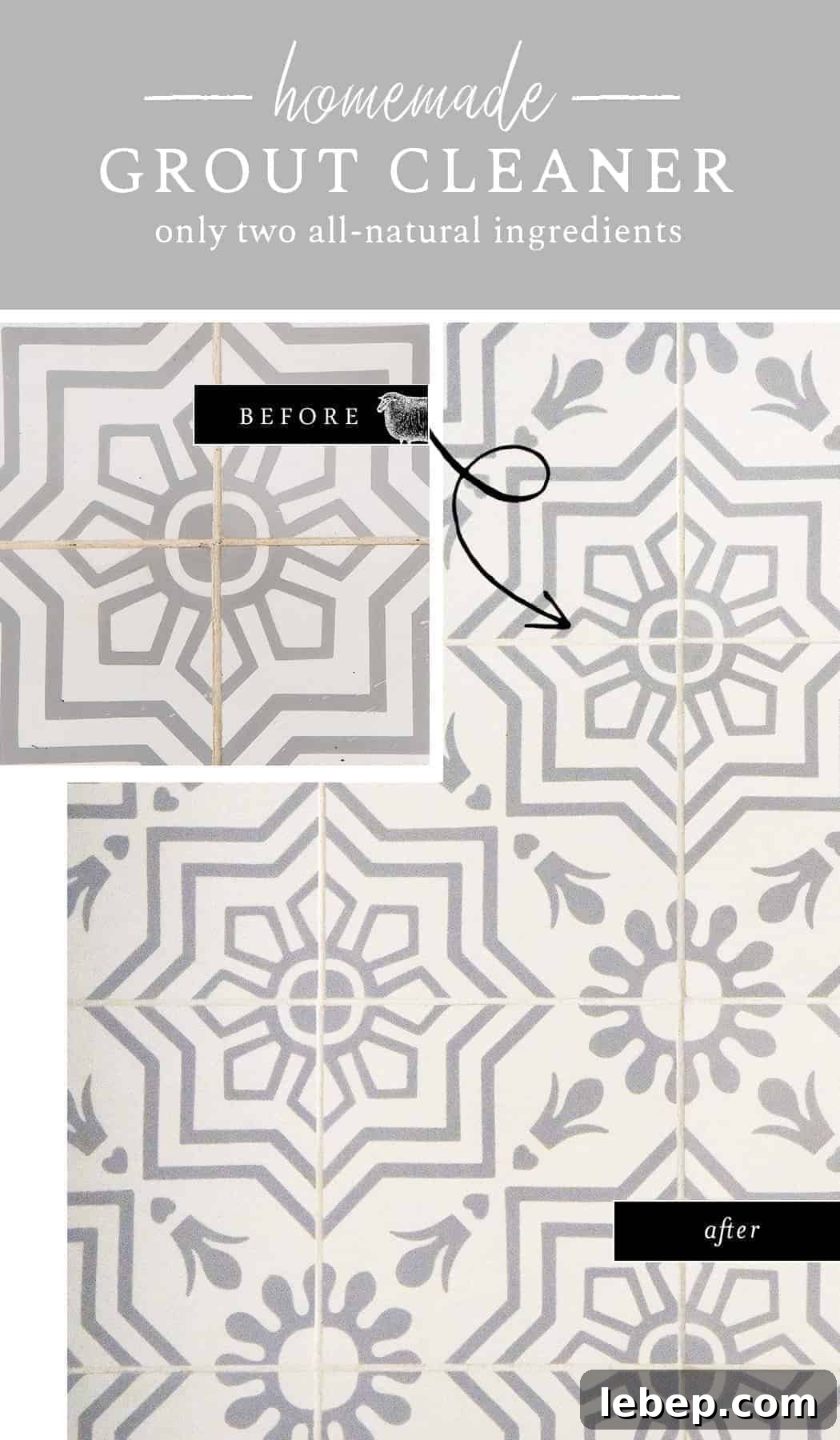

The Easiest Homemade Grout Cleaner to Make your White Grout Shine!
Equipment
-
Coarse Bristle Brush
Materials
- Glass Dispenser or Mason Jar
- Baking Soda
- Castile Soap
Instructions
-
Sprinkle baking soda over the grout lines as if you are sprinkling powdered sugar over a cake.
-
Combine 3 cups water with 1/2 cup Castile soap in a mason jar or glass dispenser. Shake gently to combine, but not hard enough to create bubbles.
-
Drizzle the diluted Castile soap over the areas of the tile covered in baking soda (as if you are drizzling a scone with glaze).
-
Scour the dirty grout with a coarse bristle brush using quite a bit of elbow grease. You may need to repeat scrubbing a few times over especially dirty areas. You should see the baking soda and Castile soap reacting as if to form a thick paste. If the paste dries out or becomes too thick, just add a little water over the top and repeat the scrubbing process.
-
Remove the paste residue by wiping up the freshly cleaned tile area with a wet rag. You will find that it takes a few rinses before the paste is gone, but do so quickly so that the dirty residue doesn’t dry into the tile. If you notice a build-up that cannot be removed with water, wait until the area is completely dry, then rinse with a diluted water:vinegar solution (about 1/2 cup vinegar in a few cups water).