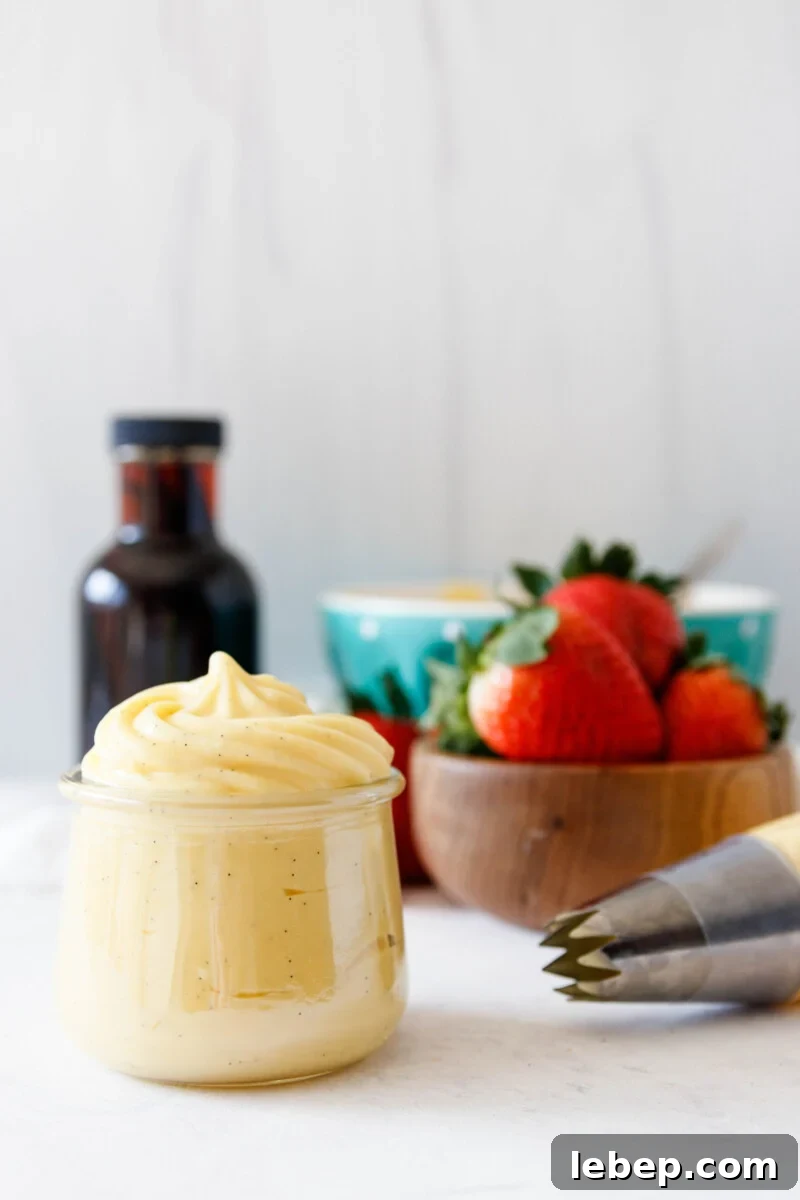
Learn how to make a silky pastry cream (Crème Pâtissière) to use in pastries, trifles, cakes, tarts, or simply to enjoy on its own. This straightforward recipe helps you achieve consistent, professional results.
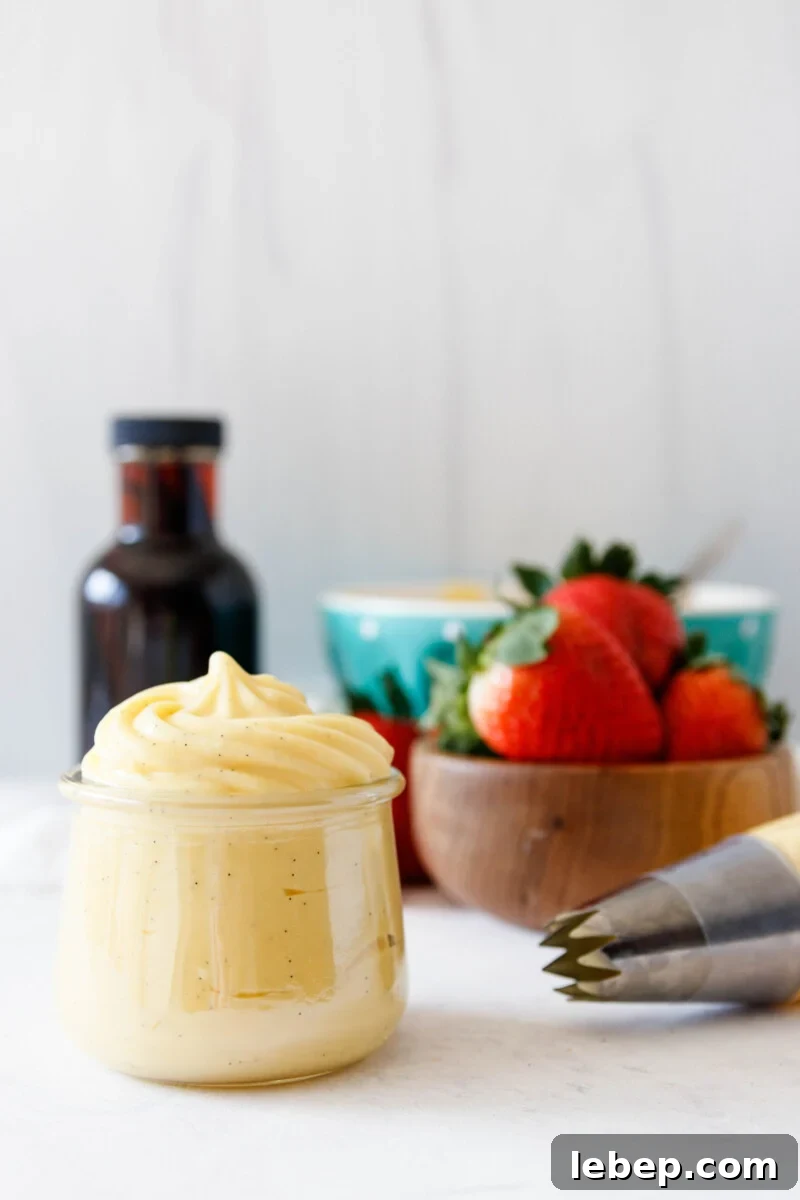
Pastry cream is a classic, versatile filling: silky, smooth, mildly sweet, and with a gentle eggy richness. Thicker than crème anglaise, it holds its shape well, making it ideal for tarts, eclairs, layered cakes, and trifles.
Think of it as a richer vanilla pudding—more concentrated in flavor and texture.
Pastry Cream Ingredients
The ingredient list for crème pâtissière is short and simple: egg yolks, milk, sugar, vanilla, butter, and a starch (cornstarch or flour) for thickening. Egg yolks provide extra creaminess and a beautiful color, while the choice of thickener influences texture and freeze-thaw stability.
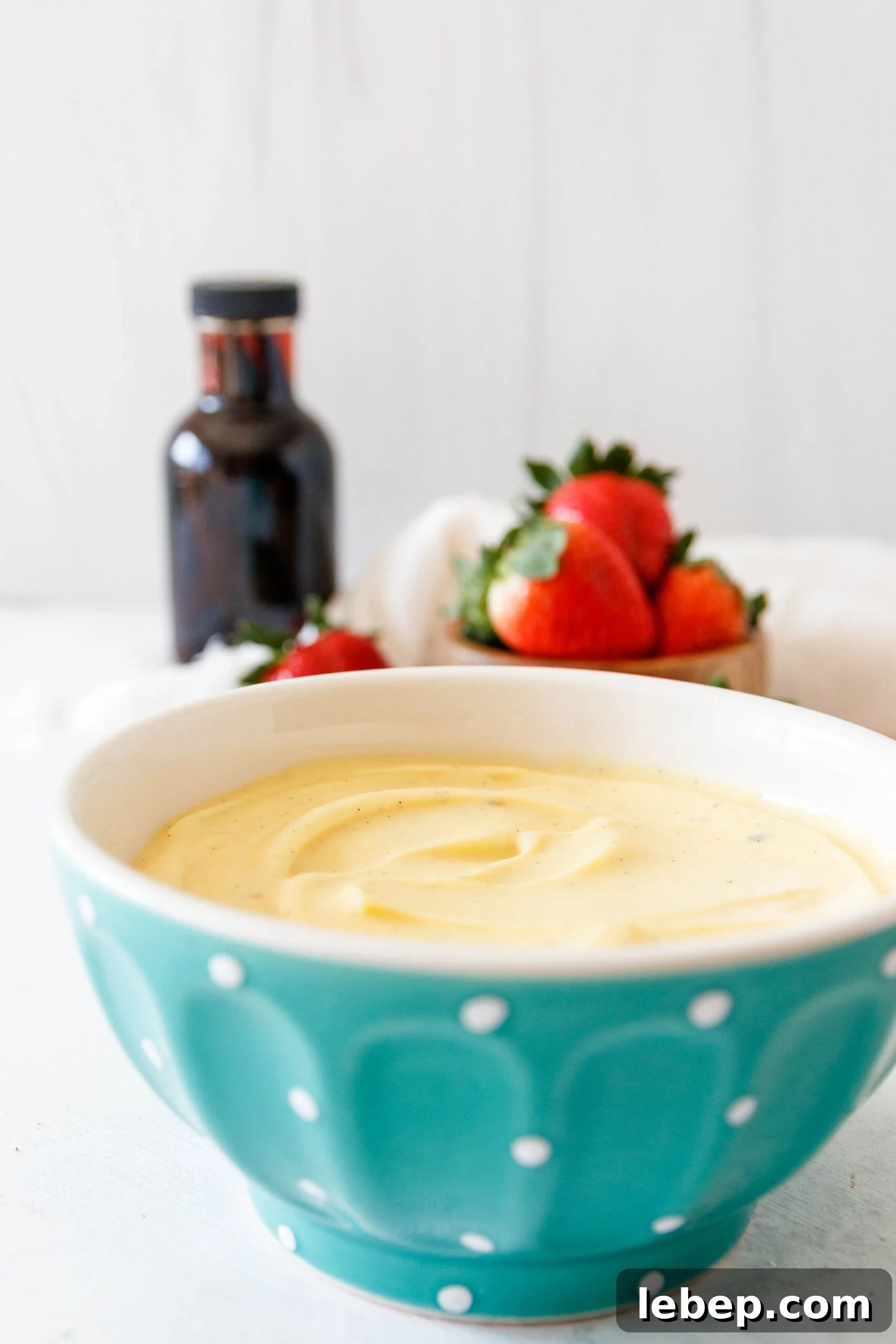
You can use salted or unsalted butter; either works. Salted butter will add a touch of seasoning, so you can omit the added salt if you prefer.
How to flavor crème pâtissière
Vanilla is the classic choice—use a split vanilla bean, vanilla paste, or vanilla extract. Steeping a vanilla bean in warmed milk releases deep, aromatic flavor; extract and paste are convenient and still delicious. Beyond vanilla, pastry cream adapts well to chocolate, spices, fruit purees, or liqueurs for different desserts.
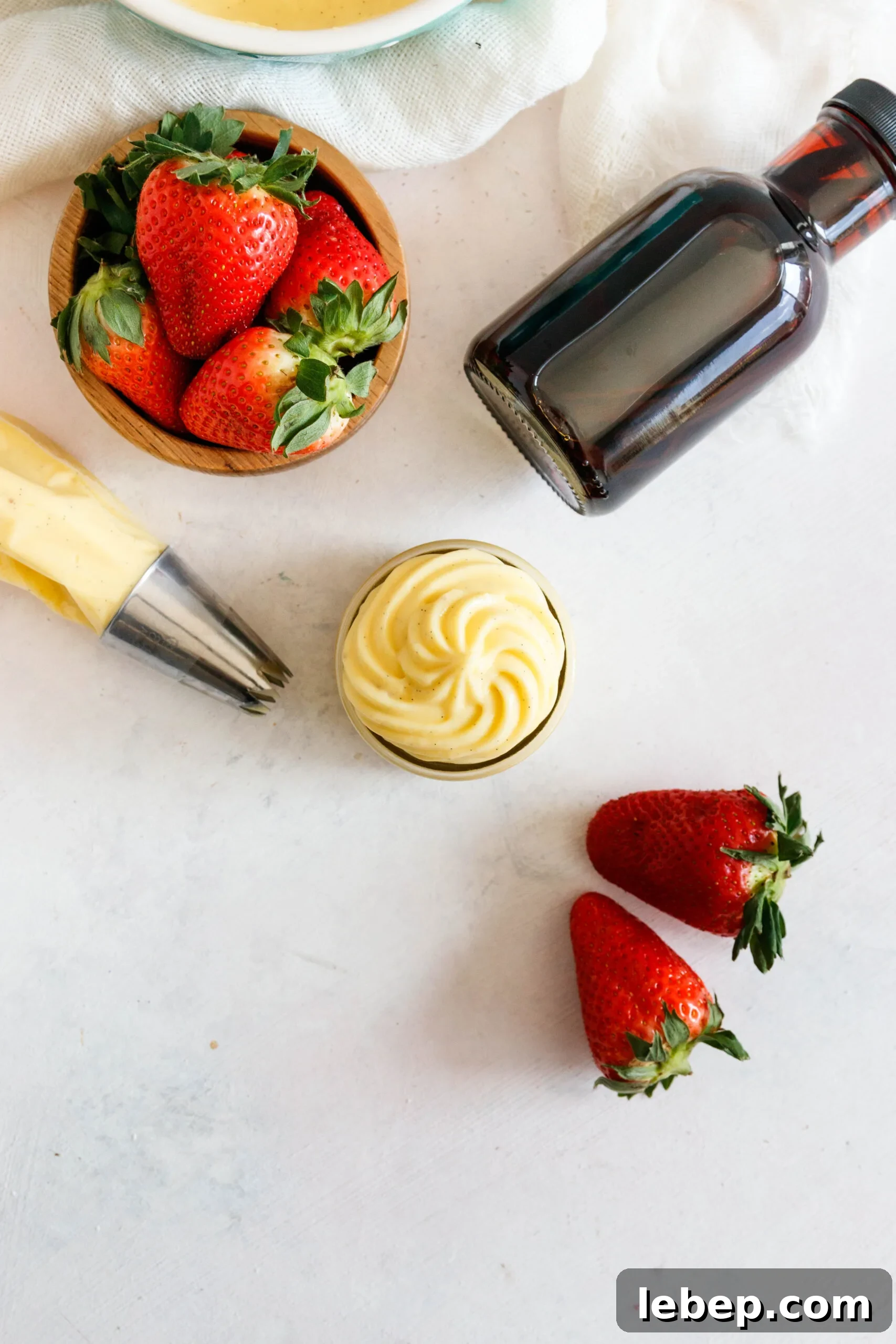
Make ahead and freezing
You can make pastry cream ahead: it keeps covered in the refrigerator for up to 5 days. After that it may become slightly grainy, so fresh is best.
Freezing depends on the thickener. Pastry cream thickened with cornstarch does not freeze well—cornstarch can separate and change texture. If you need to freeze the cream, prepare it with all-purpose flour instead; cream made with flour can be frozen for up to two months and thawed overnight in the refrigerator.
Cornstarch vs. flour: which to use?
Both work; the choice comes down to texture and storage needs. Cornstarch tends to give a slightly silkier finish and dissolves cleanly, which is why many bakers prefer it for immediate use. Flour yields a sturdier cream that stands up better to freezing and holds shape well in filled pastries you plan to freeze. If you need the pastry cream to be gluten-free, use cornstarch.
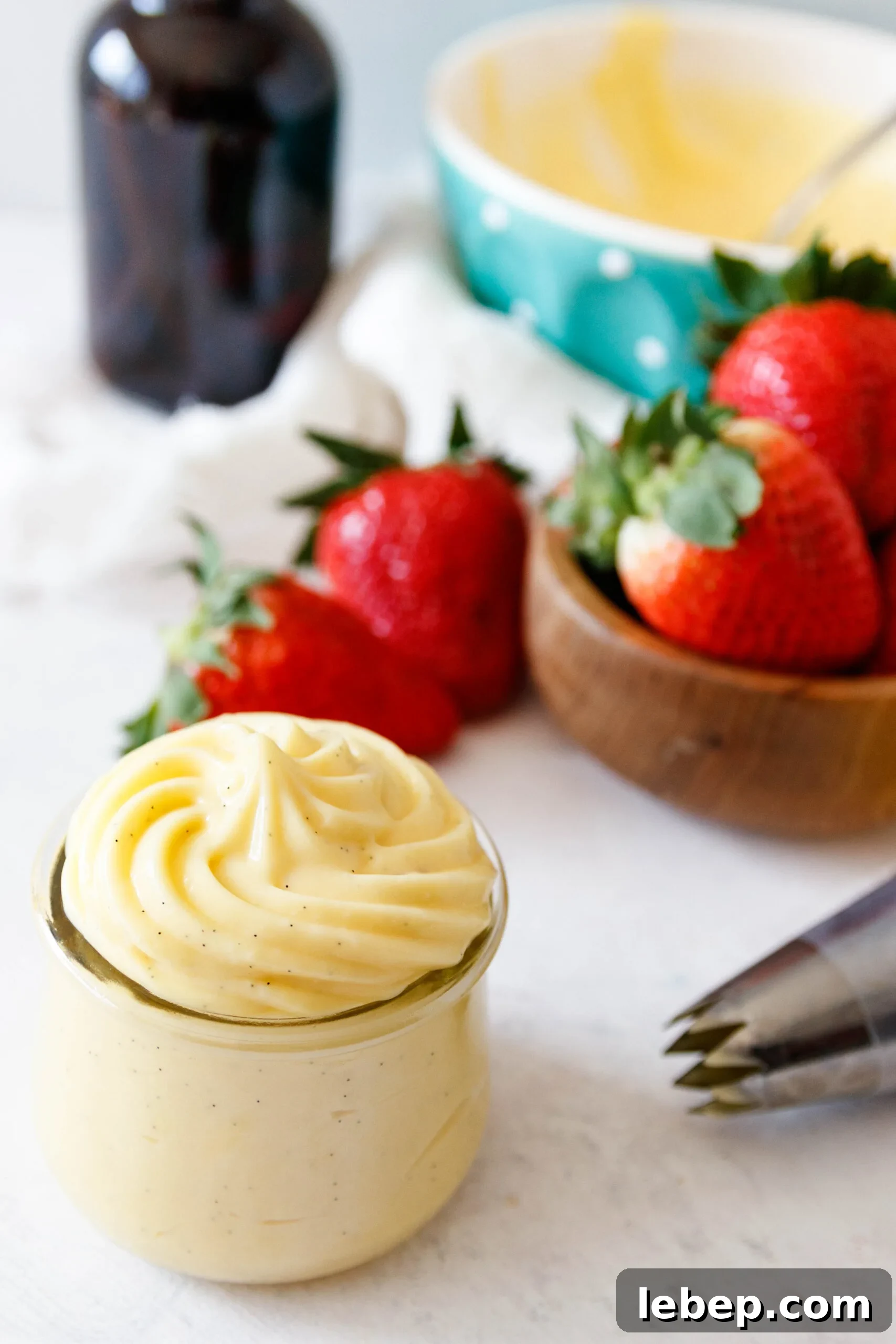
Choose the thickener based on how you plan to use the cream: cornstarch for the silkiest texture and immediate use; flour when you need freeze-stability or extra structure.
Non-dairy milk substitutions
Yes, you can use non-dairy milk. For the richest result, pick a higher-fat alternative—canned or full-fat coconut milk gives the creamiest texture and a pleasant coconut note that pairs well with many desserts. Other plant milks can be used, but lower-fat options may yield a thinner final cream.
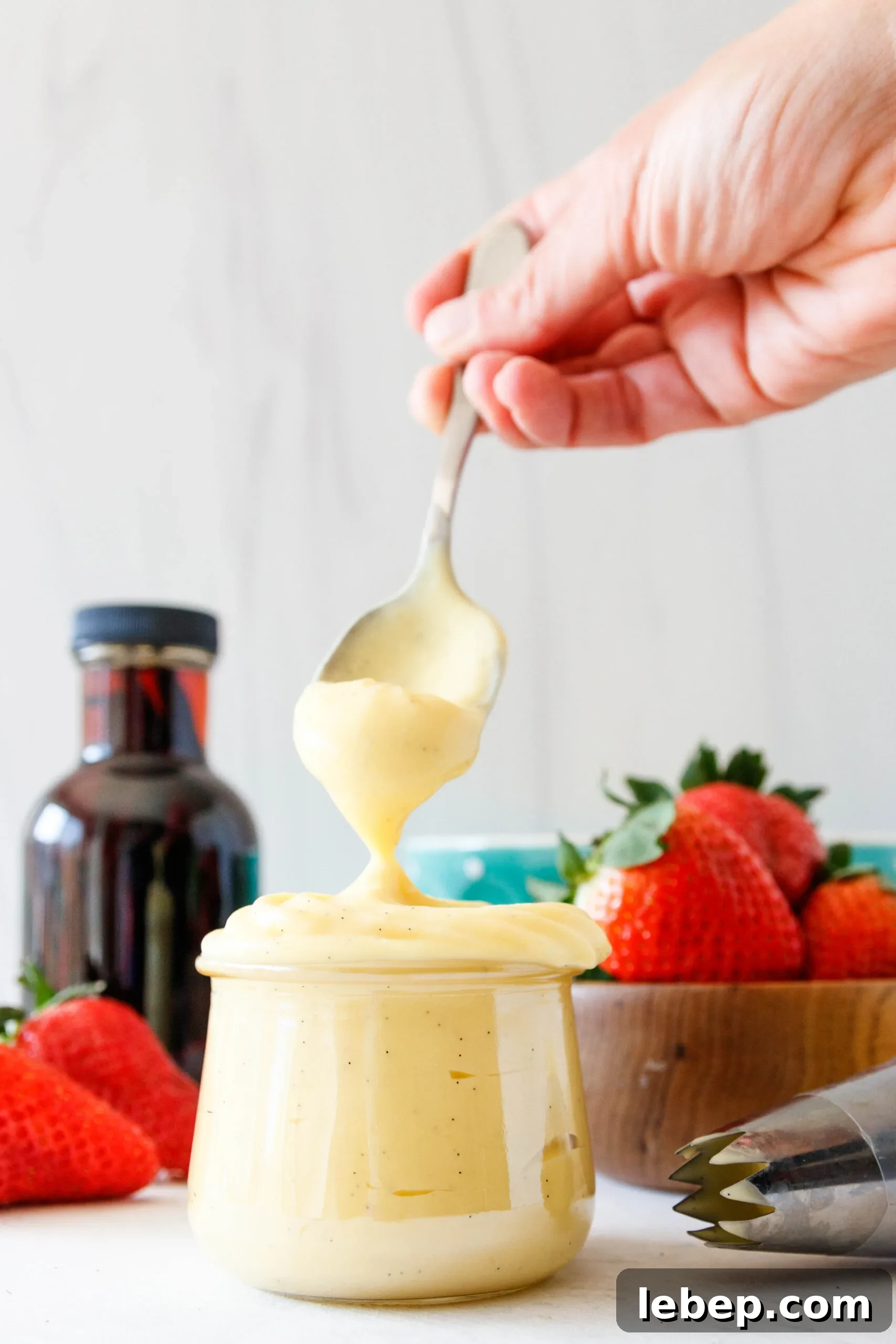
I hope you give this recipe a try—enjoy making and sharing your pastry cream!
Pastry Cream {Crème Pâtissière}
about 2 cups
10 minutes
5 minutes
2 hours
2 hours 15 minutes
Learn how to make a silky pastry cream (Crème Pâtissière) to use in pastries, trifles, cakes, tarts, or simply on its own.
Ingredients
- 2 cups milk (see notes)
- 1 vanilla bean, scraped or 2 teaspoons vanilla extract (see notes)
- 1/2 cup granulated sugar
- 3 tablespoons cornstarch (see notes)
- 1/4 teaspoon kosher salt
- 4 large egg yolks
- 2 tablespoons butter (see notes)
Instructions
- If using a vanilla bean, gently steep the split pod and scraped seeds in warmed milk to extract maximum flavor; remove the pod before proceeding. This step is unnecessary with vanilla extract or paste.
- Place a fine-mesh sieve over a heatproof bowl and set aside.
- In a medium bowl (or in the saucepan), whisk together sugar, cornstarch, and salt. Add the egg yolks and beat until combined and pale yellow.
- While whisking constantly, slowly pour in the milk, whisking until smooth and homogeneous.
- If you mixed in a separate bowl, transfer the mixture to a 2–2.5 quart saucepan.
- Over medium-low heat, cook the mixture, whisking continuously, until small bubbles form around the edges. Stay attentive—this typically takes 3–5 minutes depending on ingredient temperatures.
- When the mixture begins to bubble, continue whisking for about a minute until it thickens and the whisk leaves small trails.
- Remove from heat and whisk in the butter until melted. If using vanilla extract or paste, stir it in now.
- Strain the custard through the sieve into the reserved bowl to remove any lumps. Press plastic wrap or parchment directly onto the surface to prevent a skin from forming.
- Refrigerate until very cold, at least two hours, before using.
Notes
- Whole milk yields the best texture and flavor.
- If using a vanilla bean: warm the milk with the scraped seeds and pod, remove from heat as tiny bubbles appear, and allow to steep. You can steep it longer for a stronger vanilla flavor and even do this the day before.
- For the texture shown in the photos, use 3 tablespoons cornstarch. Increase to 4 tablespoons if you need an especially stiff cream for certain cakes or pastries.
- To freeze the pastry cream, substitute 3 tablespoons of all-purpose flour for the cornstarch; cream made with flour freezes and thaws better.
- If using salted butter, you can omit the added salt in the recipe.
- This recipe is lightly adapted from a tested method and balances ease with reliable results.
Recommended Products
As an Amazon Associate and member of other affiliate programs, I earn from qualifying purchases.
-
Wire Mesh Strainer
-
Madagascar Vanilla Beans (for scraping and steeping)
-
Balloon Whisk
-
3-Quart Stainless Saucepan with Cover
Did this recipe inspire you?
Please leave a comment on the blog or share a photo on Instagram.