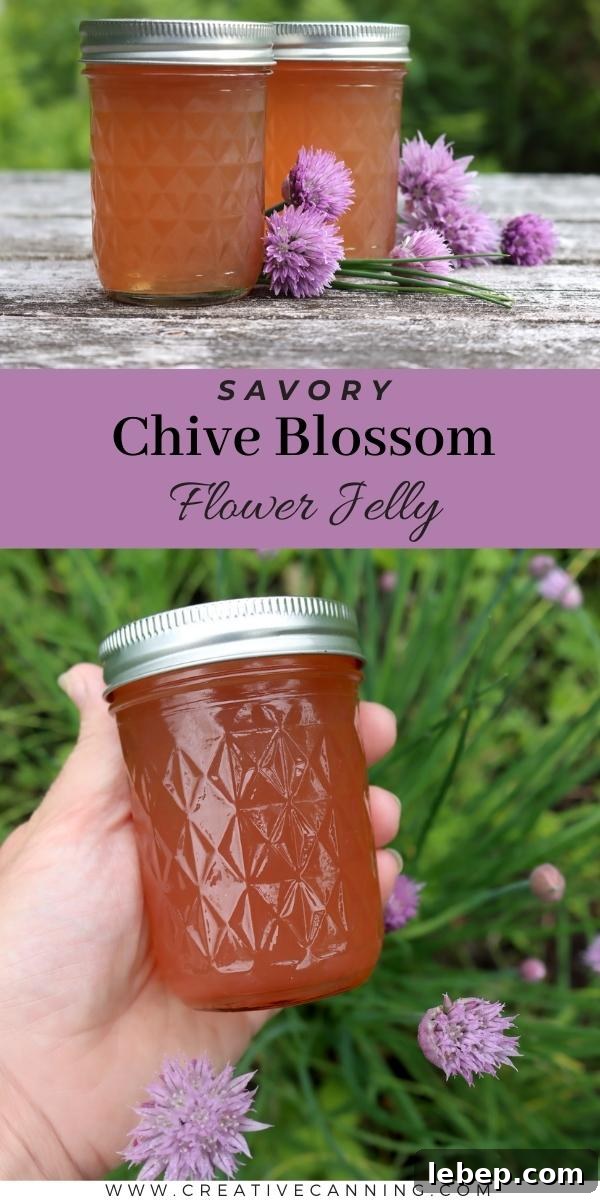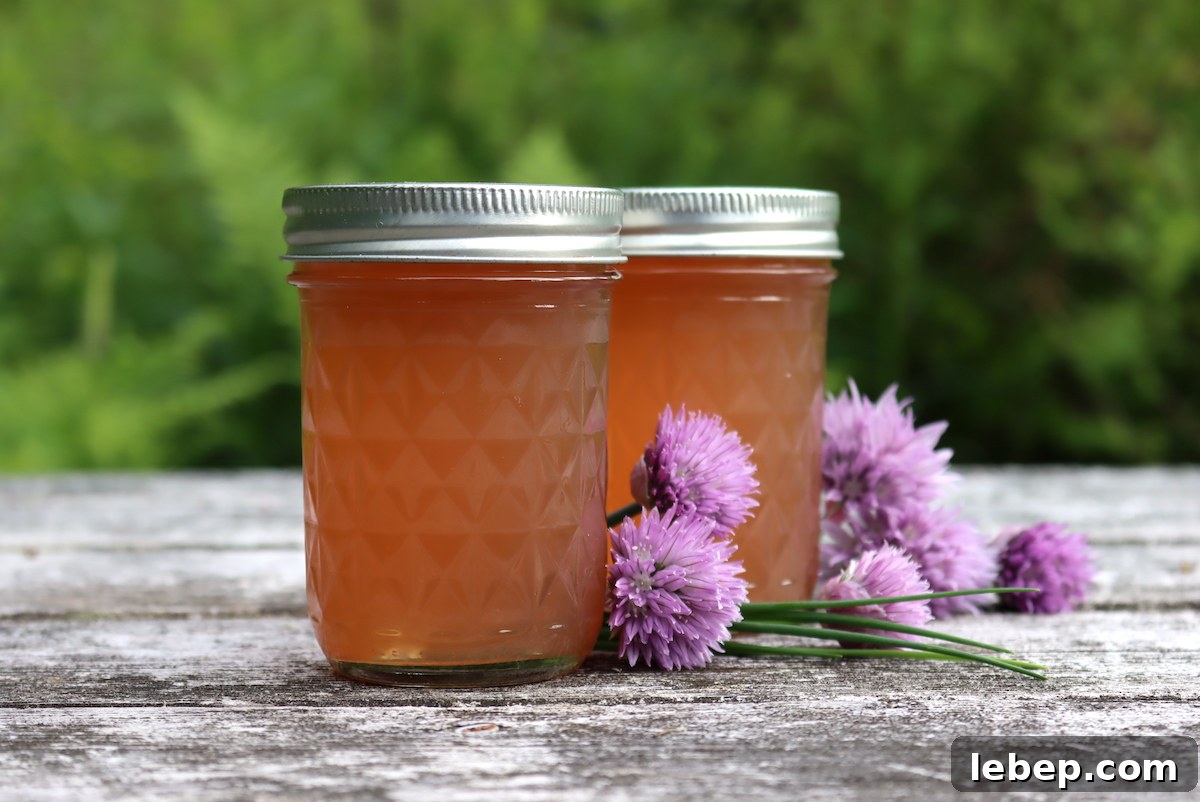
Chive Blossom Jelly is a savory, aromatic jelly with an unexpectedly robust flavor. It’s wonderful on warm biscuits, stirred into a cheese board, or used as a glaze for roasted meats.
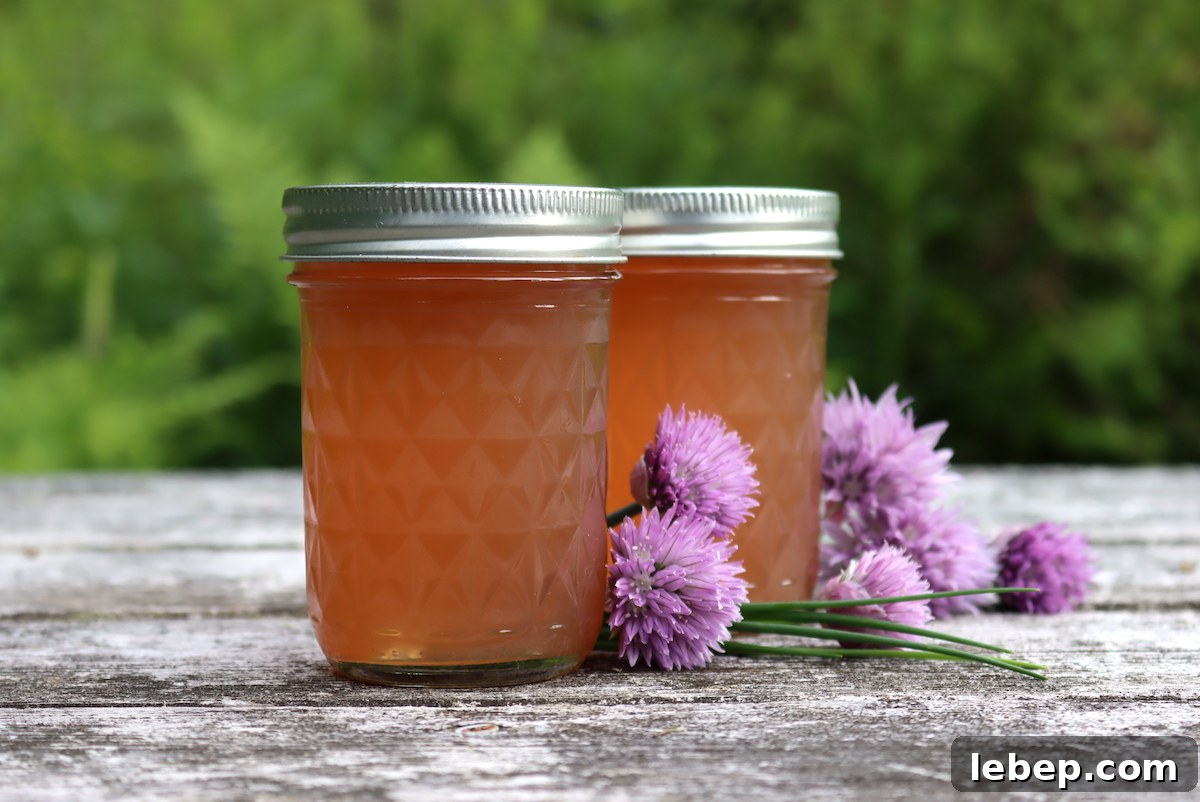
Over the past year I’ve been exploring savory herbal jellies to add interest to charcuterie plates, sandwiches, and small-bite appetizers. While some floral jellies lean sweet, chive blossoms suit a savory profile—think gentle onion notes brightened with acid and a touch of sugar to make a balanced condiment.
This recipe combines chive blossom infusion with lemon juice, vinegar, and a little sugar. A splash of white wine is optional but adds depth and helps counterbalance sweetness. The result is a translucent, herb-forward jelly that pairs beautifully with cheeses, cold cuts, and roasted proteins.
A Quick Look at the Recipe
- Recipe Name: Chive Blossom Jelly
- Recipe Type: Flower/Herb Jelly
- Canning Method: Water bath canning
- Prep/Cook Time: 30 minutes total
- Canning Time: 10 minutes (add time for high elevation)
- Yield: 4–5 half-pint jars (8 oz each)
- Jar Sizes: Quarter pint, half pint, or pint
- Headspace: 1/4 inch
- Ingredients Overview: Chive blossoms, water or wine, lemon juice, vinegar, low-sugar pectin, and sugar
- Difficulty: Easy — you make a strong tea and set it with pectin
Ingredients for Chive Blossom Jelly
This batch yields about five half-pint jars. Gather:
- 2 cups fresh chive blossoms (or 1 cup dried chive blossoms)
- 1 box (1.75 oz) low-sugar pectin (such as Sure-Jell Low Sugar)
- 1 to 2 cups sugar, to taste
- 1 cup vinegar (white wine vinegar, champagne vinegar, rice vinegar, or cider vinegar)
- 1/4 cup lemon juice (important for flavor and preservation)
- 4 cups liquid: either 4 cups water or 2 cups water + 2 cups white wine
Choose a mild vinegar—white wine or champagne vinegar will keep the jelly bright and delicate. Rice vinegar is gentle and less sharp. Apple cider vinegar works but will darken the color toward brown rather than a vibrant pink. Lemon juice helps pull color from the blossoms and aids preservation when canning.
How to Make Chive Blossom Jelly
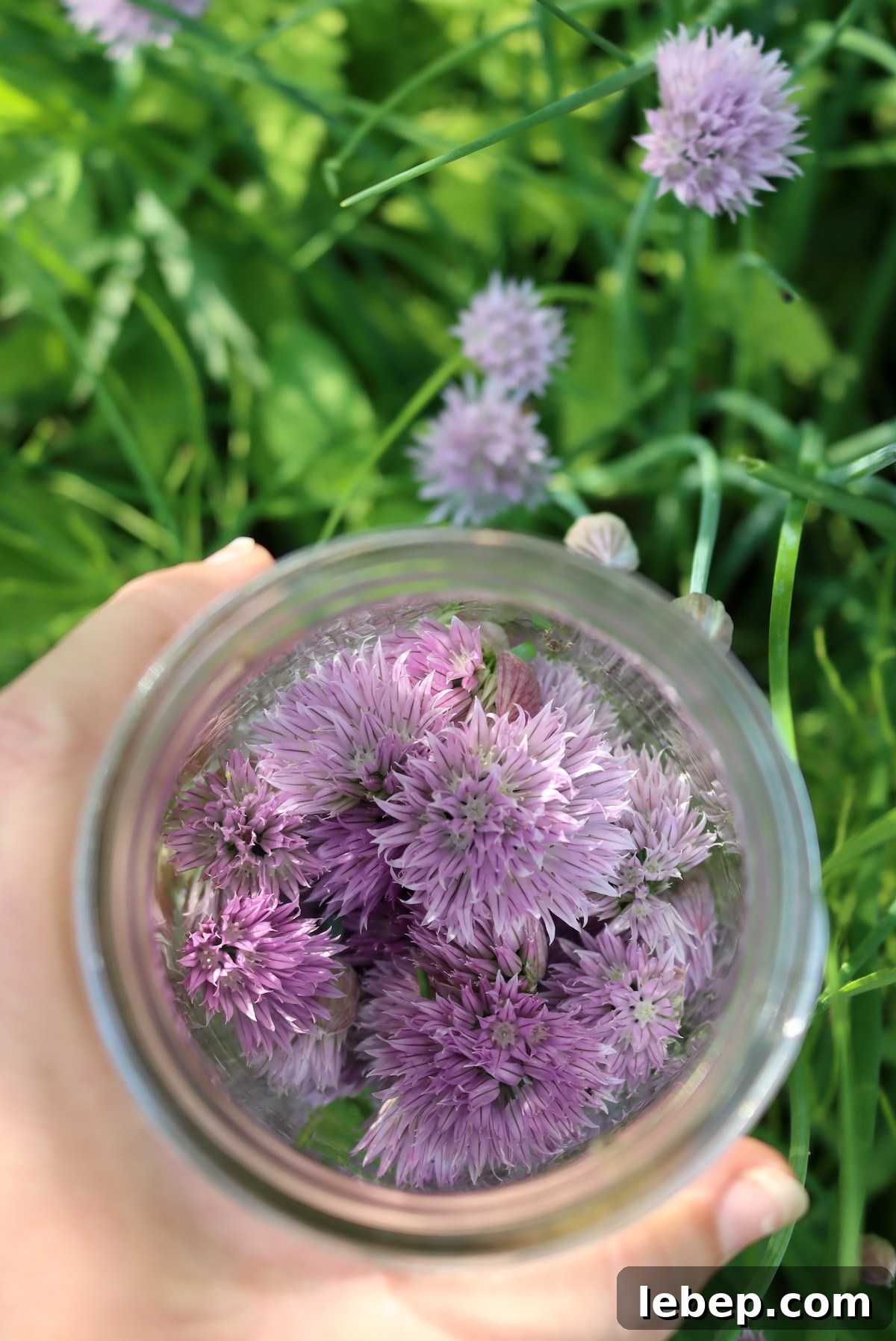
Harvest chive blossoms from pesticide-free plants and rinse gently. Use 2 cups fresh blossoms, chopped, or 1 cup dried blossoms if using dried.
1. Make the tea: place the blossoms in a heat-safe container and pour 4 cups of boiling water over them (or a boiling mixture of 2 cups water and 2 cups white wine). Add the lemon juice while steeping to encourage color extraction. Let steep 10–15 minutes.
2. Strain: strain the liquid through a fine mesh strainer or cheesecloth, pressing gently to extract flavor; discard the solids.
3. Combine and heat: pour the strained liquid into a saucepan or jam pot. Stir in the vinegar and pectin, then bring to a full rolling boil.
4. Boil for one full minute with the pectin, then add the sugar. Stir to dissolve, return to a full boil, and boil for a further minute. Remove from heat.
5. Jar and process: ladle the hot jelly into sterilized jars, leaving 1/4 inch headspace. Wipe rims clean, apply lids and bands, and process in a water bath canner for 10 minutes (increase processing time if at high elevation).
If you prefer to refrigerate or freeze rather than can, let jars cool to room temperature and store: refrigerated jellies keep up to 1 month, frozen jellies up to 6 months, and properly sealed canned jars 12–18 months. Refrigerate after opening.
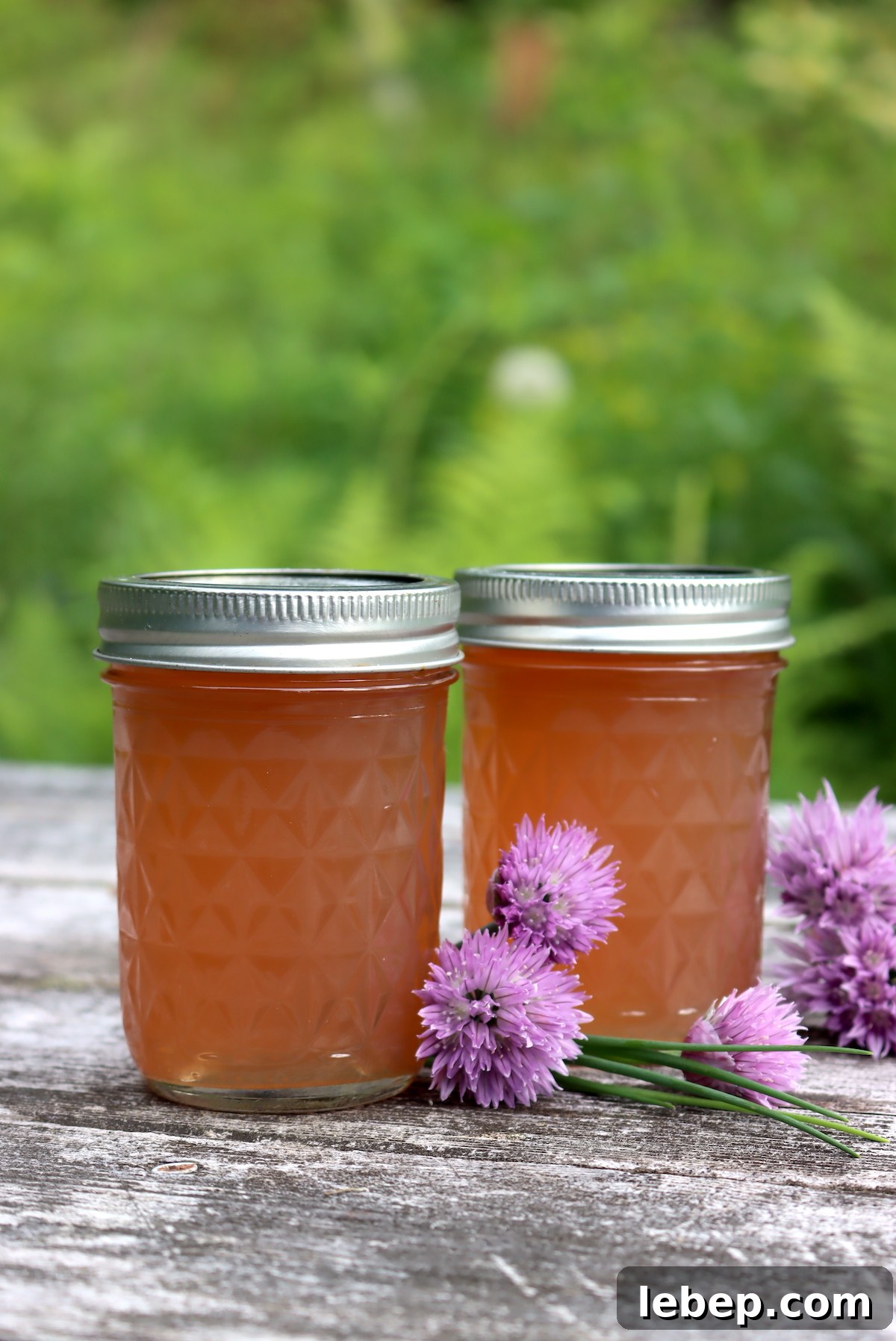
Chive Blossom Jelly Variations
To emphasize sweetness, increase sugar up to 3–4 cups for a sweet-spicy variation. Blend in other flavor elements—thinly sliced onions, orange zest, or tomatoes—to create fruit-vegetable jellies. If using alternative pectins such as Pomona’s, follow the manufacturer’s instructions for the correct order and use of calcium water.
Leftover blossoms are versatile: infuse oils or vinegars, make chive blossom butter, or add blossoms to savory baked goods like scones or biscuits. Stems make a bright chive pesto, and fresh blossoms are lovely scattered over salads or pasta dishes.
Canning Chive Blossom Jelly
Always start with clean, sterilized jars and fresh lids. Fill jars, leaving 1/4 inch headspace, wipe rims clean, and secure lids. Process in a boiling water bath for 10 minutes (add extra processing time if you’re above about 6,000 feet).
After processing, let jars cool undisturbed. Check seals after 12–24 hours—lids should be concave and not pop when pressed. Any jars that did not seal should be refrigerated and consumed within a month.
Ways to Use Chive Blossom Jelly
This savory jelly pairs naturally with goat cheese, brie, and aged cheeses on a charcuterie board. Use it as a glaze for roasted pork or chicken, spoon it onto sandwiches for a savory-sweet contrast, or serve a small ramekin alongside pâté and crackers. It also brightens grilled vegetables and adds a flavorful finishing touch to cold cuts.
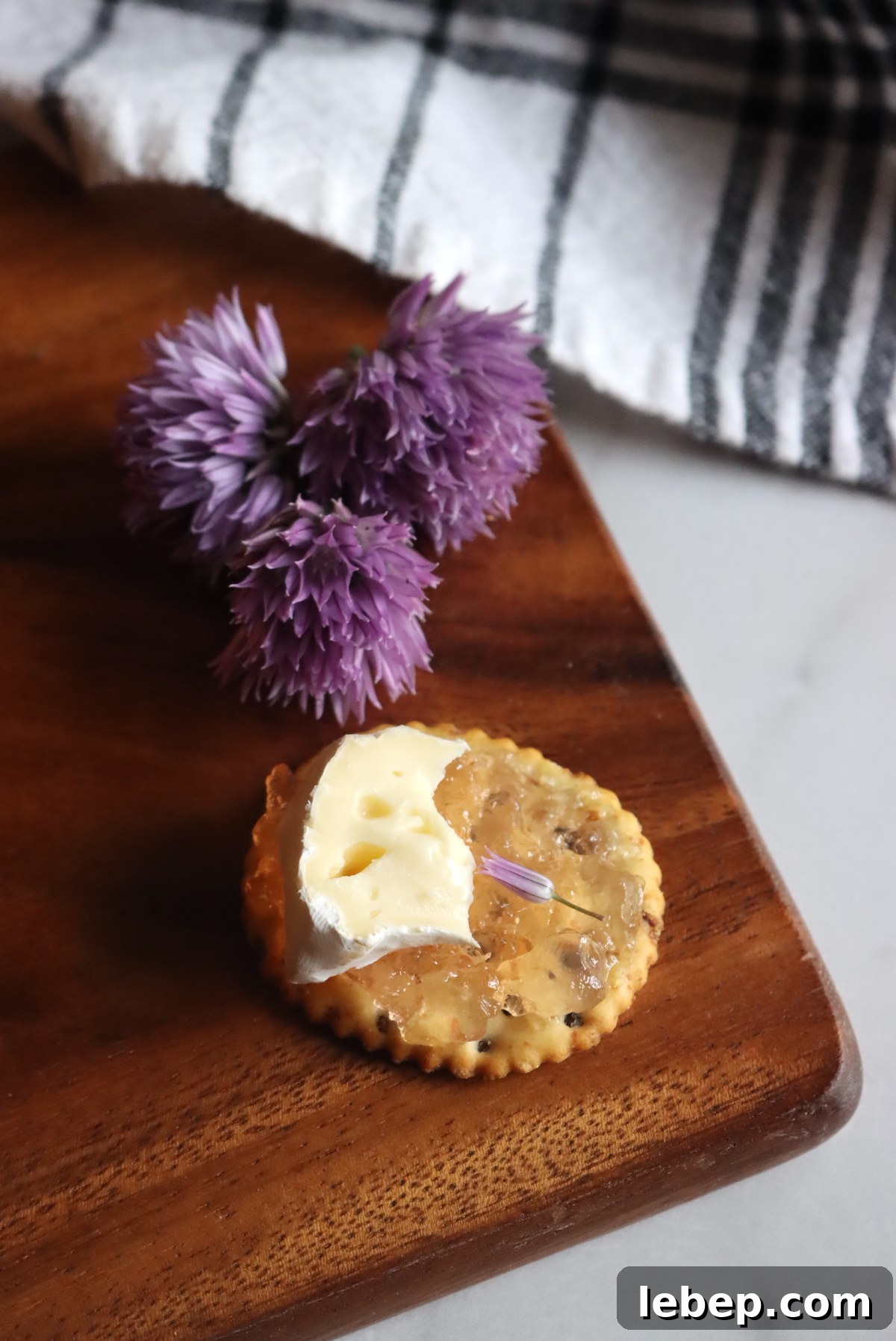
Chive Blossom Recipes
If you enjoy chive blossoms, try other simple preparations like chive blossom butter or chive-infused vinegar and oil. Fresh blossoms also work well with eggs or folded into soft cheeses.
- Chive blossom butter or compound butter
- Chive blossom vinegar and oil infusions
- Eggs with chive blossoms for a delicate garnish
This savory jelly sits alongside other savory preserves such as garlic scape jam, tomato jam, and caramelized onion jam if you’d like more pantry-made condiments.
Herbal and Flower Jellies
Flower and herb jellies are a creative way to capture seasonal flavors. Use this chive blossom technique with other edible flowers or herbs, adjusting acid and sweetness to suit the plant.
Spring Jelly Recipes
Spring offers many edible blossoms and tender tips perfect for jellies: rose petals, lilac, dandelion, and spruce tips all make interesting preserves. Experiment with different vinegar and wine combinations to find the balance you prefer.