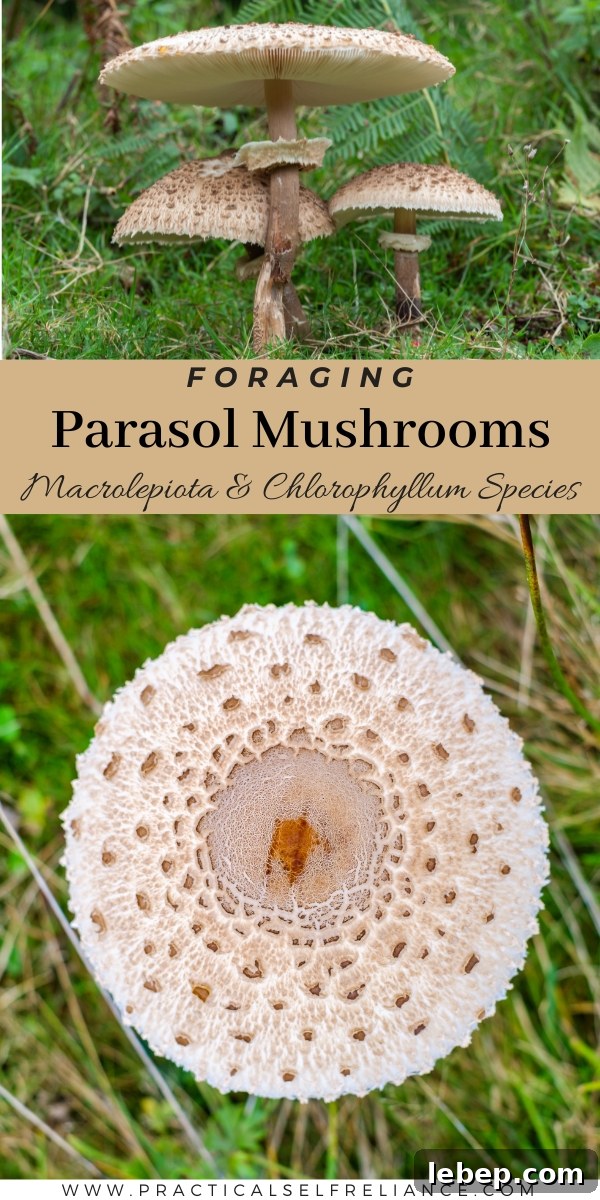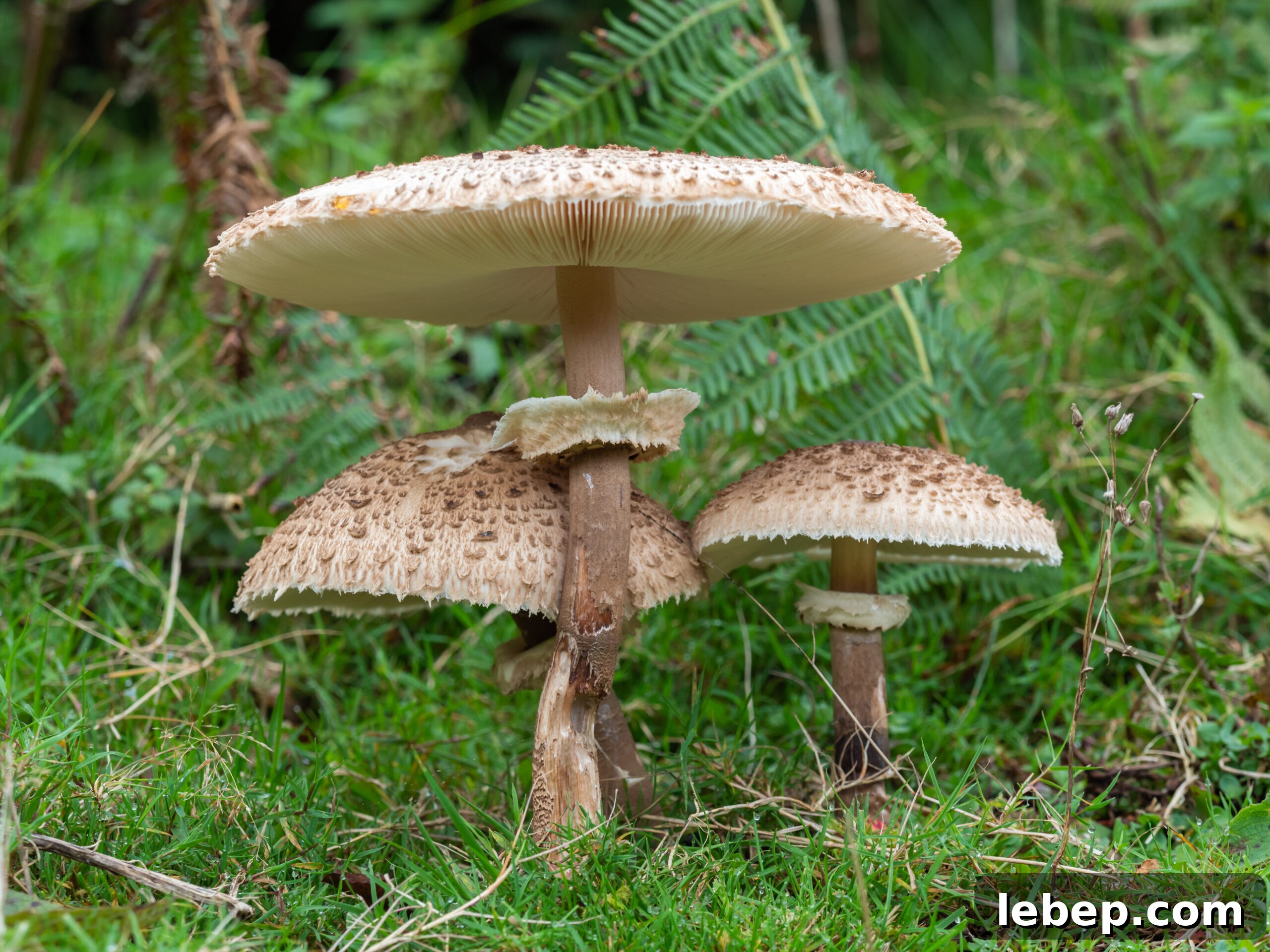
Parasol mushrooms (Macrolepiota and Chlorophyllum species) are classic summer edibles found across Europe and the United States. Favored in French cuisine for breading and frying, they work well in many dishes where mushrooms are used.
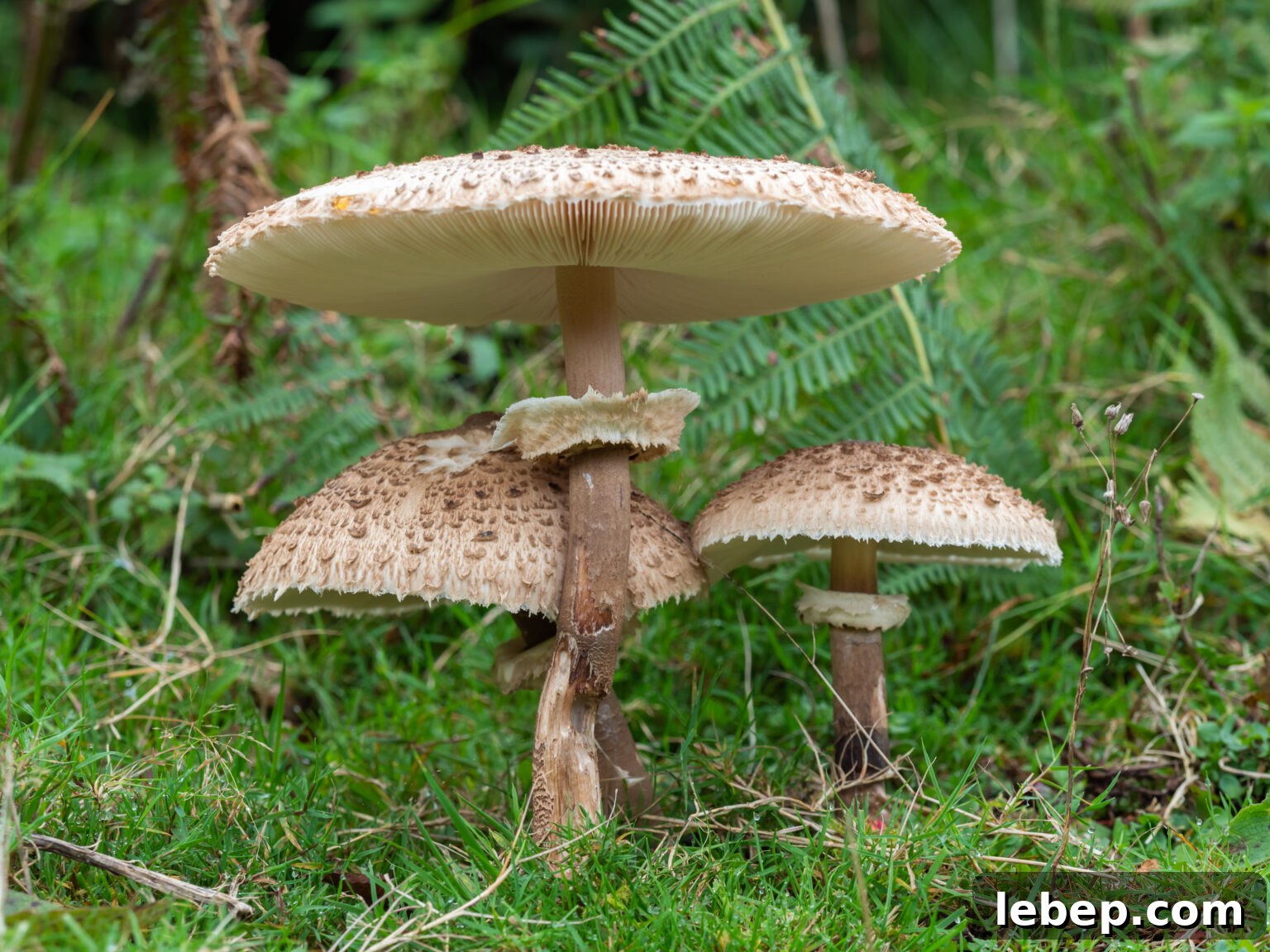
This article was written by Timo Mendez, a freelance writer and amateur mycologist who has foraged wild mushrooms around the world.
In France the Parasol Mushroom (Macrolepiota procera) carries many regional names—coulemelle, grizzette, fusée and others—reflecting its wide popularity. It’s prized for its flavor and versatility: breaded and fried, grilled, stuffed or simply sautéed, it complements many dishes. Large and distinctive, Parasols appear in diverse habitats with rich, organic soils: meadows, pastureland, forest edges, gardens and urban green spaces.
“Parasol” is used loosely and covers several related species. True parasols belong to Macrolepiota, while similar “shaggy parasols” are in Chlorophyllum (section rhacodes). They share a common look but are distinct taxonomically. Importantly, some toxic lookalikes exist—most notably Chlorophyllum molybdites, the green-spored parasol that causes many cases of mushroom poisoning in North America—so caution and proper identification are essential.
Natural History Of Parasol Mushrooms
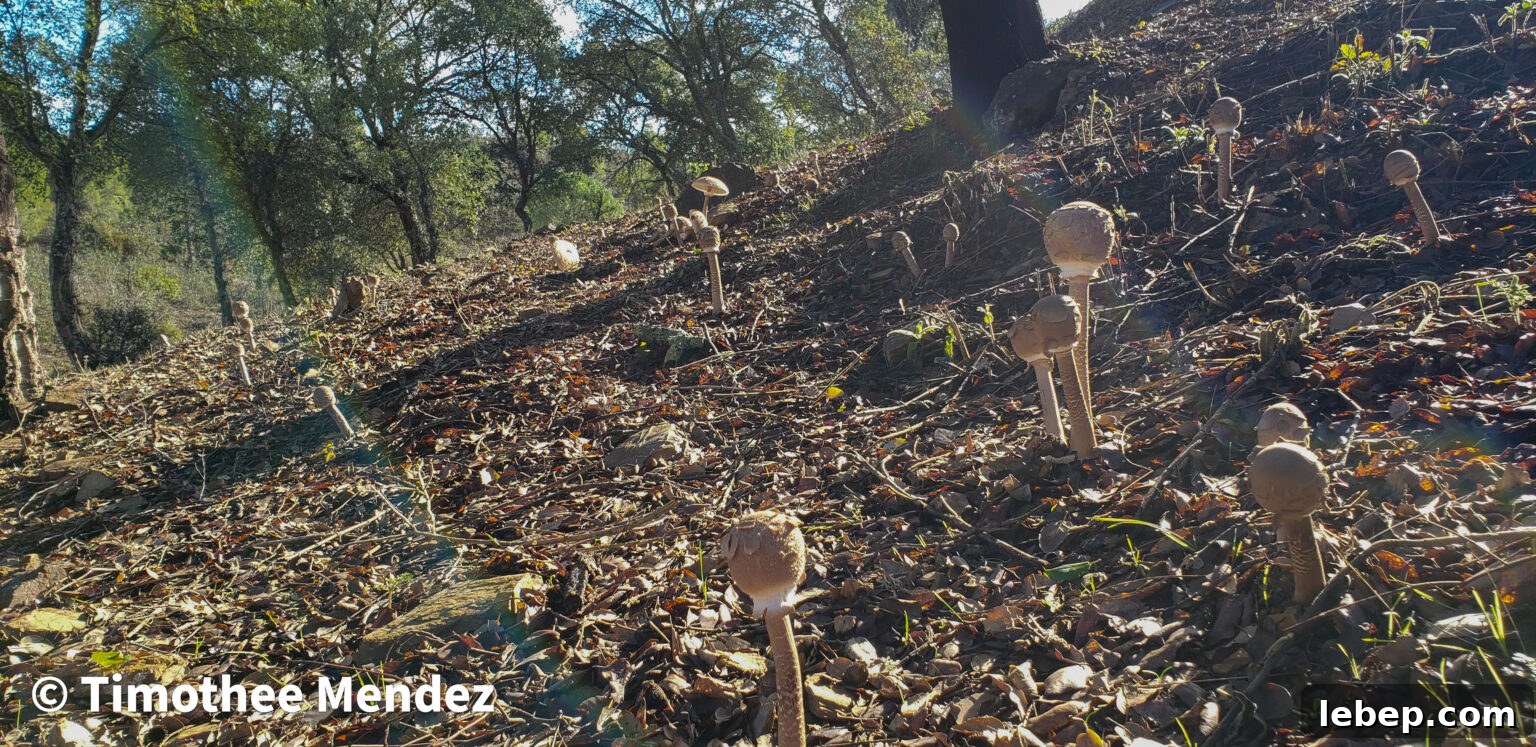
Parasol mushrooms are saprotrophic fungi that break down organic matter in soil. They prefer fertile, nitrogen-rich soils and often thrive in human-influenced landscapes like pastures, lawns, gardens and parklands. They fruit from the ground—not from wood—and sometimes form fairy rings.
Because they grow in nutrient-rich soils and in areas influenced by humans, parasol mushrooms can bioaccumulate heavy metals. Foragers should avoid collecting mushrooms from contaminated sites such as roadsides, industrial zones or areas with known pollution.
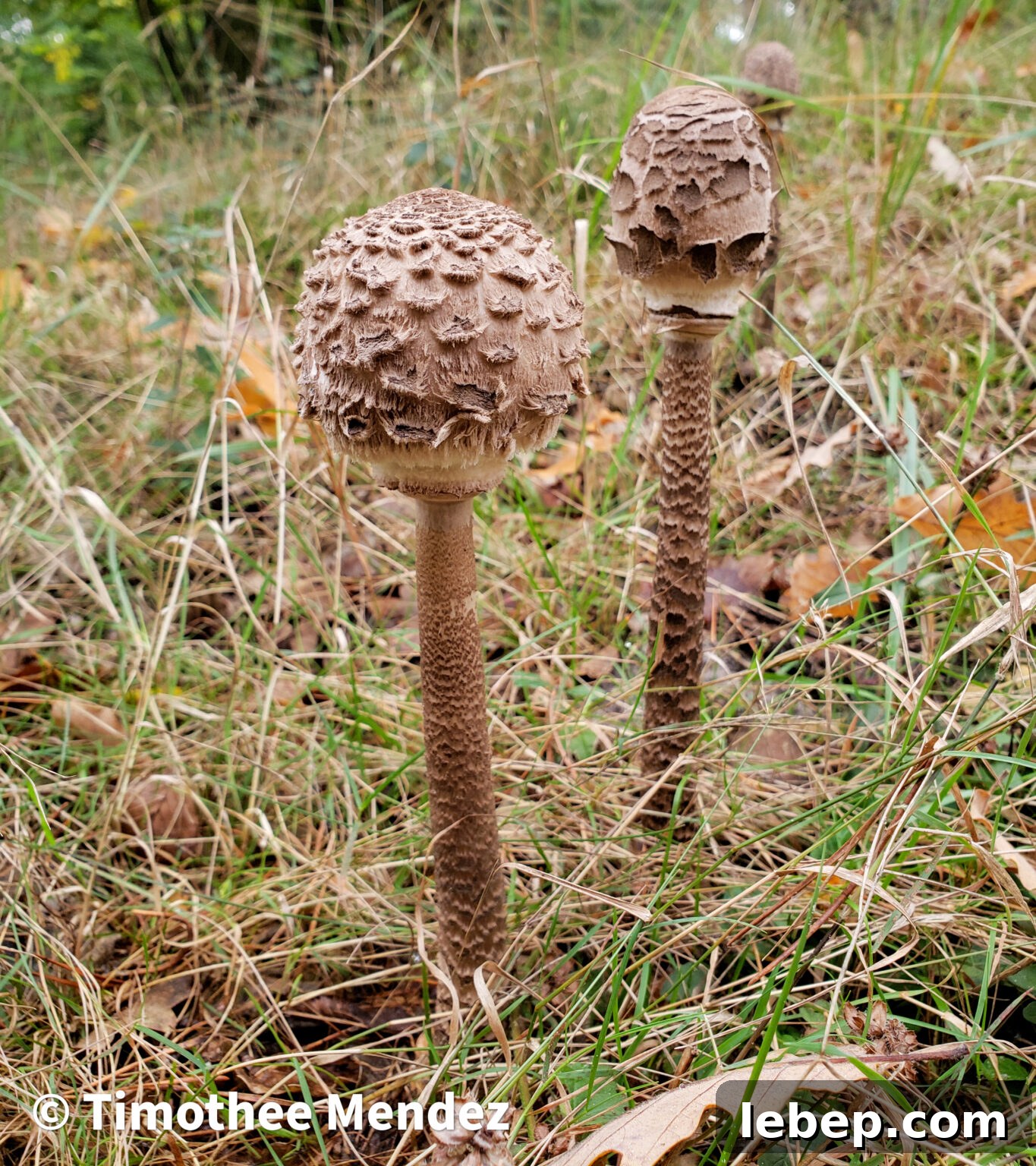
Two main groups are typically referred to as parasols:
- True Parasol Mushrooms (Macrolepiota spp.): This group includes Macrolepiota procera, the well-known edible species. True parasols are widely eaten in Europe and parts of North America. They are generally large and have distinctive stem patterns.
- Shaggy Parasols (Chlorophyllum sect. rhacodes): These edible species (for example Chlorophyllum rhacodes, C. brunneum and C. olivieri) are often smaller, with shaggy caps and smoother stems. Some Chlorophyllum species are toxic or cause gastric upset in sensitive individuals, so caution is needed.
How To Identify Parasol Mushrooms
True parasol mushrooms are typically large—caps often exceed 10 cm and sometimes reach 30–40 cm. Their umbrella-like caps are covered with radially arranged brown scales and usually show a darker central “nipple.” Gills are free from the stem, closely spaced, and white to slightly pinkish. The spore print of edible Macrolepiota is white.
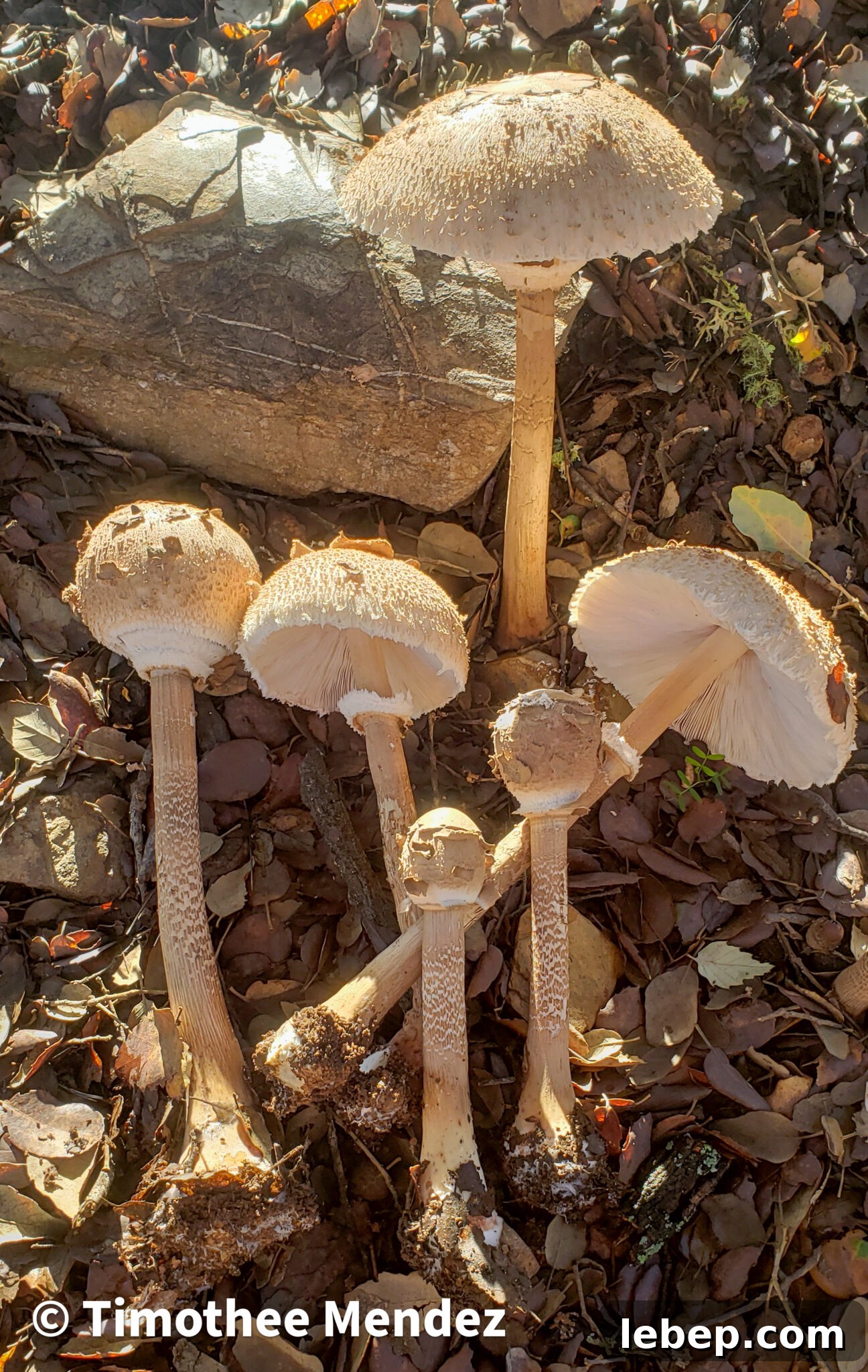
True Parasol Mushrooms (Macrolepiota procera)
Key identification features:
Cap
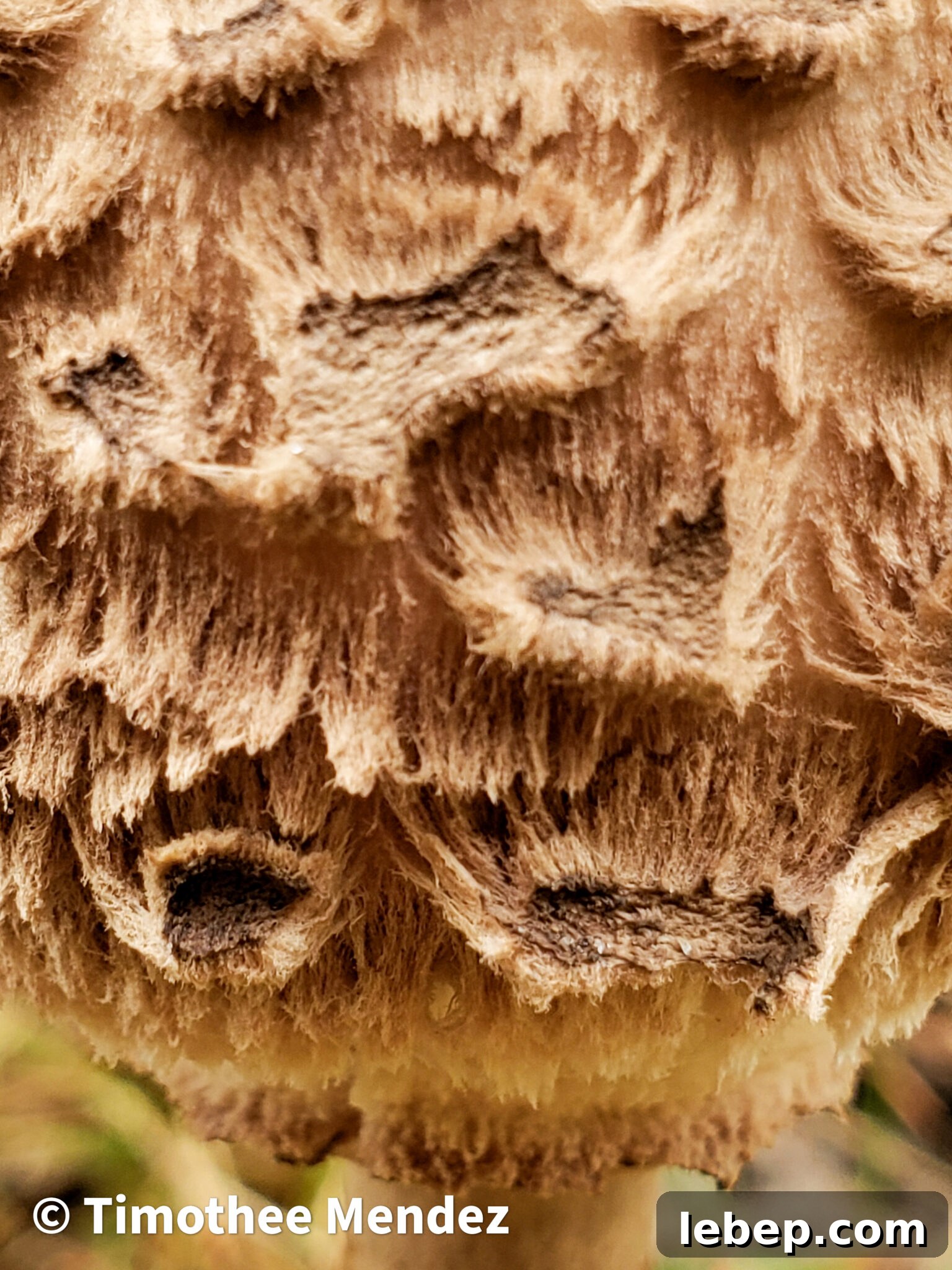
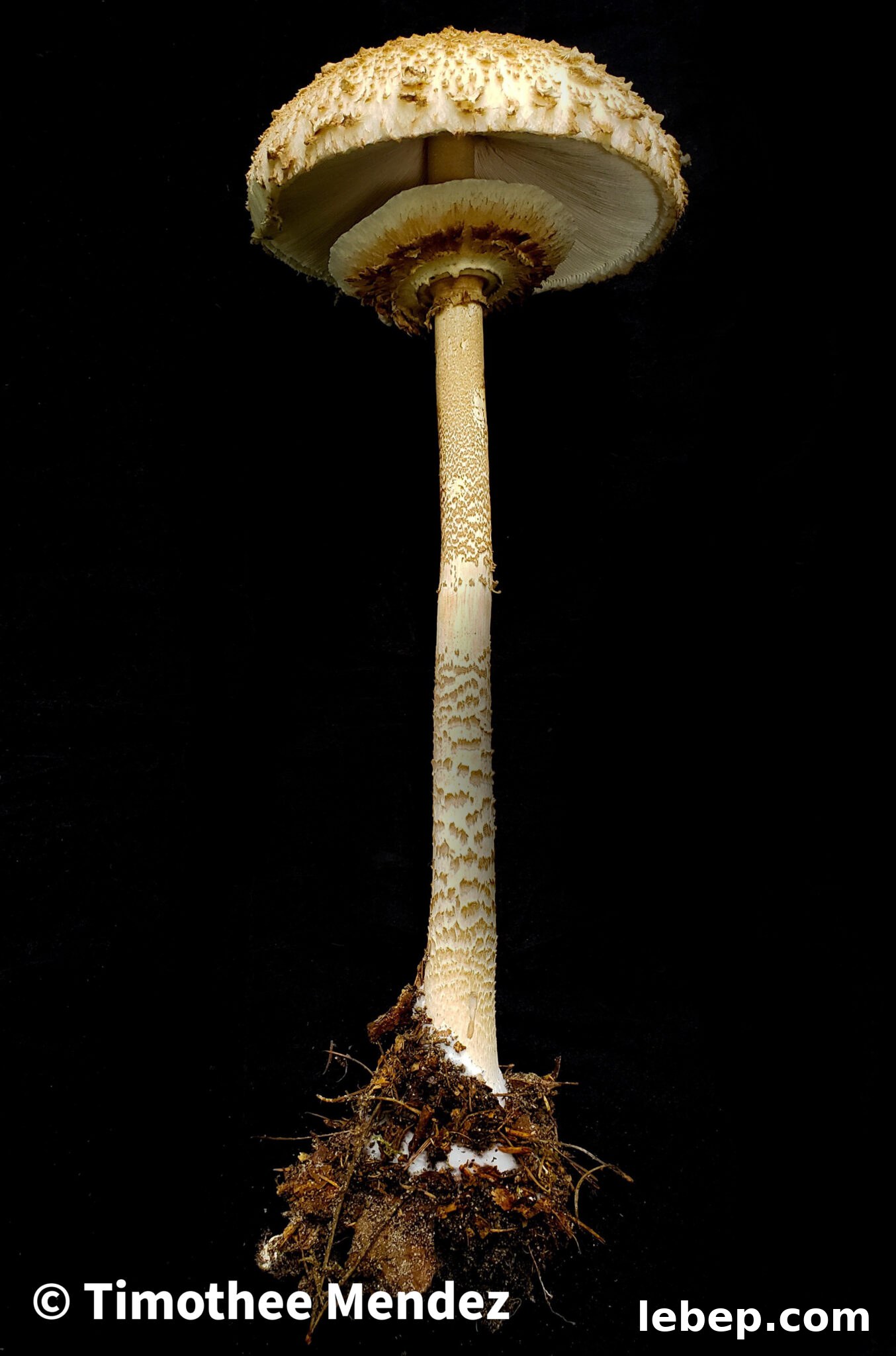
Young caps are egg-shaped, later flattening into a saucer. The surface is covered in brown scales that fade toward the margin; the central umbo is often darker.
Gills
Free, close gills that are white to slightly pinkish at times. Spore print is white.
Stem
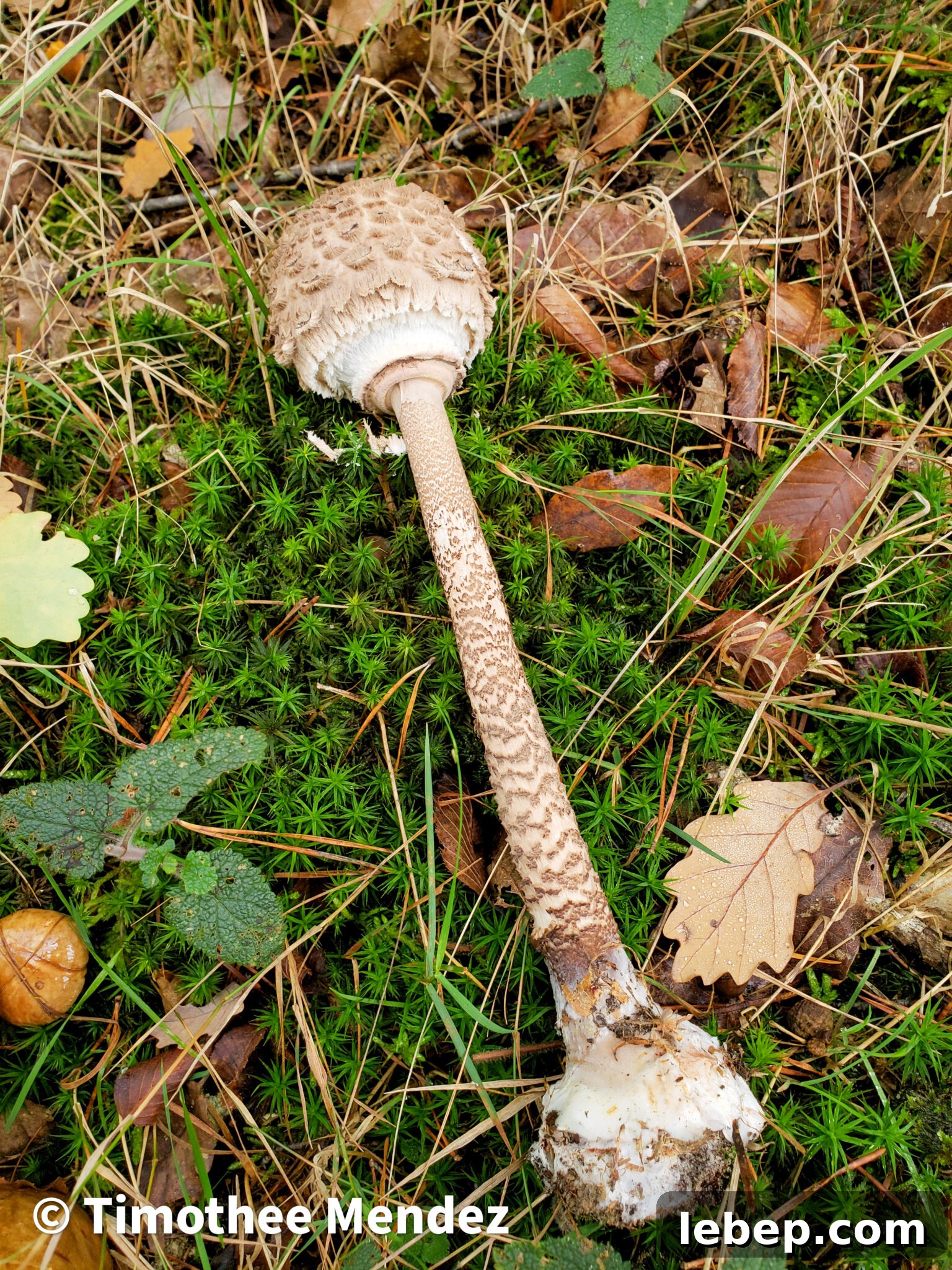
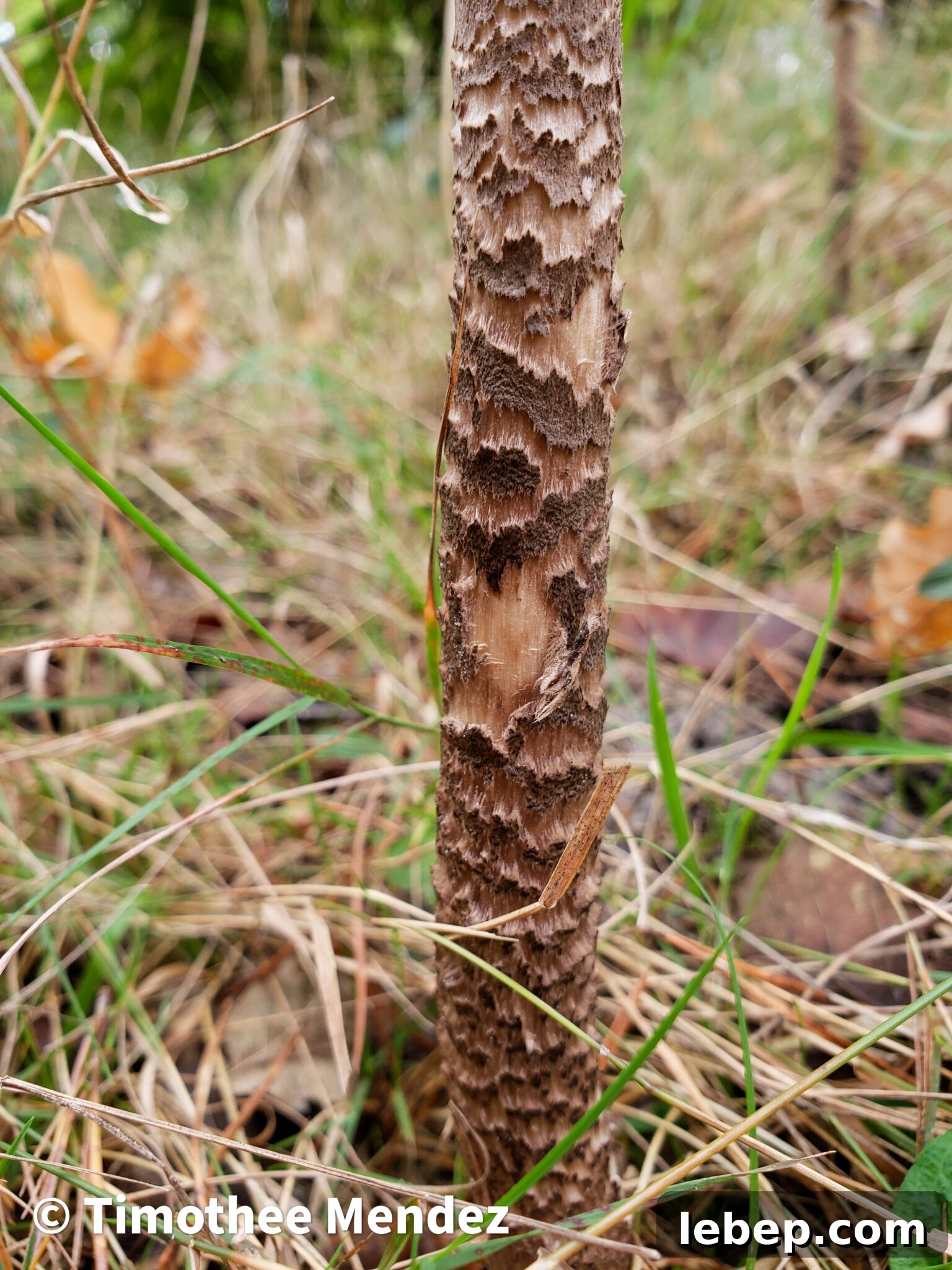
The stem bears a movable ring (annulus) that can slide up and down—an important diagnostic trait. The stem often displays a characteristic snakeskin (reticulate) pattern. There is no volva at the base.
Smell and Taste
Fresh parasols have a mild, pleasant smell and flavor. They are generally agreeable but should be cooked thoroughly; undercooked parasols can be hard to digest for some people.
Several Macrolepiota species resemble M. procera and are edible. The detachable ring and the reticulate stem are useful ID features. Note that some species formerly placed in Macrolepiota have been moved to Chlorophyllum; taxonomy changes occasionally, so consult up-to-date references when in doubt.
Identification Checklist For Parasol Mushrooms (Macrolepiota)
- Large size—rarely under 10 cm.
- Cap starts spherical/egg-shaped and flattens with age, with a central nipple.
- Radial brown scales fading toward the margin.
- Free, close gills; white spore print.
- Stem with a movable annulus and a reticulate (snakeskin) pattern.
- No volva or bulbous base.
Shaggy Parasols (Chlorophyllum sect. rhacodes)
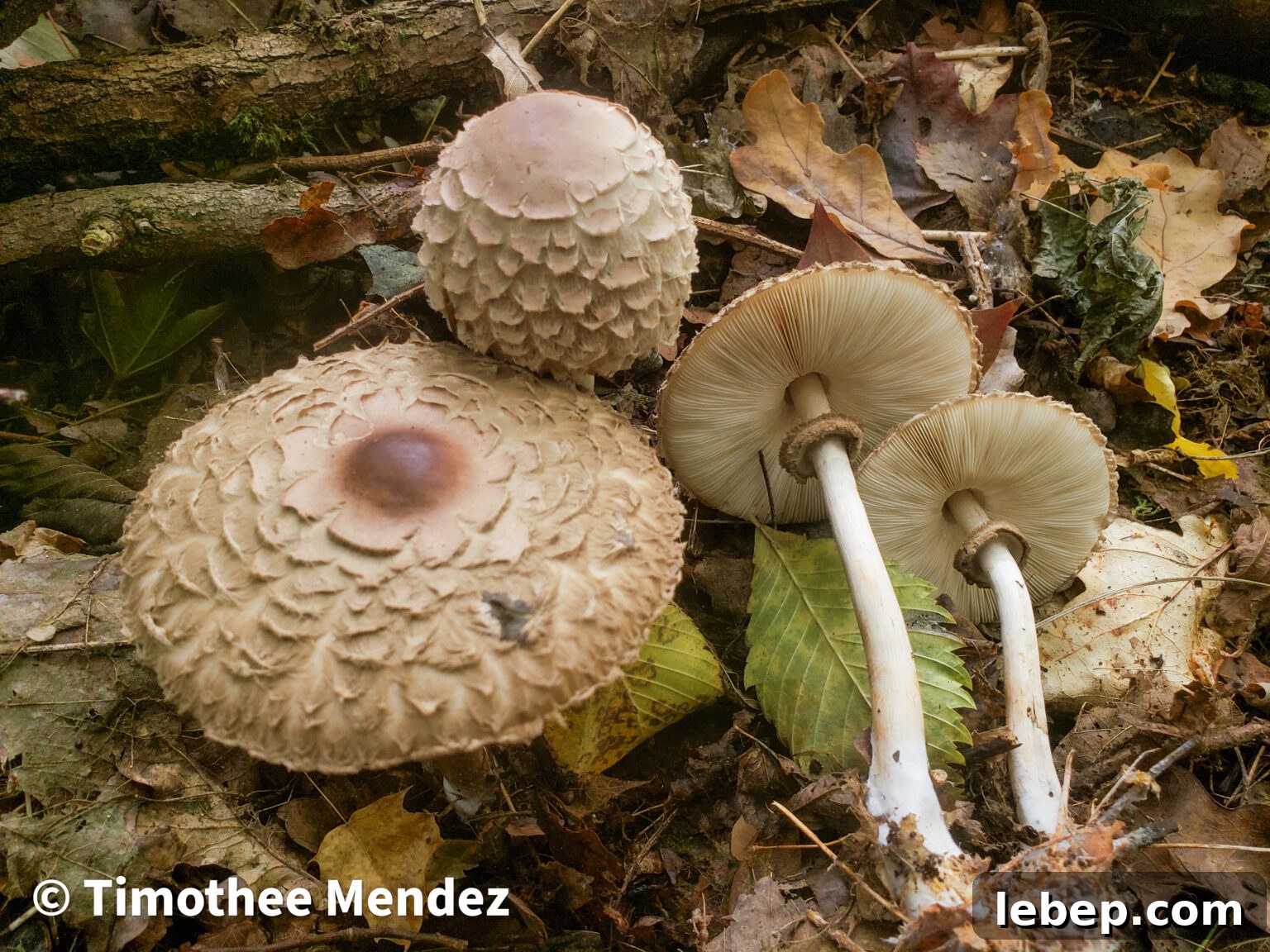
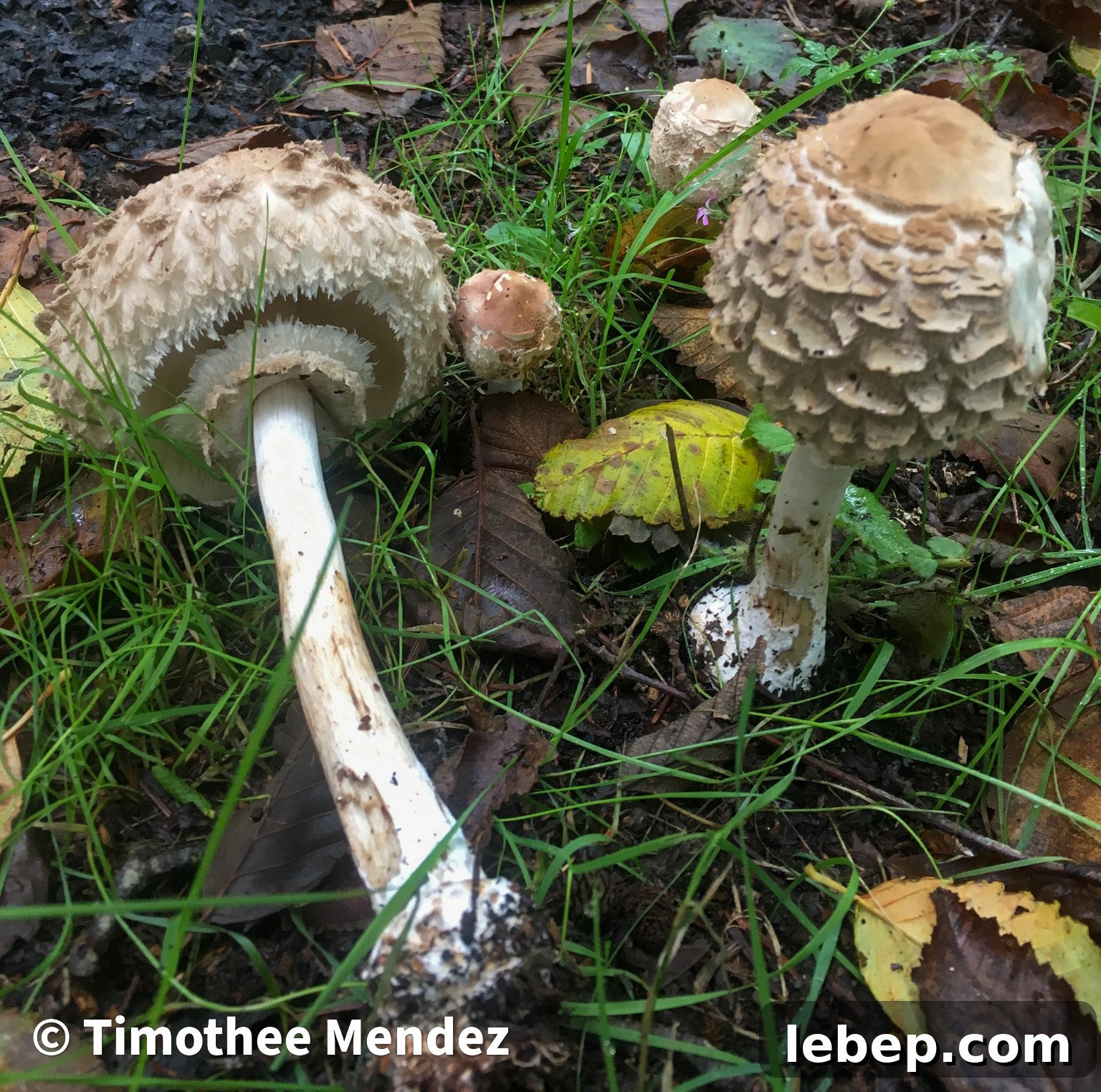
Shaggy parasols (for example C. olivieri, C. rhacodes and C. brunneum) tend to be lighter in color with more pronounced shaggy scales and are often smaller than true Macrolepiota. Their stems are generally smooth rather than reticulate. Some people experience gastric upset after eating Chlorophyllum, so try only small amounts the first time.
Parasol Mushroom Lookalikes
Several species can be mistaken for parasols; careful comparison of gill color, spore print, stem texture and base structure is essential.
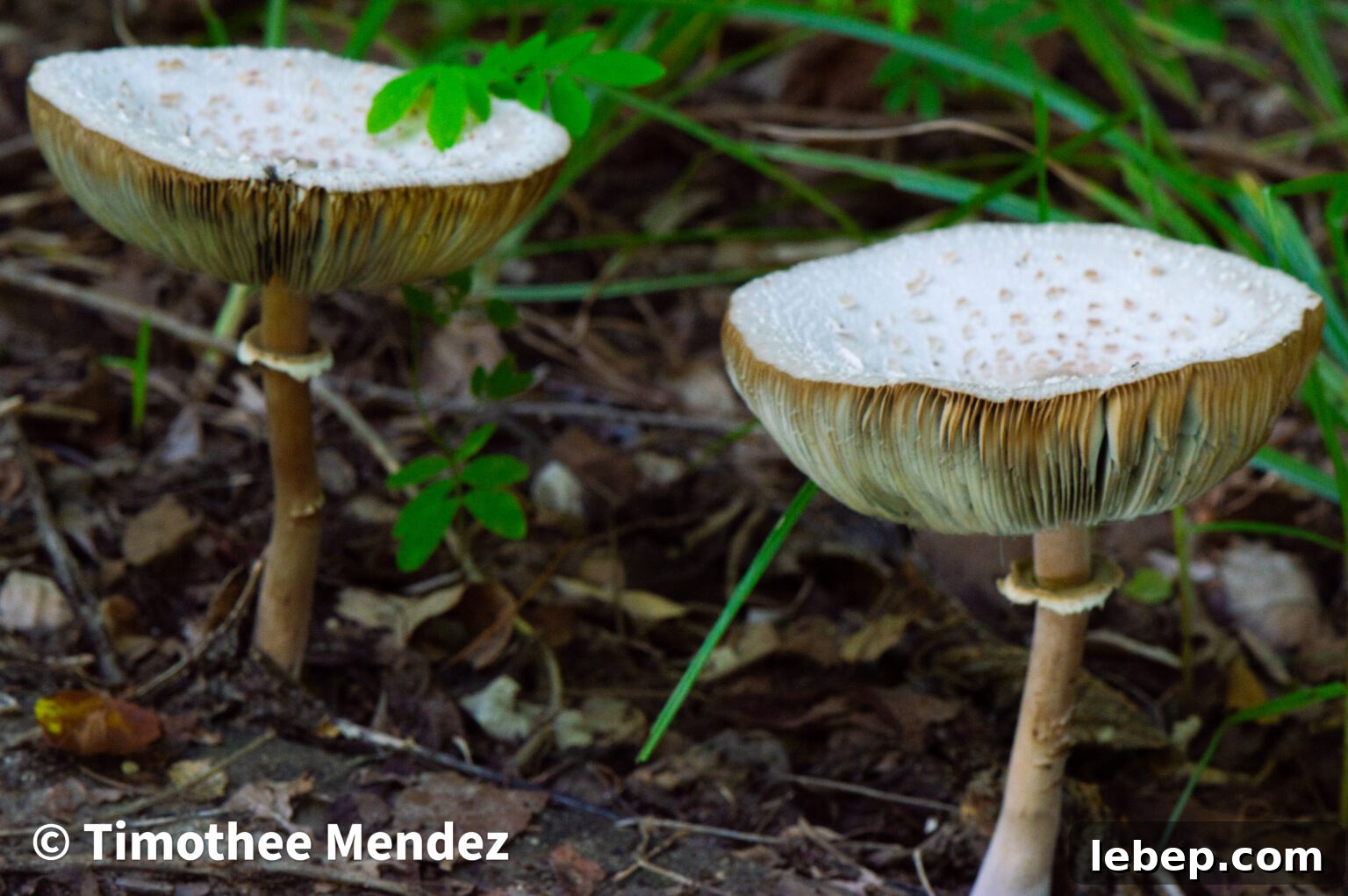
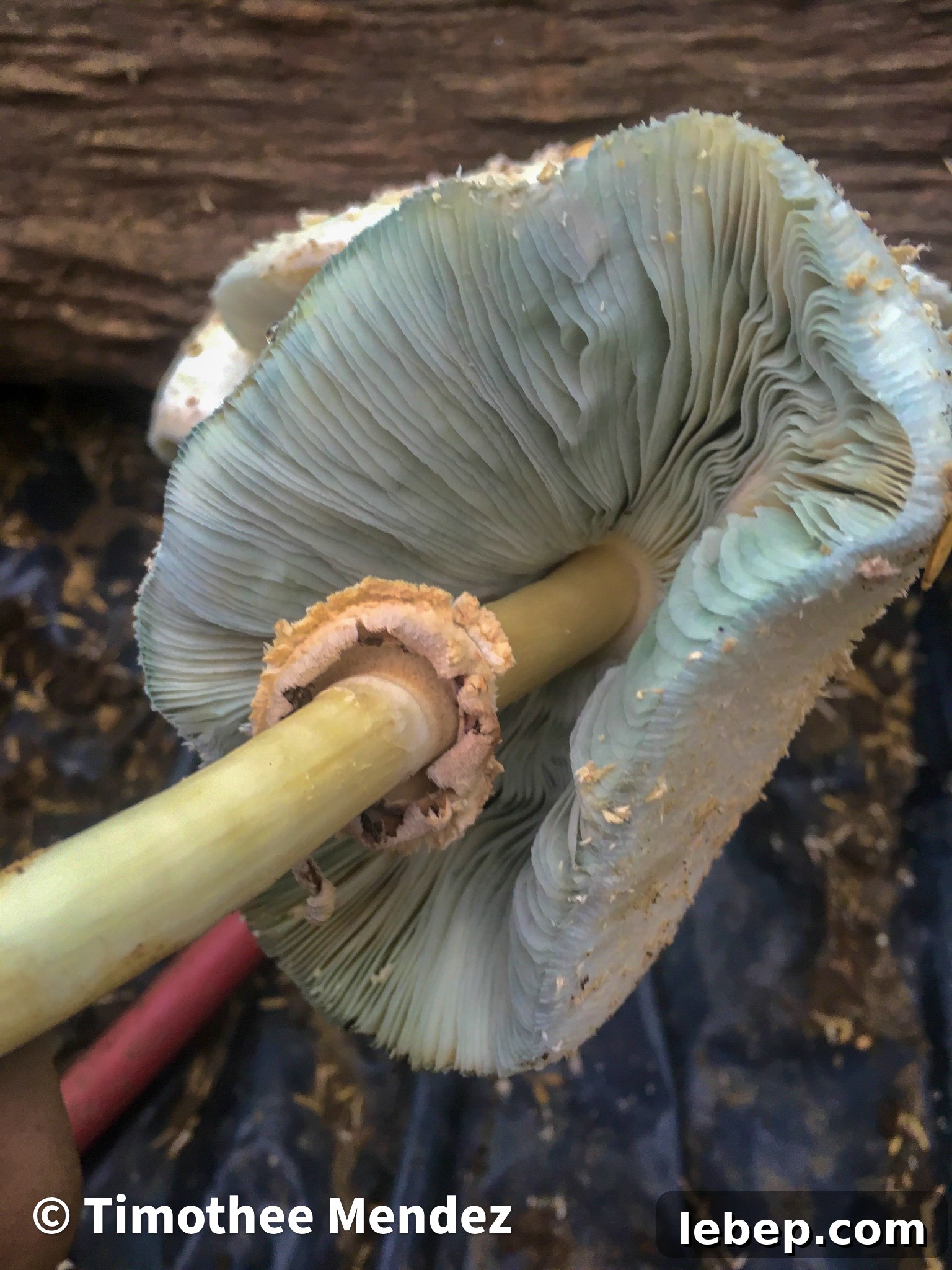
Green-Spored Parasol (Chlorophyllum molybdites)
A common and important toxic lookalike in North America. Its gills and spore print develop green to blue-green hues—an immediate warning sign. If unsure, make a spore print before consuming; edible parasols have a white spore print.
Chlorophyllum venenatum
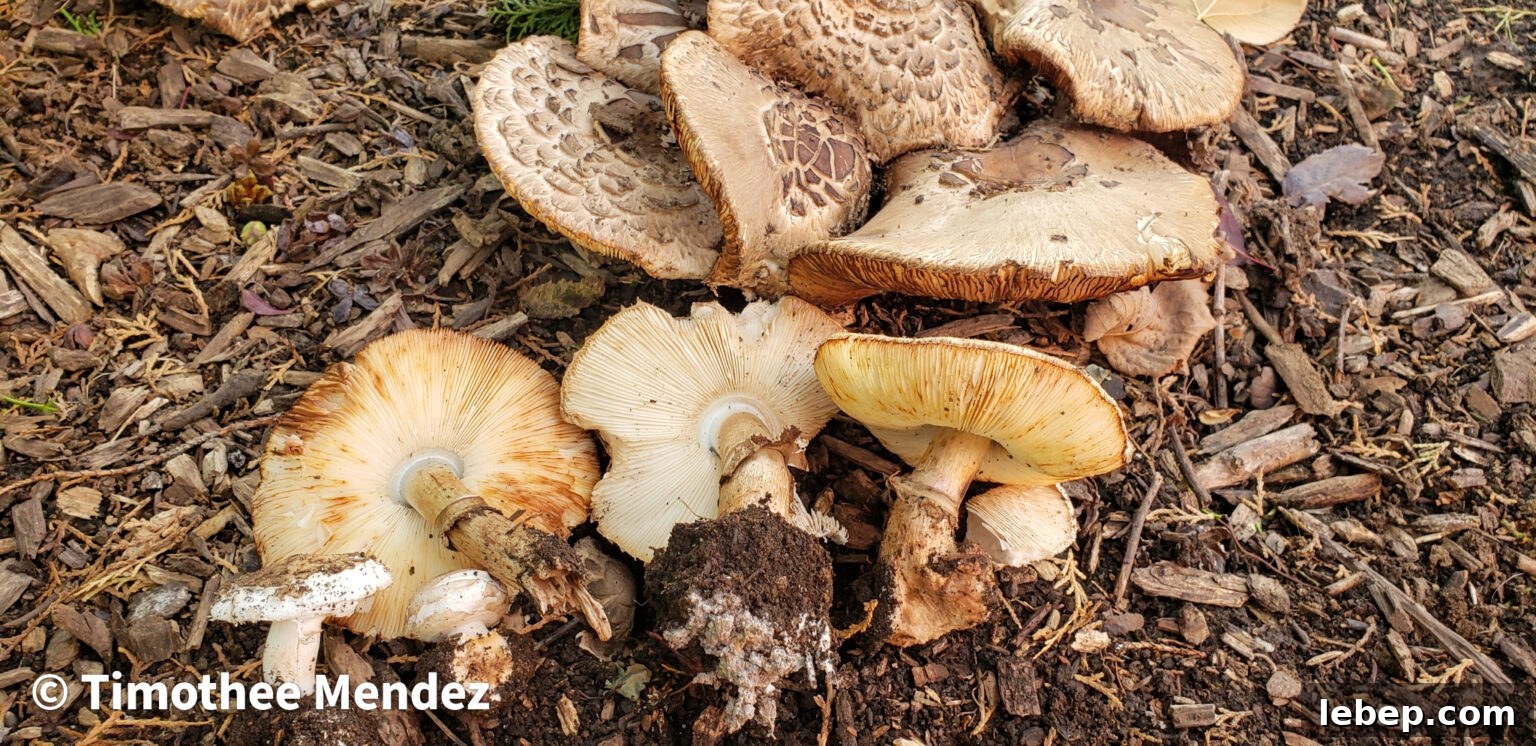
A less common toxic species that may grow in dense clusters and shows darker, patchy scales and a more pronounced bulb at the base. Clustered growth is a red flag—many edible parasols are solitary or scattered rather than tightly cespitose.
Deadly Amanitas (Amanita spp.)
Amanitas can have umbrella-like caps and rings but are distinguishable by a bulbous base with a volva and typically smoother caps with veil remnants rather than true scales. Because some Amanitas are lethal, always check for a volva by carefully examining or excavating the base if uncertain.
Shaggy Mane (Coprinus comatus)
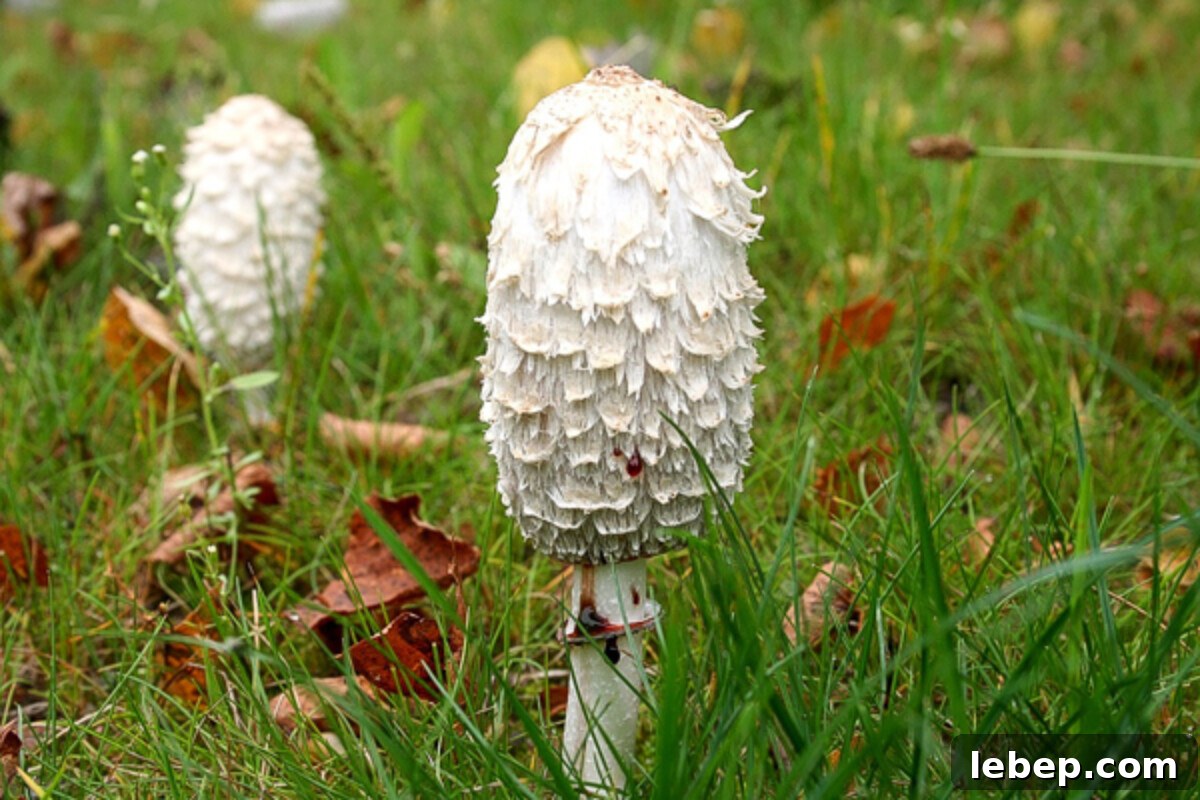
Shaggy manes have a distinctive elongated, cylindrical cap that deliquesces into an inky liquid as they age. They are more fragile and lack the reticulate stem of Macrolepiota.
Lepiotas
Lepiota species can resemble small parasols but are typically much smaller (usually under 10 cm) and lack the textured, reticulate stem. Some Lepiota species are toxic, so size and stem texture help distinguish them.
Where To Find Parasol Mushrooms
Parasols occur widely: northern temperate zones, some mountainous tropical areas and many southern hemisphere regions. True Macrolepiota are less common in the western United States, where Chlorophyllum species are more frequent, especially in urban parks and lawns. Typical habitats include meadows, pastures, forest edges, trail and road margins, gardens and lawns—anywhere with fertile, organic-rich soil.
- Eastern North America: From the Gulf States through the Appalachians to the Northeast and Great Lakes; seasons peak in late summer to fall.
- Western North America: True Macrolepiota are less common; Chlorophyllum species are often found in gardens and parks.
- Europe: Widely abundant in suitable habitats during summer and fall.
- Other regions: Parasols are reported in South America, Australia, New Zealand, Africa and parts of Asia, adapting to local climates and seasonality.
When To Find Parasol Mushrooms
- Northeastern North America: July–November, peaking in September.
- Southeastern U.S.: May–November, peak often in October.
- Gulf States: August–December with a peak around October; in warmer climates seasons may extend nearly year-round.
- Mexico & Central America: June–October with summer monsoons.
- Europe: July–November, sometimes into December in mild climates.
- Southern Hemisphere: March–July is the common fruiting period in many areas.
How To Harvest Parasol Mushrooms
Harvest with respect for ecosystems and local rules. Avoid contaminated sites and leave some mushrooms for wildlife and future seasons. For ID confirmation, take photos and, if needed, remove a whole specimen to inspect the base for a volva. Many foragers collect just the caps—immature, egg-shaped caps are excellent for stuffing—while others harvest entire fruiting bodies. Cutting or snapping the mushroom are both commonly practiced; research suggests little long-term difference for many species, but follow local best practices.
Use a basket to keep mushrooms dry and ventilated. Clean debris in the field to reduce spoilage. Store fresh parasols in the refrigerator and consume or process them within a few days for best quality.
Cooking Parasol Mushrooms
Parasol mushrooms are versatile: use them in pasta, sauces, risottos, stir-fries or simple preparations that highlight their flavor. Always cook parasols thoroughly—raw or undercooked specimens may be hard to digest and can cause discomfort, particularly with some Chlorophyllum species.
Classic European preparations include breading and frying caps (dip in egg, coat with breadcrumbs, and fry until the mushroom is cooked through) or grilling over hot coals. Stuffed caps baked in the oven are another popular option—fill young caps with a savory stuffing of bread, cheese, nuts, herbs or meat and bake until done.
Preserving Parasol Mushrooms
The best preservation method is to cook and freeze them. Sauté or cook slices until done, cool, then freeze in portions for later use. Avoid freezing raw, as texture and flavor degrade. Drying is possible but reduces flavor significantly. Other methods—canning, pickling or making jerky—are options, though results vary and require proper technique.
Bon appétit—enjoy your harvest responsibly and safely.
Summer Mushroom Foraging
Foragers seeking more summer edibles can explore guides to puffballs, shaggy manes, reishi, turkey tail, chanterelles, boletes and many other species. Always use reliable identification resources and exercise caution when trying new mushrooms.