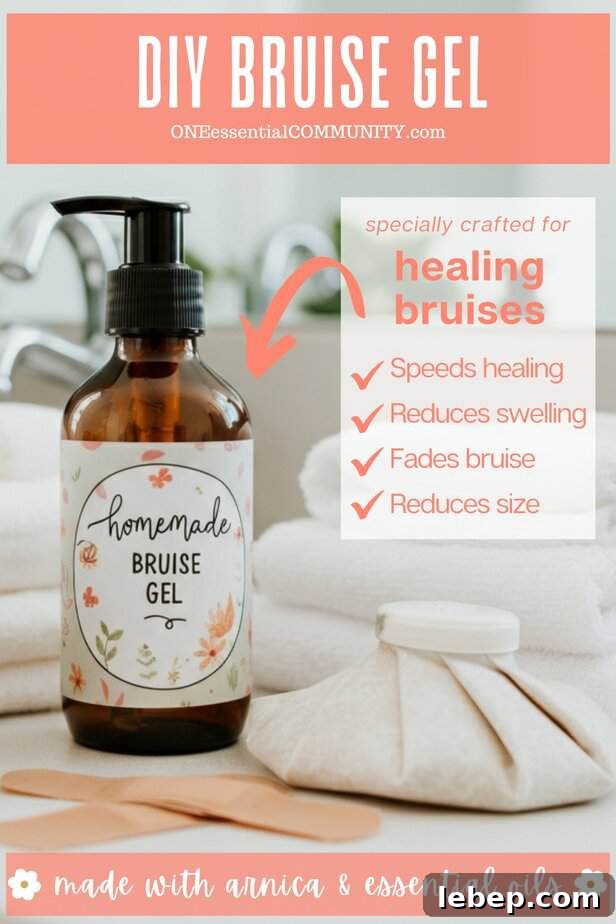
Do you ever notice bruises that seem to appear without explanation? Maybe you bumped into a table, or a purple mark showed up overnight. Bruises are frustrating, but there’s a gentle, natural option you can make at home. This DIY bruise gel combines arnica oil with targeted essential oils to help reduce swelling, fade discoloration, and support faster healing. It’s easy to prepare, absorbs quickly, and feels light on the skin. Here’s how it works and how to make it yourself.
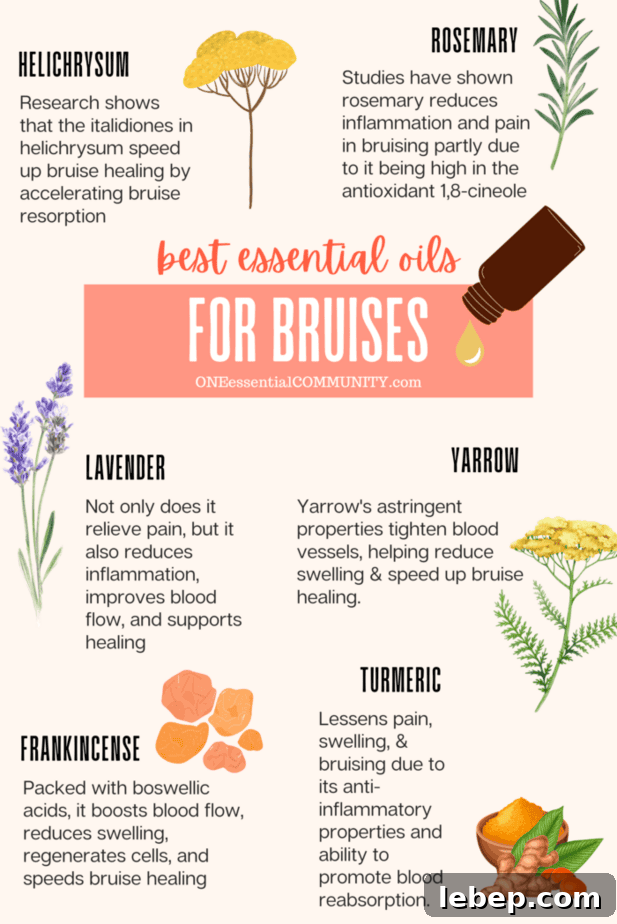
The core of this gel is arnica oil, paired with three essential oils chosen for their skin-repairing and anti-inflammatory properties:
- Helichrysum: Known for helping bruises fade faster and reducing the visible discoloration.
- Frankincense: Supports circulation, reduces swelling, and promotes tissue repair.
- Lavender: Provides gentle analgesic and anti-inflammatory effects while supporting skin healing.
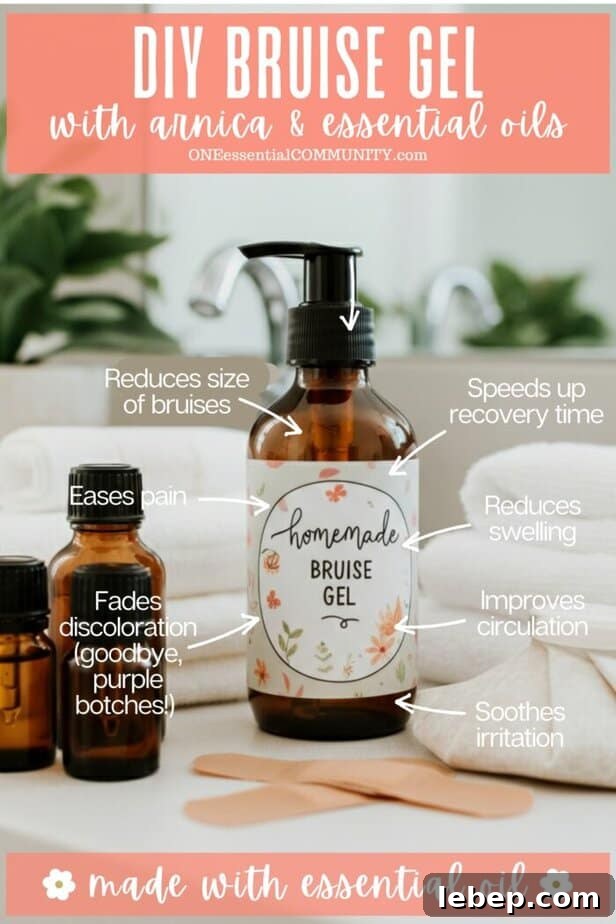
This gel helps the skin reabsorb trapped blood, minimize swelling, and soothe irritation. It absorbs quickly and won’t leave a greasy residue. For best results in the first 48 hours, use the gel along with cold therapy (ice pack) to control swelling, then switch to warmth to encourage circulation as healing progresses.
Ingredients for Homemade Bruise Gel
The following ingredients create a simple, effective bruise gel that supports natural healing without harsh chemicals:
Arnica Oil
Arnica oil is widely used to relieve pain and inflammation from bruises and soft-tissue injuries. It can help reduce swelling and discoloration while supporting circulation to speed recovery.
Helichrysum Essential Oil
Helichrysum offers anti-inflammatory and regenerative benefits. It’s often used to help reduce the size and appearance of bruises and to support skin repair.
Frankincense Essential Oil
Frankincense contains compounds that can reduce inflammation and support tissue regeneration. It can help improve circulation and aid the healing process.
Lavender Essential Oil
Lavender soothes pain and inflammation, encourages improved circulation, and helps promote skin healing. It’s gentle and calming, making it suitable for sensitive skin.
Solubol (dispersant)
A dispersant such as Solubol helps essential oils mix evenly into a water-based gel. Use the suggested ratio for even dispersion so the oils blend smoothly with aloe vera gel.
Aloe Vera Gel
Aloe vera provides a lightweight, hydrating base with anti-inflammatory properties. It soothes the skin and supports tissue repair, making it an ideal carrier for this bruise gel.
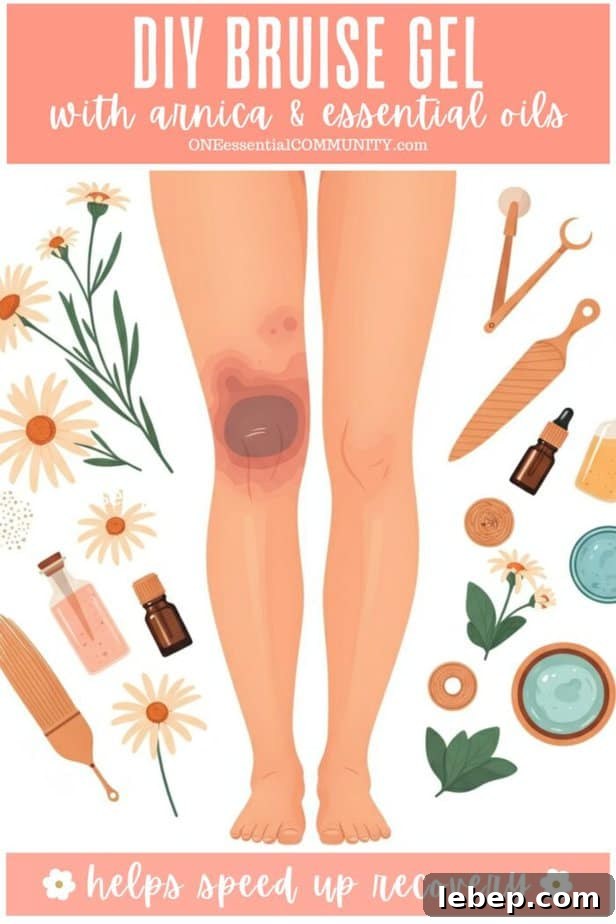
How to Make Homemade Bruise Gel
Step 1: Combine the oil-based ingredients
In a small glass bowl, blend thoroughly:
- 1 teaspoon arnica oil
- 40 drops helichrysum essential oil
- 25 drops frankincense essential oil
- 10 drops lavender essential oil
Step 2: Add Solubol (dispersant)
To disperse the essential oils into a water-based gel, add Solubol. Follow the 4:1 ratio (4 drops Solubol per 1 drop essential oil). For 75 drops of essential oils in total, use 3 teaspoons (1 tablespoon) of Solubol. Mix thoroughly until evenly combined.
Step 3: Add Aloe Vera Gel
Stir in 1/3 cup aloe vera gel and mix until the texture is smooth and gel-like. Ensure the mixture is uniform and well blended.
Step 4: Transfer and store
Use a funnel to pour the finished gel into a clean 4 oz bottle. Store the gel in the refrigerator to extend shelf life and to enjoy a cooling sensation when applied.
How to Treat a Bruise: A Step-by-Step Guide
Treating a bruise generally follows two phases: reducing initial swelling, then encouraging healing and clearance of the bruise.
Phase 1: Minimize swelling (first 1–2 days)
Goals: limit blood pooling and control swelling.
- Elevate: Keep the injured area elevated above heart level when possible to reduce blood flow to the area.
- Apply ice: Use a cold pack for 20 minutes at a time, repeating several times a day. Cold constricts blood vessels and reduces bleeding into tissue.
- Use bruise gel: Apply a thin layer of the gel up to three times daily. Gently massage for a few seconds to help absorption. Always wash hands after applying.
Phase 2: Promote healing (after 48 hours)
Goals: increase circulation to clear away pooled blood and support tissue repair.
- Warm compresses: Switch to heat therapy to boost local circulation and accelerate removal of trapped blood.
- Continue bruise gel: Apply up to three times daily, massaging gently to support absorption and tissue recovery.
- Monitor progress: The bruise should begin to fade within a few days and often resolves over the course of about a week.
Important Notes and Precautions
- Patch test first: Apply a small amount of gel to the inner forearm and wait 24 hours to check for irritation before full use.
- Avoid open wounds: Do not apply to cuts, scrapes, or broken skin.
- Keep away from eyes and mucous membranes: Wash hands after applying and avoid contact with eyes, nose, or mouth.
Where to get supplies?
The supplies listed in the recipe are commonly available from retailers that sell natural oils and DIY packaging. You’ll need a small bottle (4 oz), a funnel, arnica oil, the three essential oils (helichrysum, frankincense, lavender), a dispersant such as Solubol, and aloe vera gel.
Final Thoughts
This DIY bruise gel combines targeted botanical ingredients to support natural healing, reduce swelling, and help fading bruises. It’s a gentle, easy-to-make option for minor bruises and soft-tissue injuries. If you have concerns about a bruise—especially if it is large, extremely painful, rapidly spreading, or unexplained—seek medical advice. Always consult your healthcare provider for medical concerns or before using essential oils if you are pregnant, breastfeeding, or taking medications.
Please note: Products and information provided here are not intended to diagnose, treat, cure, or prevent any disease and are not a substitute for professional medical care. Use caution with essential oils and follow safety recommendations for topical use.